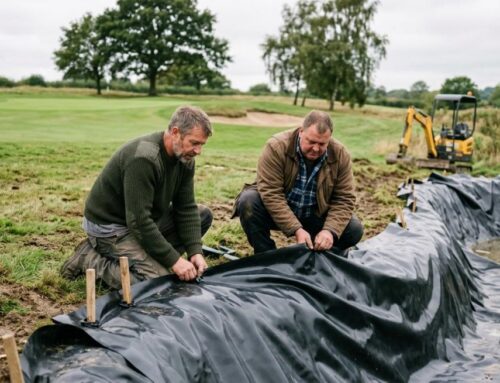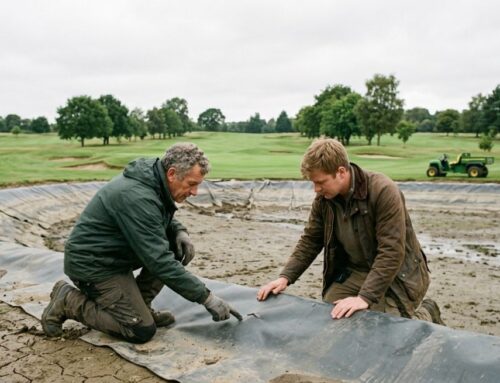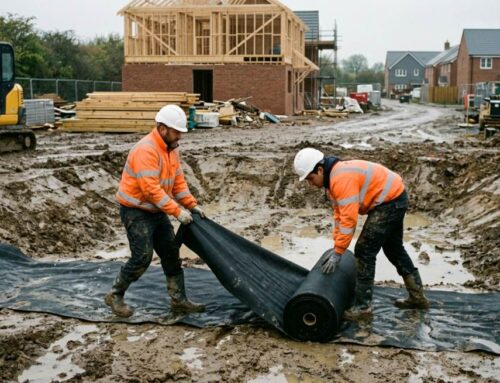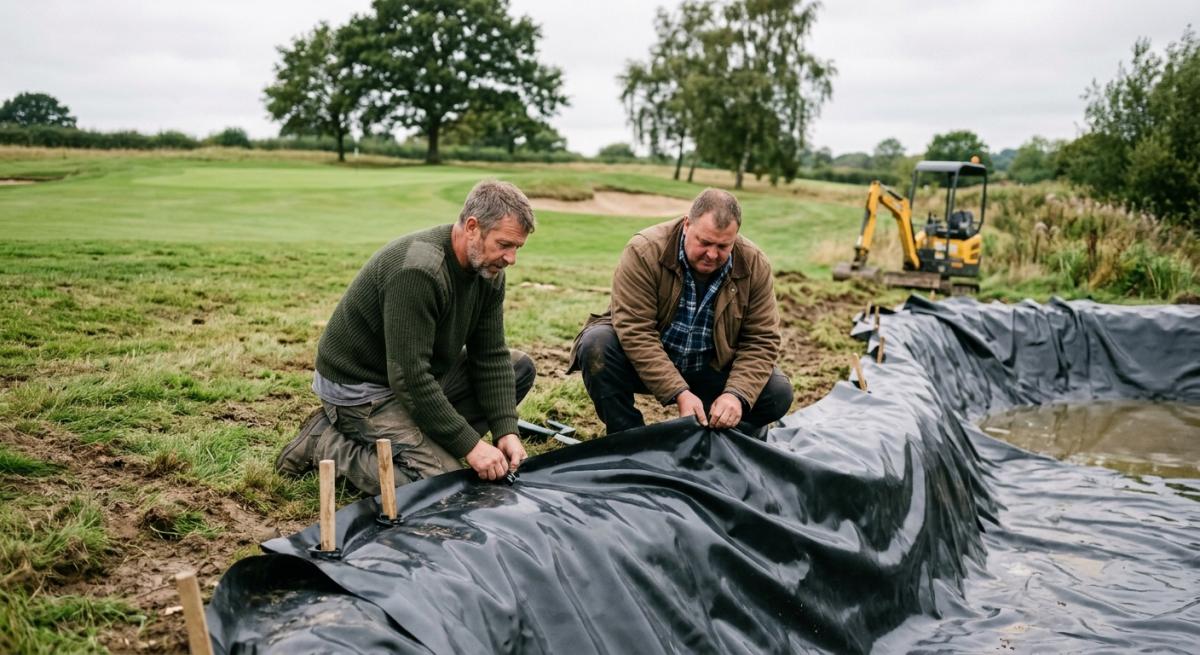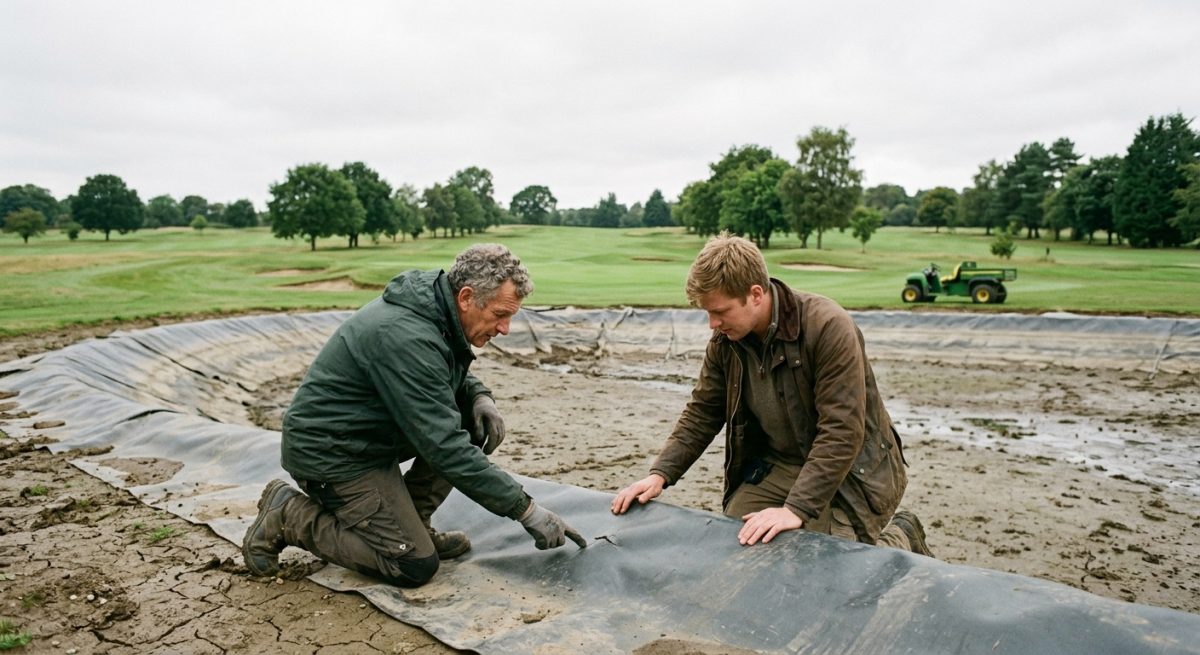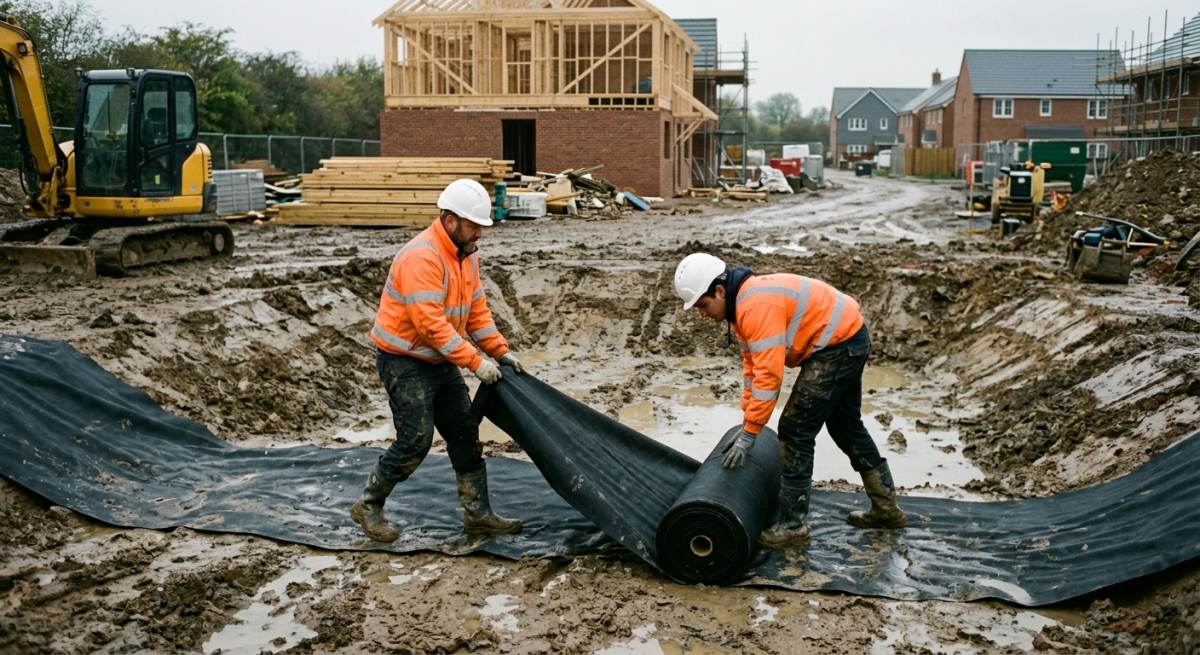
Managing heavy rainfall and water flow on farmland or commercial sites requires a robust, long-term strategy. When unmanaged surface water rushes across exposed ground, it strips away precious topsoil and creates severe drainage issues for landowners. Modern attenuation ponds and agricultural water storage facilities offer a practical way to capture excess run-off, holding it safely until it can discharge at a controlled rate or be reused for irrigation. At the heart of these containment systems sit high-quality lake liners, which form an impermeable barrier to protect the surrounding terrain. By preventing uncontrolled seepage, these durable membranes stabilise banks, safeguard local ecosystems, and stop valuable ground from washing away. With over 30 years of practical experience, Catalogue Engineering delivers reliable water management solutions that help keep site infrastructure safe, dry, and fully compliant.
Managing unpredictable surface water and preventing soil erosion across agricultural land often feels like an uphill struggle for landowners. Sudden downpours regularly overwhelm traditional drainage ditches, creating deep gullies and washing away fertile topsoil within hours.
This continuous loss of ground damages crop yields and forces managers to spend substantial sums on constant ground repairs. Over time, contaminated run-off pollutes nearby watercourses, resulting in potential regulatory fines and frustrating operational delays for site teams.
Installing robust lake liners within attenuation ponds creates a reliable, cost-effective containment barrier that controls water movement precisely. These specialist membranes prevent subsoil saturation, helping land managers maintain stable ground conditions and secure long-term agricultural water storage safely.
KEY TAKEAWAYS
- Heavy rainfall causes rapid soil erosion across exposed land, stripping nutrients and damaging surrounding site infrastructure.
- Specifying flexible lake liners within attenuation ponds prevents unmonitored seepage and stabilises surrounding banks effectively.
- Managed agricultural water storage helps balance water flow, reducing financial risk and ensuring regulatory compliance for site owners.
Table of Contents
- How soil erosion and runoff damage surrounding land structures
- Key impermeable materials used for durable containment
- Selecting appropriate membrane thickness for high volume storage
- Preventing bank scouring and subgrade washing through proper lining
- Managing high flow rates in attenuation ponds during heavy storms
- Best practice installation steps for long term leak prevention
- Frequently Asked Questions around Lake Liners
Need Specialist Advice on lake liners?
Speak to our technical team today for tailored specifications, regulations compliance, and practical support.
How soil erosion and runoff damage surrounding land structures
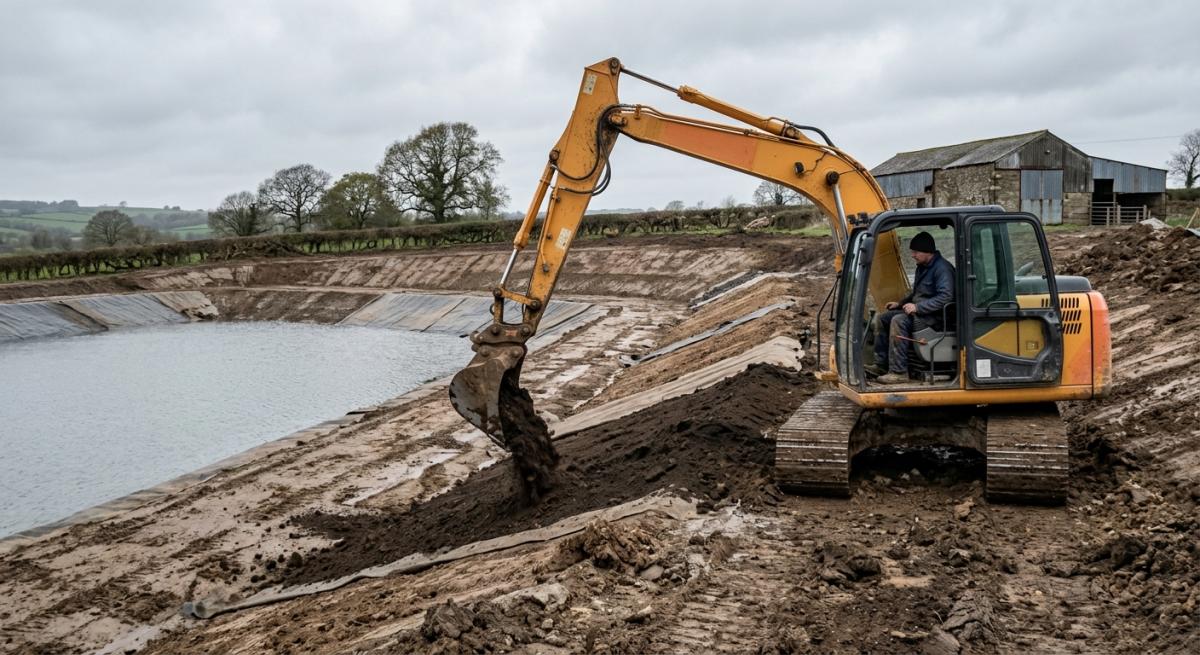
Uncontrolled surface runoff is one of the most destructive forces a civil engineer or landowner can face. When heavy rain hits bare ground, the resulting topsoil movement causes severe long-term damage to the immediate landscape and nearby built assets.
Structural foundation failure through subgrade scouring
Unmanaged surface runoff gradually strips away the critical supporting material beneath concrete slabs and retaining walls. This insidious process known as subgrade scouring leaves heavy civil engineering structures sitting on hollow, unsupported ground.
When water pathways remain unlined, the surrounding soil stability degrades in a distinct sequence.
- Initial surface runoff saturates the permeable upper soil layer during heavy rainfall.
- Migrating water creates subterranean channels that carry fine sediment away from structural footings.
- Unsupported foundation subgrades crack under heavy loads, leading to total structural collapse over time.
Without specialised geomembrane liners to redirect high-volume water flows, foundational repairs can quickly cost tens of thousands of pounds.
Increased risk of slope failure and bank instability
Excess water rapidly destabilises earthen embankments and drainage ditches across agricultural land. High water volume reduces the shear strength of saturated soil, causing severe bank instability along perimeter channels.
When an unlined slope loses its structural integrity, thousands of tonnes of mud can slip into low-lying areas. This dynamic creates immediate hazards for access roads, outbuildings, and secondary drainage networks. Properly specified attenuation lake liners intercept this movement, keeping the surrounding earth dry and firmly anchored.
Drainage capacity loss caused by widespread sedimentation
Eroded topsoil ultimately settles inside culverts, storm drains, and balancing ponds, drastically reducing their overall storage volume. This heavy accumulation of sedimentation forces drainage systems to back up during moderate rainfall events.
When fine silt builds up inside critical water infrastructure, the effective discharge capacity drops significantly. Surrounding fields transform into waterlogged bogs, while nearby concrete yards suffer from localised flooding. Over 30 years of site experience shows that managing soil movement at the source is the single most cost-effective way to preserve drainage infrastructure capacity.
| Liner Material Type | Erosion Control Capability | Puncture and Tensile Strength | Primary Advantage | Best Suited For |
|---|---|---|---|---|
| HDPE Smooth Geomembrane | Exceptional containment prevents subgrade scouring and bank slumping | Very high tensile strength with strong chemical resistance | Prevents fluid seepage completely while handling heavy hydraulic pressure | Large attenuation basins and agricultural slurry storage holding high volumes |
| Flexible LLDPE Geomembrane | High slope stability that limits runoff damage on uneven ground | Outstanding elongation properties to accommodate ground movement | Conforms easily to irregular lake contours without stress cracking | Irrigation reservoirs and farm catchment ponds with unstable subsoils |
| Geosynthetic Clay Liner GCL | Self-sealing sodium bentonite layer prevents sub-surface erosion channels | Moderate strength requiring a protective soil cover layer | Seals small punctures automatically if root or rock penetration occurs | Eco-friendly farm lakes and naturalised Sustainable Drainage Systems SuDS |
| EPDM Rubber Membrane | Reliable water retention that stops soil washing away at shoreline margins | High flexibility with good resistance to weathering and root action | Simple installation across complex shapes with minimal seaming required | Small to medium agricultural retention ponds and landscape features |
Key impermeable materials used for durable containment
Selecting the correct geomembrane material is the ultimate foundation of any successful soil protection strategy. When dealing with vast volumes of water, your choice of lining material directly dictates how well your containment system resists chemical degradation, physical punctures, and extreme weather over 30 years or more.
High-density polyethylene for heavy-duty containment
HDPE geomembranes offer exceptional chemical resistance and high tensile strength for large-scale agricultural projects. These robust liners create an unyielding barrier against aggressive farm run-off and intense hydrostatic pressure.
Because of their rigid structure, installing these heavy-duty sheets requires specialised equipment and precise execution on site.
- Prepare a smooth subgrade by clearing sharp stones, roots, and debris across the entire lake bed.
- Unroll the heavy-duty rolls across the expanse using specialised spreader bars to prevent creasing.
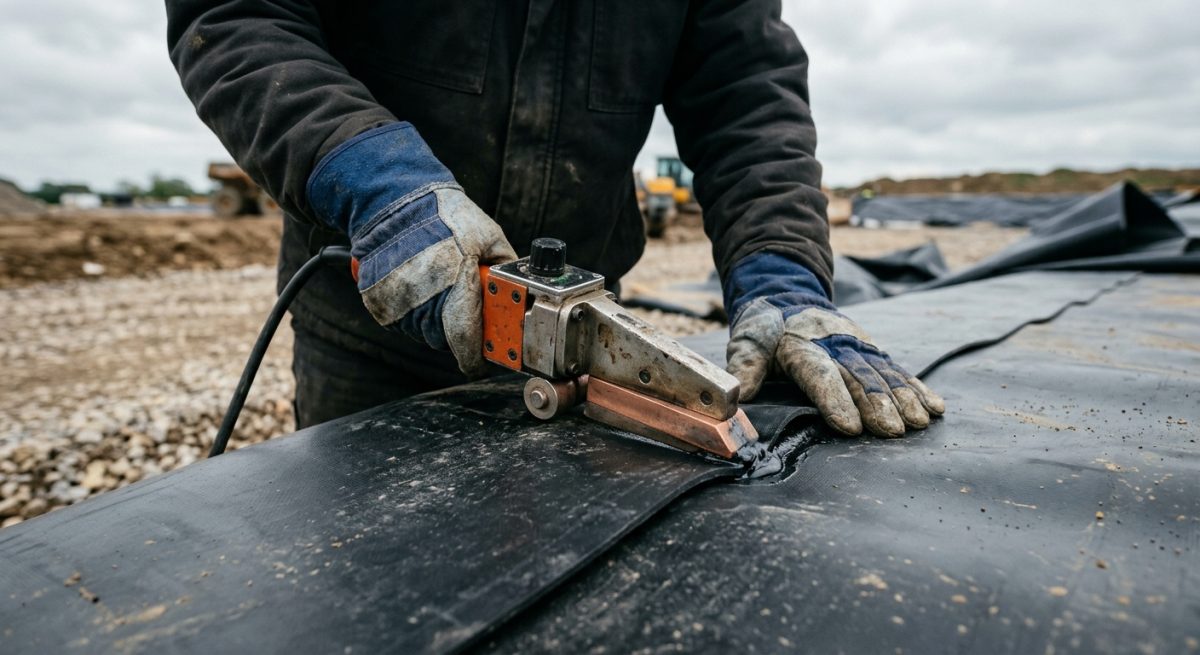
- Thermal-weld the adjacent seams using dual-track wedge welders to guarantee a permanent, pressure-tested seal.
Low-density polyethylene for complex ground contours
LDPE liners deliver brilliant flexibility while maintaining superb impermeability across irregular subgrades. Their high elongation capacity allows the material to stretch over uneven ground without suffering structural tears.
This remarkable adaptability makes them a favourite for smaller attenuation ponds and intricate farm storage channels. While slightly less chemically resistant than high-density alternatives, their forgiving nature reduces installation stress in cold conditions. They lay flat with minimal fuss, making them a cost-effective option for rapid deployments where terrain ground movements present a long-term challenge.
Flexible polypropylene for demanding environmental conditions
PP liners excel in applications demanding superior mechanical toughness and high thermal stability. These specialised membranes withstand prolonged UV exposure and aggressive chemical compounds without breaking down over time.
Their outstanding flexibility simplifies on-site handling, allowing installation teams to prefabricated large panels off-site to speed up project delivery. They adapt smoothly to fluctuating water levels and ground settlement, ensuring your containment solution remains intact through severe weather cycles.
Protective cushions to secure long-term performance
Geotextile underlays provide a critical protective cushion directly beneath the primary impermeable membrane. These non-woven synthetic fabrics prevent sharp rocks and coarse subgrade materials from puncturing the primary liner above.
In addition to puncture protection, these heavy-duty fabrics diffuse localised stress and allow ground gas to vent safely without bubbling the main containment sheet. By pairing a high-grade textile underlay with your primary geomembrane, you create a dual-layer defence system that ensures maximum service life and total peace of mind.
Selecting appropriate membrane thickness for high volume storage
Choosing the correct membrane thickness is a crucial step when designing large-scale attenuation and agricultural storage schemes. Getting this specification right ensures your containment system withstands massive liquid volumes while protecting the surrounding ground from severe erosion.
Calculating hydrostatic pressure for deep storage installations
Hydrostatic pressure increases significantly as water depth rises within a high-volume storage lagoon or attenuation lake. You must specify a thicker geomembrane to withstand these immense hydraulic forces without stretching or bursting over time.
When evaluating sub-grade conditions and load requirements, engineering teams typically follow a clear 3-step assessment process.
- Measure the maximum water depth to calculate the peak downward and lateral pressure on the base.
- Inspect the underlying soil texture to determine if sharp aggregate or uneven ground is present.
- Select a heavy-duty polymer liner, often between 1.5 mm and 2.0 mm, that offers the structural integrity required for long-term depth retention.
By accounting for these physical forces early in the design phase, you prevent catastrophic liner failure and ensure your water management system remains completely stable under peak capacity.
Balancing flexibility with puncture resistance
Selecting a liner requires a fine balance between physical toughness and operational flexibility during installation. A thicker membrane provides superior puncture resistance against sub-grade stones, but it must remain pliable enough to conform to complex basin profiles.
Thinner materials might seem cost-effective initially, but they carry a much higher risk of tearing when heavy machinery passes nearby or when sharp sub-base debris presses against the liner. For high-volume attenuation lakes, a robust 1.5 mm high-density polyethylene or flexible polypropylene liner offers the ideal middle ground. It resists mechanical damage from root growth and angular gravel while accommodating slight ground movements without cracking.
Minimising long-term structural strain on steep embankments
Steep basin slopes experience continuous mechanical stress that can cause thin flexible liners to stretch, thin out, or tear. You need a thicker geomembrane on severe gradients to maintain uniform structural strength and prevent localised thinning along the slope profile.
Deploying a minimum 1.5 mm or 2.0 mm membrane across steep side slopes guarantees that tensile loads are distributed evenly across the entire surface area. This extra material mass prevents the liner from creeping downwards under the weight of stored water, preserving the slope stability of the surrounding earthworks. Over a multi-decade operational lifespan, this additional thickness provides reliable protection against ground movement and seasonal freeze-thaw cycles.
Preventing bank scouring and subgrade washing through proper lining
When unlined water storage lakes face fluctuating water levels, the perimeter banks take the brunt of the physical energy. Without a robust barrier, the movement of water gradually shears away earth and compromises the structural foundation.
Stopping surface displacement with continuous water slope protection
Installing an impermeable geotextile or geomembrane liner forms a physical shield that absorbs dynamic hydraulic forces. This barrier prevents incoming waves and surface currents from stripping raw earth away from the exposed margins.
When managing open storage bodies, hydraulic movement rapidly degrades unlined edges. The effective deployment of water slope protection addresses this issue by breaking the direct contact between fluid and soil. Over time, unlined edges form micro-fissures that expand into deep channels, leading to bank scouring and sudden bank failure. A continuous lining system spreads surface stresses evenly across the slope, keeping the surrounding ground completely stable during heavy weather.
Eliminating subsurface piping to preserve containment integrity
Properly specified liners stop water from seeping into the subgrade where it can wash away fine particles. Keeping the underlying soil dry ensures long-term foundation stability and prevents hidden structural collapse.
Subgrade washing occurs when water migrates through microscopic pores beneath the surface, slowly carving out subterranean voids. Over 30 years of field experience demonstrates that once these hidden paths form, the ground above inevitably settles and cracking occurs. Suppressing this internal piping requires a rigorous installation approach.
- Prepare a smooth, compacted subbase free from sharp stones or organic debris.
- Lay high-density geotextile underlayment to cushion the primary geomembrane.
- Weld all sheet seams using dual-track pressure testing to ensure complete containment integrity.
Securing perimeter edges with engineered anchor trenches
Fixing the top edge of a liner into an anchor trench prevents water from creeping behind the material during peak filling cycles. This simple mechanical lock stops edge lift and protects the top-of-bank soils from washing out.
Even the most durable lining material fails if surface runoff slips underneath the top perimeter edge. Digging an engineered trench along the top bank allows installation crews to drop the liner edge down and backfill it with heavily compacted soil or concrete.
- Excavate a continuous channel set back at least 1 metre from the crest of the slope.
- Run the liner smooth across the bank, dropping the excess sheet neatly into the channel.
- Backfill the void with well-compacted aggregate or structural fill to lock the sheet firmly against pull-out forces.
This straightforward method stops top-of-bank erosion in its tracks, guaranteeing that high-volume water management systems operate reliably for decades.
Managing high flow rates in attenuation ponds during heavy storms
When extreme weather events hit, surface water surges off saturated ground and hard surfaces at alarming speeds. Managing these intense volumes relies heavily on well-engineered storage basins that balance rapid inflow with controlled, safe discharge into local watercourses.
Balancing rapid inflow with peak flow control
Peak flow control relies on restricting the outward rate of stormwater attenuation while temporary storage basins fill up safely. This clever mechanism gives local drainage networks time to process surface water without backing up into neighbouring streets or fields.
During heavy downpours, millions of litres of rain land on roofs, roads, and agricultural land in a matter of minutes. Without a robust control system, this massive surge causes severe downstream flooding and washes away precious topsoil. Installing an impermeable geomembrane liner ensures that collected water remains within the pond perimeter, preventing dangerous sub-base softening. A typical flow management strategy follows a logical pattern to protect nearby land.
- High-volume runoff enters the basin through inlet pipes designed to handle maximum calculated storm events.
- The geomembrane liner holds the accumulating water securely, protecting the surrounding soil structure from saturating and slumping under hydraulic pressure.
- Flow-control devices, such as hydro-brakes or orifice plates, release water at a steady, pre-agreed rate into local rivers.
Neutralising incoming kinetic energy with diffuser structures
Diffuser structures reduce the destructive velocity of incoming stormwater attenuation surges as they enter the retention basin. By spreading incoming water over a wider surface area, these installations protect the underlying liner from physical damage and scouring.
Fast-flowing water carries immense force, especially when channelled through narrow pipework during a 1-in-100-year storm event. If this high-velocity flow hits an unlined or unprotected pond bed directly, it gouges deep trenches, displaces protective sub-grade layers, and kicks up silt. Heavy-duty concrete headwalls, riprap aprons, and baffled diffusers break this kinetic energy instantly upon entry.
Positioning these energy dissipators directly over a high-performance liner creates a resilient defence system. The liner remains completely shielded from sharp debris carried by the storm, whilst the quietened water spreads evenly across the basin floor. This calm settlement process allows suspended solids to sink to the bottom, keeping nearby waterways clean and sediment-free.
Absorbing heavy hydraulic pressure across the basin floor
Robust liner systems distribute heavy hydraulic pressure evenly across the base of the pond to stop structural ground failure. This engineered stability stops the soft soil beneath the basin from shifting or piping when thousands of tonnes of water press down on it.
A full attenuation pond places tremendous weight on the underlying earth, particularly during prolonged multi-day storms. If ground conditions vary beneath the site, this uneven loading can cause localised subsidence, tearing inferior materials and triggering catastrophic bank erosion.
By combining thick, flexible geomembranes with needle-punched geotextile underlays, engineers create a unified barrier that bridges small voids and resists puncture. The flexible material stretches slightly under load without losing its watertight seal, ensuring that the stored stormwater attenuation volume stays fully contained until the storm passes and normal drainage resumes.
Best practice installation steps for long-term leak prevention
Installing a reliable geomembrane liner is not merely about laying plastic down on the dirt. When you are managing significant volumes of agricultural or stormwater runoff, precise site execution makes all the difference between a resilient water feature and a costly, leaking liability.
Thorough ground preparation stops damage before laying begins
Proper subgrade preparation removes sharp debris and levels the earth to protect the liner from immediate puncture risks. Taking time to smooth the soil surface creates a uniform base that supports the massive weight of retained water.
Our ground preparation sequence follows 3 straightforward steps:
- Clear all roots, angular stones, and sharp vegetation across the entire basin area.
- Compact the exposed soil to eliminate air pockets and prevent future settlement issues.
- Lay a thick, protective geotextile underlayment to cushion the main flexible membrane.
Skipping these early steps usually leads to pinhole tears once the lake fills with heavy drainage water.
Double-seam wedge welding guarantees watertight joints
Dual-track wedge welding fuses adjacent geomembrane sheets together using controlled heat and mechanical pressure. This technique creates a continuous, high-strength bond that routinely outperforms the raw material itself in tensile strength tests.
Our specialist installers monitor ambient temperatures and sheet cleanliness closely during fusion. Dust, moisture, or sudden wind changes can compromise seam integrity, so panels must be wiped clean prior to joining. By relying on precise thermal bonding instead of simple adhesives, the finished barrier easily handles structural movement and long-term hydrostatic pressure without pulling apart.
Rigorous non-destructive testing proves total seam integrity
Engineers use non-destructive testing to verify every single linear metre of welded seam without damaging the newly installed barrier. This thorough quality assurance check ensures complete peace of mind before the excavation is backfilled or flooded with runoff.
Common site verification techniques include:
- Air lance testing along exposed edges to check for unbonded flap sections.
- Spark testing on specialised conductive liners to pinpoint invisible microscopic voids.
- Air pressure testing inside double-seam channels to confirm total pressure retention over time.
Catching minor installation defects at this stage prevents subgrade erosion, protects groundwater supplies, and ensures your attenuation lake functions perfectly for over 30 years.
Frequently Asked Questions around Lake Liners
What Exactly Is a Lake Liner and How Does It Work?
A lake liner is a heavy-duty, impermeable membrane installed along the bed and banks of a body of water to create a watertight barrier. It works by keeping water securely contained within the lake while physically separating the liquid from the surrounding earth.
By preventing water from seeping into the soil below, the liner maintains stable water levels and stops the ground from becoming oversaturated. This structural barrier shields the soil banks from the continuous movement of water, which is one of the primary causes of ground collapse and washouts.
How Do These Liners Prevent Soil Erosion Around Agricultural Lakes?
They stop erosion by absorbing the energy of moving water and protecting the soft soil underneath from being washed away. Without a lining, wave action, rising tides, and incoming drainage currents constantly scrape away at the exposed earth, causing banks to crumble.
When you install a quality liner, it acts as a tough protective skin for the land. It absorbs the impact of rainwater and surface turbulence, ensuring the underlying soil stays firmly in place regardless of how much water moves through the system.
Can a Lake Liner Really Help Control Surface Water Runoff?
Yes, a liner allows you to control surface water runoff by turning a standard basin into a highly effective attenuation lake. By keeping the stored water completely separate from the surrounding earth, you can manage exactly how and when that excess water is released.
During periods of heavy rain, runoff flows into the lined lake rather than flooding adjacent fields or washing across vulnerable topsoil. You can then channel this captured water safely into local drainage networks at a controlled, manageable rate.
What Is the Difference Between Agricultural and Attenuation Lakes?
An agricultural lake is primarily built to store water for farming needs such as irrigation, crop spraying, and livestock drinking supply. An attenuation lake, on the other hand, is specifically designed to catch surface water during heavy storms and hold it back to prevent flooding elsewhere.
Despite their different main purposes, both types rely on liners to perform effectively. Whether you are holding water for long-term farm use or managing temporary storm surges, a liner ensures the water stays where it belongs without degrading the surrounding land.
Which Materials Are Most Commonly Used for Lining Large Lakes?
The most popular materials for large-scale lining are High-Density Polyethylene, Linear Low-Density Polyethylene, and Ethylene Propylene Diene Monomer rubber. Each material offers great flexibility and impressive resistance to punctures, weather changes, and chemical runoff.
High-Density Polyethylene is particularly favoured for larger agricultural projects due to its exceptional toughness and long lifespan. Synthetic rubber options are also widely used because they stretch easily to fit unusual ground contours and naturally uneven lake beds.
How Long Can You Expect a Commercial Lake Liner to Last?
A well-installed, high-quality lake liner will easily last for 20 to 30 years, and often much longer if it is covered with a protective layer of soil or geotextile fabric. The material is specifically engineered to withstand constant water pressure, freezing temperatures, and strong ultraviolet light without degrading.
To get the longest life out of your liner, regular maintenance is key. Keeping the edges secure, removing sharp debris, and checking for accidental mechanical damage during site works will ensure it performs well for decades.
Do Lake Liners Help Improve Overall Water Quality in a Reservoir?
They certainly do, because they prevent mud, soil minerals, and ground contaminants from mixing into the clear water supply. When bare soil is constantly exposed to water, it breaks down into fine silt that clouds the lake and lowers overall water clarity.
A liner forms a clean barrier that stops this silt from mixing into the water column. This keeps the stored water cleaner for agricultural equipment, reduces sediment buildup at the bottom, and creates a much healthier environment for aquatic plants and farm animals.
Are Lake Liners Safe for Fish and Natural Local Wildlife?
Yes, modern agricultural and attenuation lake liners are completely non-toxic and safe for fish, birds, and other local wildlife. Manufacturers specifically design these materials to ensure no harmful chemicals or synthetic compounds leach out into the water.
In fact, lined lakes often become thriving natural habitats over time. Once installed, you can easily add gravel, rock features, and native aquatic plants over the liner to create a rich, natural environment for local species to enjoy.
What Main Steps Are Involved in Installing a Large Lake Liner?
The installation process begins with digging out the basin, smoothing down the earth, and removing any sharp rocks or tree roots that could cause damage. After the ground is prepared, a soft protective geotextile underlayment is laid down to cushion the main liner.
The waterproof membrane is then rolled out across the site and fused together at the seams using specialised heat welding tools. Finally, the outer edges of the liner are secured into a deep anchor trench dug around the perimeter to hold everything firmly in place.
How Much Does it Typically Cost to Install a Lined Lake?
Costs usually range from £10 to £35 per square metre for supply and installation, depending on the chosen material thickness and ground conditions. For a medium-sized farm storage basin or attenuation pond, total project costs often fall between £5,000 and £25,000.
While the initial outlay requires a reasonable financial investment, a lined lake quickly pays for itself. By preventing soil erosion, protecting farm infrastructure, and safeguarding against flood damage, it provides long-term value for any land owner.
Ready to Discuss Your lake liners Project?
Get in touch with our specialists today for detailed site guidance, technical specifications, and a quotation tailored to your requirements.