Managing surface water management on modern civil engineering schemes demands a clear grasp of environmental compliance, particularly when integrating SuDS attenuation lakes into residential or commercial layouts. Unlined or poorly lined attenuation features risk severe groundwater contamination, soil erosion, and structural failure, leading to costly site delays and potential regulatory fines. In this comprehensive guide, we unpack the fundamental regulatory frameworks governing sustainable drainage systems across the UK. We focus on how high-performance lake liners and impermeable membranes prevent unwanted discharge while maintaining stable storage volumes during extreme rainfall events. Drawing on over 30 years of practical industry experience from Catalogue Engineering, we highlight best practice installation techniques, material selection criteria, and long-term maintenance strategies. By aligning your site design with these essential environmental standards, you can deliver robust, fully compliant drainage infrastructure that protects local watercourses and stands the test of time.
Designing effective SuDS attenuation lakes presents a constant challenge for modern housebuilders and site engineers trying to balance regulatory demands with tight land budgets. Without robust containment systems, surface water management quickly fails as run-off leaks into surrounding soils, risking localised flooding and severe groundwater pollution.
This breakdown in containment leads to expensive site remediation, drawn-out planning disputes, and frustrating delays that derail project timelines. Developers often face heavy financial penalties from environmental regulators when unlined attenuation basins allow contaminated run-off to migrate into local watercourses.
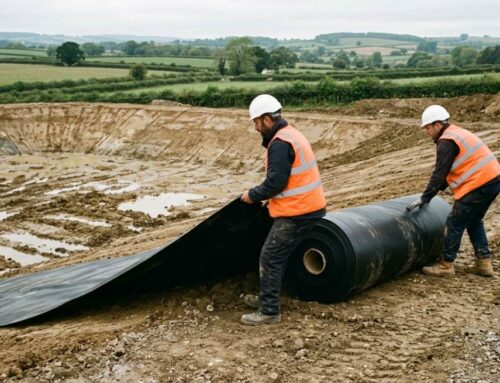
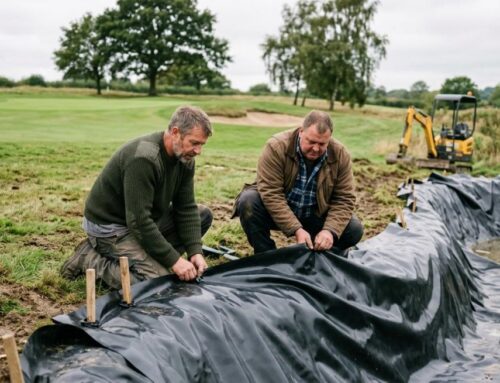
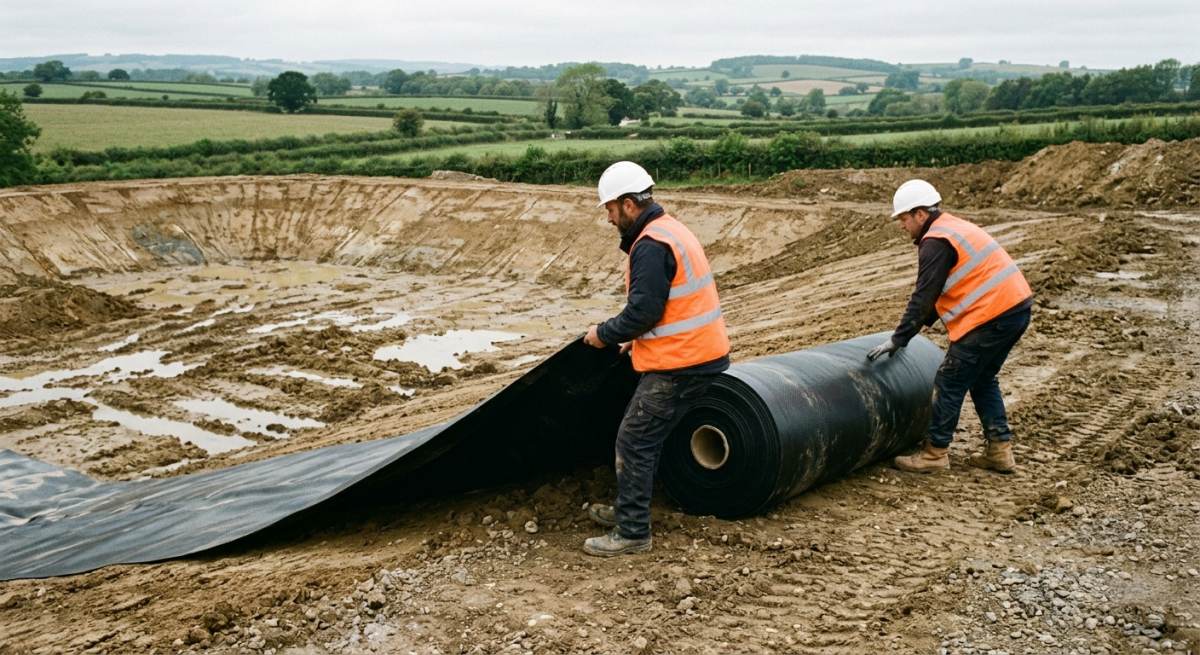
Installing heavy-duty lake liners made from durable impermeable membranes provides an immediate, reliable barrier that secures stored surface water until it can discharge at controlled rates. Partnering with specialist installers ensures these systems meet strict environmental standards, protecting your development through time-tested containment strategies.
KEY TAKEAWAYS
- Heavy-duty lake liners provide the primary impermeable barrier required to prevent contaminated surface water from seeping into sensitive local aquifers.
- Integrating durable impermeable membranes into SuDS attenuation lakes helps site operators control peak flow rates during heavy storm events.
- Working alongside specialist installers with over 30 years of field experience ensures full compliance with UK water management regulations.
Need Specialist Advice on lake liners?
Speak to our technical team today for tailored specifications, regulations compliance, and practical support.
Key Regulatory Frameworks and Compliance Standards
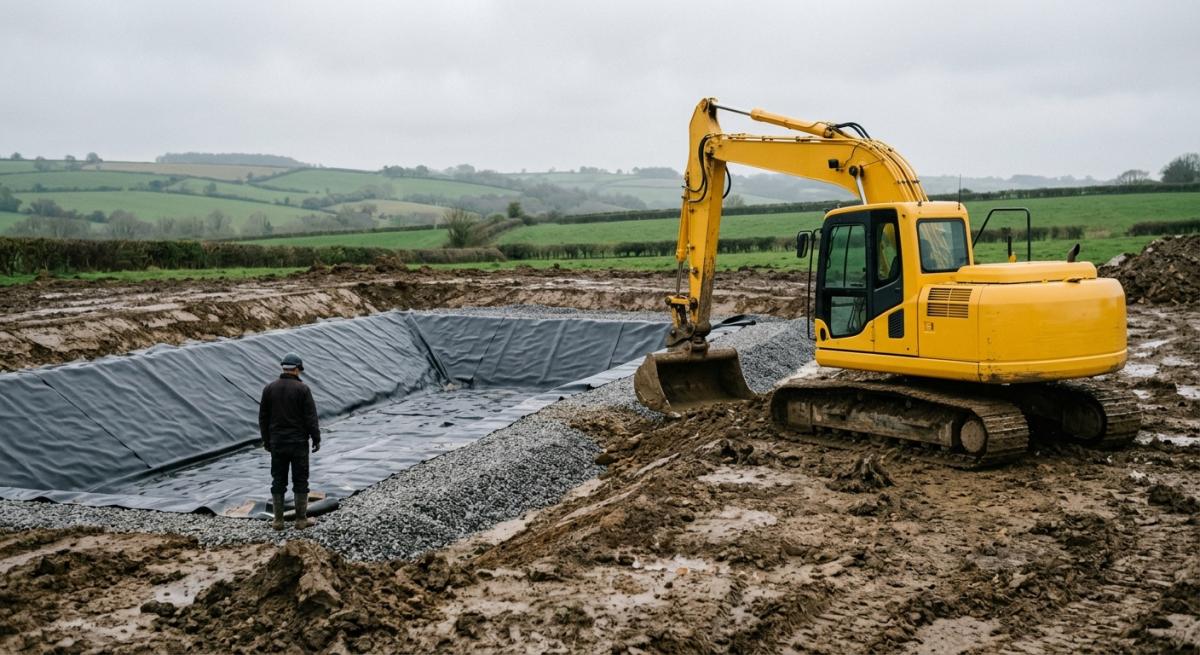
Navigating the complex landscape of UK surface water management requires a clear understanding of both national policy and local planning expectations. Installing impermeable geomembrane liners in attenuation lakes ensures that potentially contaminated run-off does not infiltrate vulnerable aquifers or surrounding land.
CIRIA C753 SuDS Manual Requirements
The CIRIA C753 SuDS Manual serves as the definitive reference point for designing safe, effective surface water management systems in the UK. It outlines strict criteria for hydraulic performance, water quality treatment, and long-term structural integrity.
When selecting and installing liners under this framework, site teams generally follow a 3-step compliance routine:
1. Conduct a thorough risk assessment to determine potential pollutant loads and ground sensitivity.
2. Select an appropriate geomembrane material that matches the specific chemical and physical demands of the site.
3. Carry out independent quality assurance testing on all welded seams prior to backfilling.
By adhering to these established steps, developers satisfy local planning authorities while protecting ground conditions. Properly lined attenuation ponds act as robust treatment barriers, preventing untreated hydrocarbon spills or urban sediment from migrating into regional groundwater supplies.
Environment Agency Guidelines and Water Quality Assurance
Environment Agency guidelines focus heavily on protecting natural watercourses from point-source pollution and unmanaged surface water discharge. These regulatory standards demand that any retention lake handling high-risk drainage incorporates a dependable, puncture-resistant lining system.
Engineers must ensure that the chosen barrier prevents chemical leaching while maintaining stable water volumes during dry spells. Achieving full approval involves close consultation with regional officers to verify that the proposed lining material suits the specific soil chemistry and hydrogeological profile of the site.
BS EN ISO Standards for Geomembrane Testing
BS EN ISO standards govern the manufacturing consistency, tensile strength, and durational performance of synthetic lining membranes. These rigorous testing protocols guarantee that specified materials can withstand heavy structural loads, earth movements, and continuous exposure to biological agents over a 50-year design life.
Site managers must verify that every batch of delivered membrane arrives with valid third-party certification confirming compliance with these industrial benchmarks. Using fully certified materials reduces the risk of sub-grade erosion, premature degradation, and costly remediation work after handover. Ultimately, aligning site practices with recognised manufacturing standards guarantees a robust, leak-free installation that satisfies both environmental inspectors and future site adopters.
| Liner Material | Environmental Compliance Strengths | Primary Advantage | Key Installation Risk | Best Suited For |
|---|---|---|---|---|
| EPDM Synthetic Rubber | Excellent chemical resistance and highly non-toxic to aquatic flora and fauna | Exceptional flexibility accommodating 300% ground movement without tearing | Requires careful joint sealing in wet UK weather conditions | Irregularly shaped attenuation ponds with high biodiversity requirements |
| HDPE Geomembrane | Robust containment preventing migration of urban runoff pollutants into groundwater | Superior puncture resistance and high chemical durability | Rigid nature requires specialised thermal welding and strict QA testing | Large-scale commercial developments with heavy silt or hydrocarbon risk |
| Bentonite Geosynthetic Clay (GCL) | Natural sodium bentonite clay provides a sustainable hydraulic barrier | Self-sealing capability if minor punctures occur during backfilling | Must be covered immediately to prevent premature hydration from rain | Rural housing schemes requiring a natural soft-engineered aesthetic |
| LLDPE Geomembrane | Reliable containment meeting Environment Agency water quality objectives | Greater elasticity than HDPE with excellent slope stability performance | Lower chemical resistance compared to standard rigid HDPE membranes | Steep-sided attenuation basins on residential developments |
Selecting the Right Geomembrane Material for Site Conditions
Choosing the correct lining material is an essential decision when designing sustainable drainage lakes for modern residential and commercial developments. You must carefully balance ground geology, structural movement, and potential surface run-off contamination to ensure complete containment over the long-term.
Evaluating Chemical Resistance and Ground Conditions
Matching your liner material to local soil chemistry and expected run-off pollutants prevents premature degradation of the containment system. Ground conditions containing hydrocarbons or agricultural chemicals require robust synthetic barriers to guarantee zero leakage into surrounding aquifers.
High-density polyethylene (HDPE liners) offer exceptional chemical resistance and high tensile strength, making them the standard choice for aggressive soil environments. However, where sub-base settlement is anticipated, more flexible options are required to avoid mechanical stress.
To select the correct material based on site conditions, follow this simple 3-step evaluation checklist:
- Conduct comprehensive soil chemistry testing across the entire footprint to identify aggressive compounds.
- Calculate expected ground movement and structural settlement risks across the attenuation area.
- Review potential surface run-off contaminants from nearby roadways or industrial sites.
Assessing Flexibility and Tensile Performance
Selecting a flexible membrane ensures your attenuation system handles differential settlement without tearing or compromising structural integrity. Low-density options easily adapt to uneven contours and complex basin shapes, reducing installation times on tricky ground.
Flexible polypropylene (PP geomembranes) excel in irregular excavations where high puncture resistance and thermal stability are paramount. Alternatively, low-density polyethylene (LDPE membranes) provide an economical, highly pliable solution for standard sites with low chemical exposure risks.
Our installation team draws on over 30 years of experience to fit tailored containment systems across diverse UK developments, ensuring full compliance with environmental standards. By matching the correct material properties to your specific site profile, you protect local ecosystems and guarantee long-term asset performance.
Preventing Groundwater Contamination and Hydrocarbon Migration
Managing run-off on new housing and commercial developments requires a robust approach to water quality. When surface water washes over car parks and access roads, it collects harmful pollutants that threaten local aquatic ecosystems if left unchecked.
Meeting the Water Framework Directive standards
Lining your attenuation lakes provides an impermeable barrier that keeps harmful surface run-off separated from sensitive aquifers. This straightforward engineering approach ensures your site remains fully compliant with the Water Framework Directive by stopping pollutants from seeping downward.
When surface water enters an attenuation basin, it carries a mix of heavy metals, silt, and vehicle residues. Without an effective liner system, these contaminants migrate through subsoils into groundwater protection zones, causing long-term ecological damage.
To prevent diffuse pollution across your development, follow this 3-step containment routine:
1. Lay a heavy-duty geotextile underlay to protect the primary membrane from sharp aggregate punctures.
2. Install a specialised hydrocarbon-resistant geomembrane across the entire base and side slopes.
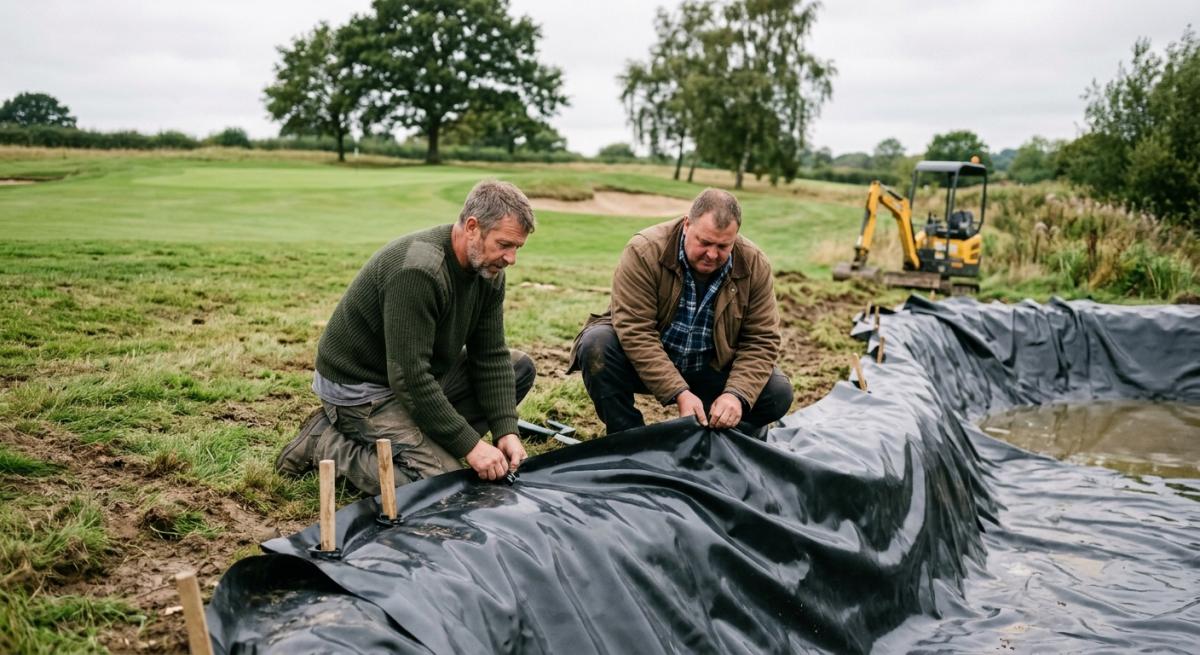
3. Terminate the liner in a dedicated anchor trench around the perimeter to seal the system completely.
Intercepting hydrocarbons before they reach the lake
Installing reliable oil separators upstream of your basin stops petrol and diesel spills from ruining the primary lining membrane. This pre-treatment phase catches bulk floating oils early so the main lake only handles manageable surface water flows.
While high-grade liners resist chemical attack, constant exposure to heavy fuel floating on the water surface degrades sealants and complicates site maintenance. Integrating efficient forebay chambers and mechanical separators creates a multi-stage defense line that traps fuel bound to fine sediments.
Protecting groundwater protection zones long-term
Working over sensitive chalk or gravel aquifers demands a rigorous quality-assurance process during every stage of the liner installation. You can eliminate the risk of subsurface leaks by testing every welded seam before filling the basin with water.
Site teams must prioritise containment integrity from day 1 to safeguard local drinking supplies. Using experienced specialist installers who carry out dual-track thermal welding ensures every joint meets strict regulatory guidelines.
- Pressure test all double-seam welds using compressed air to confirm continuous containment.
- Inspect surrounding anchor trenches to guarantee ground movement will not pull the liner out of place.
- Verify that all pipe penetrations use custom engineered boots sealed with stainless-steel bands.
By combining robust gas and water barrier systems with regular site checks, developers create safe, compliant attenuation lakes that protect local watercourses for decades.
Installation Quality Assurance and Integrity Testing Requirements
Deploying a robust geomembrane for attenuation lakes requires rigorous on-site oversight to satisfy local authorities and protect groundwater. Without formal verification, even minor pinholes can cause catastrophic land instability and heavy financial penalties.
Rigorous Construction Quality Assurance
Securing full CQA validation reports is the only way to prove your attenuation lining meets strict environmental compliance standards. Independent engineering inspectors oversee every phase of geomembrane placement to verify that ground conditions, material specifications, and joining methods align with approved designs.
To maintain a transparent trail of accountability during installation, site teams follow a clear sequence.
1. Subgrade inspection to remove sharp aggregate and standing water before unrolling materials.
2. Continuous observational monitoring of panel deployment, ambient temperatures, and seam overlap widths.
3. Final compilation of daily logs and design sign-offs into a definitive compliance file for local planning authorities.
Advanced Non-Destructive Leak Detection
Non-destructive spark testing provides a swift method for scanning exposed geomembranes to locate microscopic leaks without compromising the material. This high-voltage technique passes a charged brush over the liner, instantly pinpointing defects as electrical current grounds through the earth below.
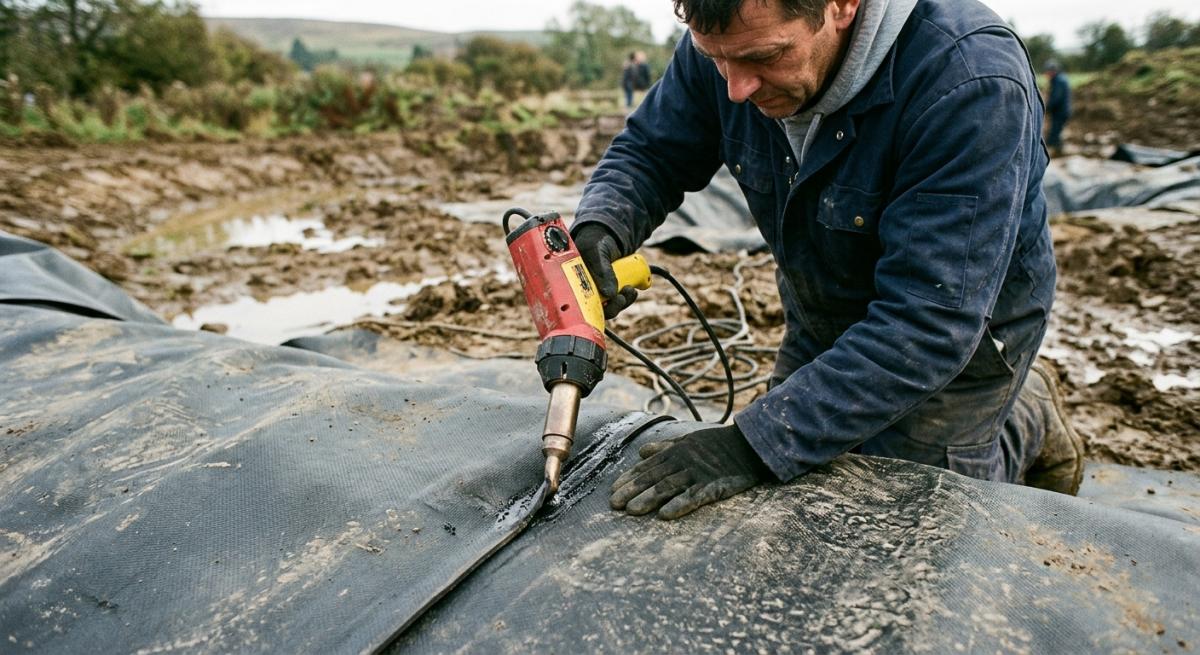
Engineers routinely deploy spark testing alongside air pressure trials on dual-track wedge welds. On smooth elastomeric sheets, a high-voltage probe sweeps across the surface to identify unbonded areas or punctures. For double-seamed joints, technicians seal both ends of the central channel, inject compressed air, and monitor pressure gauges for 5 minutes to confirm absolute air tightness.
Destructive Testing for Seam Strength
Destructive seam testing involves cutting physical liner samples to verify that welded joints are stronger than the parent material itself. Field technicians strip small coupons from overlap margins to conduct immediate shear and peel tests using calibrated tensiometers.
These physical trials ensure that thermofused joins resist prolonged hydrostatic loads across decades of service. If a coupon fails, the installer isolates the affected seam length, performs additional repairs, and retests until the joint achieves full structural integrity. Engaging accredited specialist membrane installers ensures these technical protocols are executed flawlessly, giving developers complete peace of mind during handover.
Long-Term Maintenance and Structural Integrity Inspections
Navigating local authority adoption and asset handover
Achieving a clean asset handover requires complete proof that your attenuation lake meets statutory water management standards. Local council planning teams and water companies will only sign off on a site once they have full confidence in the subterranean lining assembly.
Securing a smooth transition involves a transparent three-step process that protects your development bottom line.
1. Compile all original installation sign-offs, including membrane batch numbers, weld pressure test records, and validation reports from specialist installers.
2. Complete a joint site walkover with the adopting body to review inlet structures, outfalls, and surface silt management measures.
3. Establish a clear ongoing schedule for maintenance responsibilities before the final sign-off takes place.
Failing to present clear documentation during asset handover often leaves developers holding the financial burden for maintenance far longer than budgeted. Partnering with experienced specialists during the initial build ensures every quality assurance check meets long-term adoption requirements right from day one.
Establishing routine schedule for long-term membrane integrity
Checking geomembrane integrity on a regular basis prevents minor surface tears from turning into costly structural failures. Routine inspections keep your attenuation pond performing properly while protecting the surrounding groundwater network.
A comprehensive site check focuses on key structural zones where stress usually accumulates over time.
- Inspect exposed geomembrane sections around the perimeter for physical puncture damage or UV degradation.
- Clear heavy debris and excess sediment from silt management channels to maintain steady water inflows.
- Check that protective geotextile fleeces remain fully covered by soil or ballast layers to prevent displacement.
Planning these visual checks every 6 months, alongside major storm event inspections, gives site managers total peace of mind. Keeping simple, dated logs ensures full alignment with environmental agency guidance throughout the design life expectations of the pond.
Protecting submerged liners against mechanical and environmental wear
Submerged barrier systems face continuous hydrostatic pressure alongside chemical and biological factors within the stormwater runoff. Correctly specified protective geotextile fleeces act as a permanent cushion against sharp subgrade rocks and heavy machinery stress.
Without adequate protection, ground movement or invasive root systems can compromise the underlying water barrier. Over a 30-year period, unmaintained silt accumulation exerts excessive weight on slope liners, increasing the risk of stress cracking along subgrade seams. Integrating high-quality cushioning layers during the primary build cushions the primary gas and water barriers against abrasive material settlement.
Simple, proactive maintenance strategies ensure the lining system easily reaches its full multi-decade design life expectations. Working alongside proven installation specialists helps developers maintain robust water management assets that stand up to rigorous regulatory scrutiny year after year.
Frequently Asked Questions around Lake Liners
Which Lake Liner Materials Meet UK Building Standards?
High-density polyethylene, flexible polypropylene, and bentonite clay liners are the main materials that comply with UK building regulations for attenuation lakes. High-density polyethylene offers fantastic durability for large bodies of water, whilst flexible polypropylene handles ground movement brilliantly. You should always select a liner that carries appropriate certification and meets the specific permeability targets set out by your local planning authority.
Do I Always Need a Synthetic Liner for an Attenuation Lake?
You will not always need a synthetic liner if your site sits on natural, impermeable clay that passes strict geotechnical testing. However, most new developments require an impermeable flexible membrane to stop stored surface water from seeping into surrounding soils or contaminating protected groundwater supplies. Installing a purpose made liner gives you complete control over water retention and protects the structural stability of adjacent buildings.
How Long Can You Expect a Quality Lake Liner to Last?
A well installed, high-quality synthetic lake liner will comfortably last for over 30 years when buried beneath a protective layer of soil or aggregate. Exposure to direct sunlight can degrade certain materials over time, so choosing a UV stabilised membrane is essential if parts of the liner remain visible. Regular maintenance, such as keeping deep rooted plants away from the margins, will help extend the working lifespan even further.
What Is the Best Way to Protect a Liner From Punctures?
Installing a heavy duty non woven geotextile underlay beneath your main lake liner is the most effective way to prevent punctures from sharp rocks and uneven ground. You ought to lay a similar protective geotextile layer on top of the membrane before adding gravel, soil, or aquatic planting margins. Taking the time to properly clear and smooth the excavated subgrade before laying any materials will also dramatically reduce the risk of accidental damage.
How Do Environmental Regulations Affect Lake Liner Selection?
Environmental regulations require you to select a lake liner that prevents untreated runoff from polluting nearby watercourses or shallow aquifers. Environment Agency guidelines often dictate whether you need a fully impermeable membrane or a permeable geotextile, depending on the sensitive nature of your site. Using certified, non toxic materials ensures that no harmful chemicals leach into the water, protecting local aquatic wildlife and meeting your legal planning conditions.
Can You Install a Lake Liner During Wet Winter Weather?
You can lay lake liners during the winter months, but persistent rain and saturated ground make the installation process much more challenging. Groundworkers must keep the excavated pit free from standing water and soft mud to ensure the underlying soil remains stable before laying the geotextile underlay. Heavy rain and freezing temperatures can also interfere with specialist heat welding equipment, so it is usually best to schedule liner jointing during dry spells.
How Are Large Sheets of Lake Liner Joined Together On Site?
Specialist technicians join large sheets of synthetic lake liner together using hot wedge or extrusion welding techniques to create completely watertight seams. Every single field seam is then pressure tested on site to verify its integrity before the lake is filled with water or covered over. For smaller or more complex areas, approved waterproof adhesives and double sided butyl tapes can be used alongside mechanical clamping bars.
What Depth of Protective Cover Should Be Laid Over the Liner?
You should aim to place a protective cover layer of clean, rounded aggregate or soil at least 300 millimetres deep over the installed geotextile and liner. This protective cushion shields the delicate membrane from accidental damage caused by maintenance equipment, falling debris, and UV degradation. It also provides a stable anchor that stops the liner from floating upwards when groundwater levels rise around the base of the attenuation lake.
How Much Does it Cost to Line an Attenuation Lake on Average?
Supply and installation costs for a professional lake liner typically range between £10 and £25 per square metre, depending on your chosen material and site access. You must also budget for initial ground preparation, protective geotextile underlays, specialised seam testing, and decorative edge anchoring trench works. Investing in a slightly thicker, premium membrane usually pays off by significantly reducing long term repair and maintenance bills over the lifetime of the development.
What Happens If a Lake Liner Develops a Leak After Completion?
If your attenuation lake liner develops a leak, water levels will drop unexpectedly and surrounding subsoils may become waterlogged or unstable. Specialists can locate leaks using non destructive electronic vector mapping, which pinpoints damage beneath the water without needing to drain the entire lake. Once discovered, small punctures can be repaired quickly by placing an overlapping patch of the same liner material over the hole and hot air welding it into place.
Ready to Discuss Your lake liners Project?
Get in touch with our specialists today for detailed site guidance, technical specifications, and a quotation tailored to your requirements.