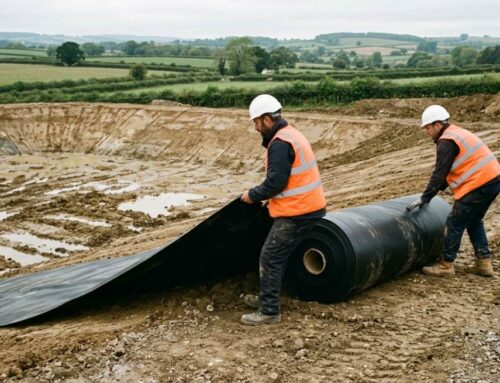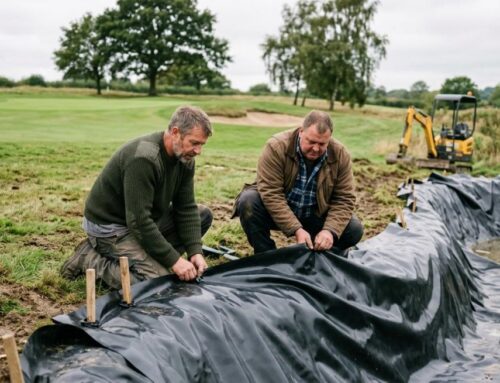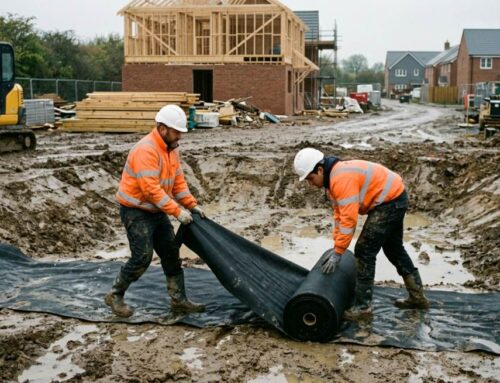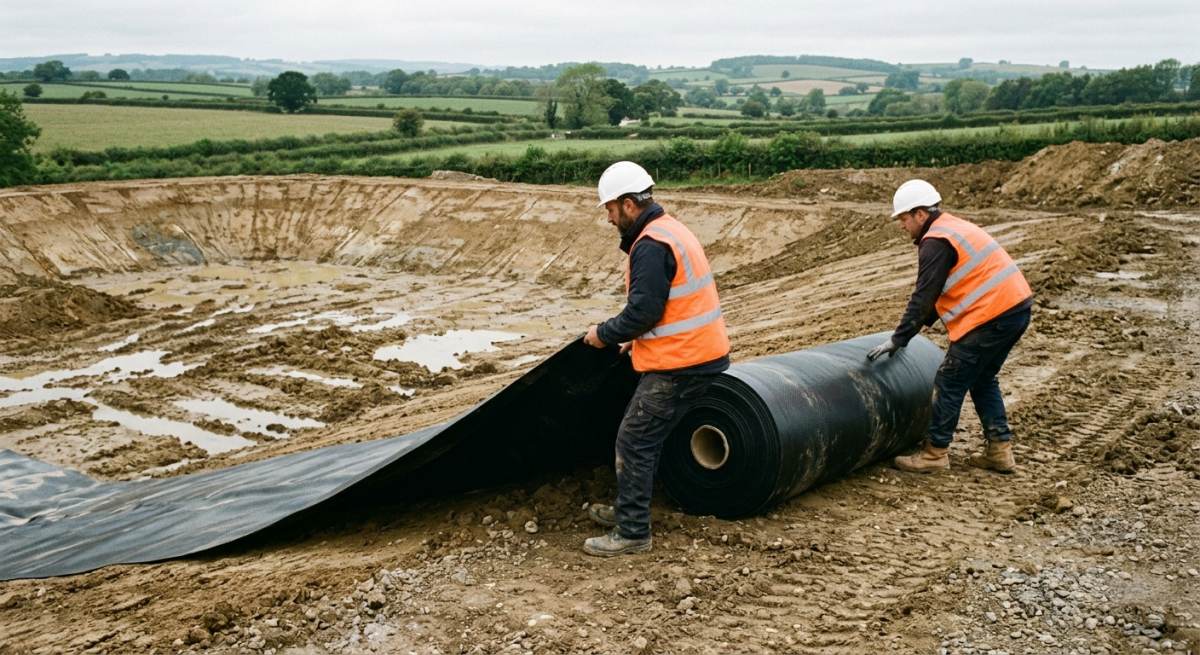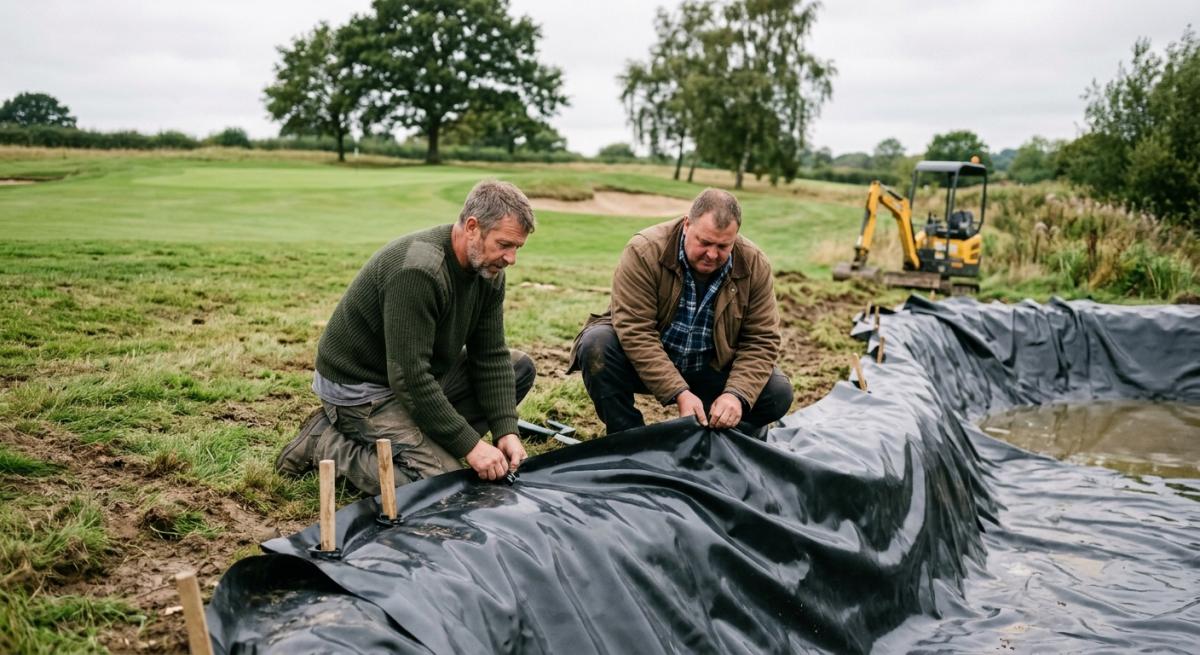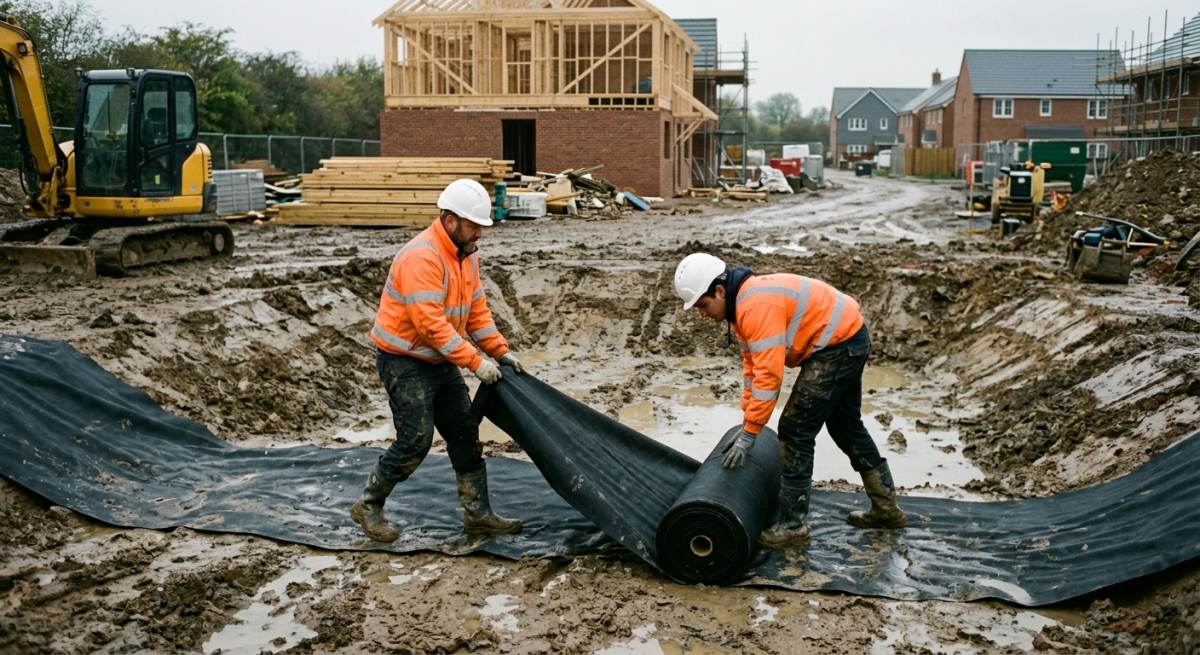
Managing a pristine green fairway requires a reliable supply of water, yet subtle seepage beneath the surface of a golf course pond liner often goes unnoticed for months. When a storage reservoir slowly drains away, course managers face compounding operational expenses that extend far beyond simple resource depletion. Escalating pumping energy costs, damaged turf conditions, and increased stress on mechanical infrastructure all stems from unaddressed irrigation lake water loss. Over my 30 years of experience advising greenkeeping teams across the UK, I have seen how quiet subterranean leaks turn a well-managed budget into a financial headache. This section breaks down the true price of invisible water loss, helping you identify subtle warning signs early on while protecting both your playing surfaces and your bottom line through modern water management solutions.
The True Price of Hidden Leaks
A small, unseen breach in an irrigation lake lining creates a constant drain on your essential water reserves every single day. Greenkeeping teams often spend hours troubleshooting pressure drops or topping up water levels without realising subterranean seepage is the true culprit.
This ongoing wastage inflates pumping energy costs exponentially as your filtration and distribution equipment runs continuously to compensate for the drop in volume. Over a single season, the financial drain compounds into thousands of pounds in unnecessary utility bills and premature machinery wear.
Deploying specialised synthetic liners and advanced detection methods stops silent subsurface drainage before it damages your operational budget. Partnering with experienced professionals ensures your storage facilities remain completely watertight, preserving both precious water reserves and course playing quality for the long-term.
KEY TAKEAWAYS
- Unnoticed irrigation lake water loss severely increases seasonal pumping energy costs by forcing pump stations to run continuously.
- Gradual subterranean seepage compromises fairway quality by reducing available water reserves during crucial dry weather periods.
- Installing a specialised golf course pond liner backed by expert water management solutions prevents long-term structural failure and protects your bottom line.
Table of Contents
- Selecting the right golf course pond liner material for long term success
- Key installation practices that prevent liner failure before it starts
- Early detection methods for pinhole leaks and seam failures
- Protecting exposed liners from bank erosion and maintenance equipment
- Working with experienced water management specialists for lasting peace of mind
- Frequently Asked Questions around Golf Course Pond Liner
Need Specialist Advice on golf course pond liner?
Speak to our technical team today for tailored specifications, regulations compliance, and practical support.
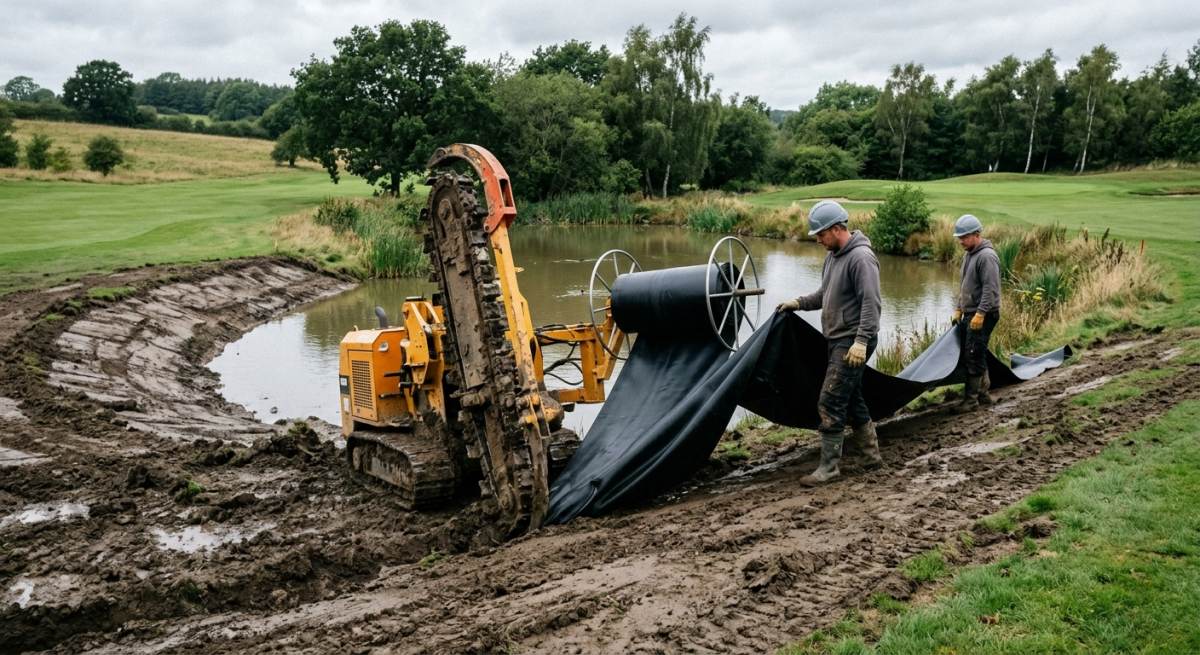
Selecting the right golf course pond liner material for long term success
Choosing the right lining material for your irrigation lake is the single most important decision you will make regarding long-term water retention. Selecting an inappropriate membrane leads to sub-surface seepage, structural instability, and staggering repair bills that strain your course budget.
Evaluating HDPE geomembrane for large capacity lakes
HDPE geomembrane offers exceptional tensile strength and chemical resistance for expansive course reservoirs. Its rigid structure makes it a high-performance choice when covering vast surface areas that demand robust structural integrity.
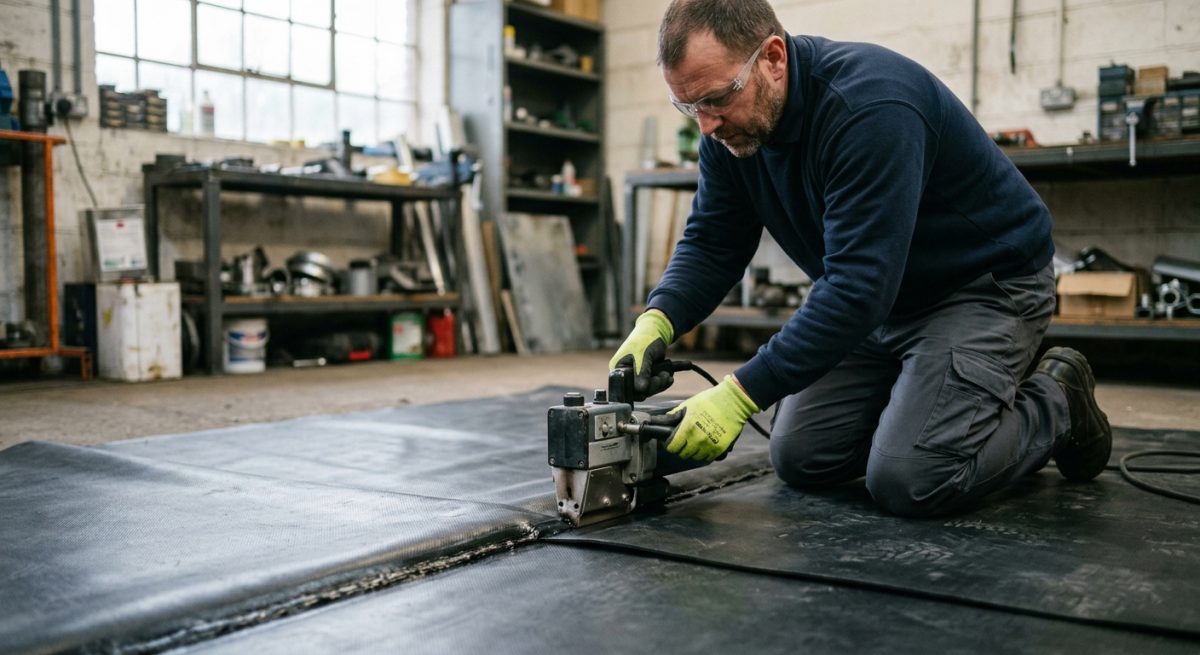
This material excels in large-scale applications where long-term durability is non-negotiable. However, proper installation requires specialised thermal welding equipment to join the heavy sheets together securely. Greenkeepers often choose high-density polyethylene for major storage basins due to its outstanding resistance to environmental stress cracking and groundwater chemicals.
Choosing EPDM rubber liner for complex water features
EPDM rubber liner provides remarkable flexibility and elasticity, making it ideal for irregularly shaped decorative hazards. Its supple nature allows it to conform effortlessly to dramatic contours, tight shelves, and intricate fairway boundaries.
Because this synthetic rubber stretches up to 300% without tearing, it easily accommodates ground movement and severe frost heave during harsh winters. It is exceptionally resilient, offering low-maintenance performance across decades of continuous exposure. When specifying rubber membranes for intricate shapes, keep these 3 steps in mind:
- Measure the total surface area including deep anchor trenches around the perimeter.
- Prepare a smooth sub-grade free from sharp stones, roots, and organic debris.
- Lay a heavy-duty geotextile underlayment to protect the membrane from sub-soil punctures.
Prioritising puncture resistance and UV stability
High puncture resistance and reliable UV stability ensure your liner withstands both installation hazards and intense sunlight exposure. Selecting a material with these twin protections prevents hidden leaks beneath the waterline and premature degradation along exposed banks.
Course maintenance equipment, sharp aggregate, and burrowing wildlife pose constant threats to thin, low-quality plastics. Meanwhile, solar radiation degrades unstabilised polymers within just a few seasons, causing brittle fractures along the water margin. Investing in top-tier membranes treated with carbon black shielding prevents solar breakdown, keeping your water features full and functional for 30 years or more.
| Lining Material Option | Key Physical Properties | Primary Operational Advantage | Maintenance Consideration | Best Suited For |
|---|---|---|---|---|
| EPDM Rubber Liner | High flexibility, 1.1 mm to 1.5 mm thickness, superior UV resistance | Conforms smoothly to complex lake contours and resists ground movement | Requires protective geotextile underlayment on stony substrates | Irregularly shaped feature lakes and decorative water hazards |
| HDPE Geomembrane | Rigid structure, high chemical resistance, 1.0 mm to 2.0 mm thickness | Exceptional puncture resistance and long term seam strength | Demands specialised hot-wedge welding equipment during installation | Large volume primary irrigation storage reservoirs with simple geometry |
| Bentonite Clay Matting | Self-sealing sodium bentonite clay layer sandwiched between geotextiles | Self-heals small punctures naturally upon contact with water | Must remain hydrated and covered with soil to prevent desiccation cracking | Eco-sensitive course areas and sites seeking a natural soil finish |
| Reinforced Polypropylene | Internal scrim reinforcement, lightweight, high dimensional stability | Can be prefabricated into large custom panels to speed up installation | Higher initial material cost compared to standard polyethylene options | Rapid retrofitting projects needing minimal course downtime during winter |
Key installation practices that prevent liner failure before it starts
Proper ground preparation stops sharp stone damage dead in its tracks before your liner ever touches the soil. Spending time on meticulous excavation guarantees a smooth surface that keeps your investment safe for decades.
Soil condition and subgrade preparation
Getting your subgrade preparation spot on prevents underlying rocks from puncturing the primary waterproof membrane. Taking shortcuts during this initial phase almost always leads to hidden tear points and early water loss.
Our specialist installers always recommend a simple sequence to secure the base.
- Clear all root systems, jagged stones, and general debris from the excavation footprint.
- Compact the exposed soil to create a dense, uniform foundation without soft spots.
- Apply a fine sand blinding layer to cushion the base across uneven ground.
Protective geotextile underlayment positioning
Laying down a high-quality protective geotextile underlayment creates a tough buffer between raw earth and the primary lining material. This non-woven fleece layer absorbs heavy ground pressure and stops sharp subsoil objects pushing upward.
Skipping this cushioning material exposes the main barrier to constant friction damage every time water levels shift. Over time, subtle earth movement grinds coarse aggregate against the membrane, creating microscopic pinholes. Fitting a thick geotextile layer spreads these physical loads evenly across the whole basin. It also provides a smooth working surface, allowing installation crews to roll out main panels without snagging the material on rough dirt.
Correct anchor trench design and backfilling
Designing a deep anchor trench keeps your liner firmly locked around the lake perimeter during high winds and heavy rains. Securing the edges properly stops the heavy sheet slipping down the bank slope when water volumes fluctuate.
An effective securing routine requires 3 key steps.
- Dig a neat channel at least 500 mm back from the crest of the pond slope
- Run the liner down into the base of the trench before bringing it up the back wall
- Backfill with clean, well-compacted soil to lock the material permanently in place
Professional seam welding and continuous testing
Flawless panel jointing ensures every single square metre of your storage reservoir stays completely watertight. Applying incorrect heat or pressure during field welding creates weak joints that burst under normal hydraulic pressure.
Over our 30 years of experience, we have learned that double-wedge thermal welding offers the most reliable seal for long-term water containment. Specialist installers run continuous pressure tests along the hollow channel built into these dual seams, proving the seal is air-tight before filling the lake. Investing in rigorous quality checks at the jointing stage protects your greenkeeping budget from continuous topping-up costs later on.
Early detection methods for pinhole leaks and seam failures
Detecting compromised liner integrity before substantial water loss occurs requires a proactive, structured approach to daily maintenance. Catching minor punctures and sub-surface separation early will save your facility thousands of pounds in wasted resources and emergency liner repairs.
Continuous water level monitoring to spot hidden losses
accurate water level monitoring provides the earliest possible warning that your irrigation lake is losing volume below the surface. By tracking daily fluctuation against evaporation rates, course managers can quickly isolate sub-surface seepage from normal environmental loss.
To establish an effective monitoring regime, greens teams should adopt a simple 3-step routine:
- Record baseline water levels at fixed 24-hour intervals using a stilling well or electronic sensor.
- Compare daily losses against local evapotranspiration data supplied by local weather stations.
- Trigger a physical check whenever net water loss exceeds baseline expectations for 2 consecutive days.
When automated sensors highlight unexplained drops, you can immediately focus your investigation on high-stress zones like shelf transitions and inlet structures.
Targeted waterline inspection along high-risk margins
Regular visual waterline inspection allows staff to spot physical liner stress and early seam separation before major failures happen. Sunlight degradation and biological growth heavily affect exposed upper margins, making these edges prime locations for early defects.
Walk the perimeter weekly when water levels are low, paying close attention to welded joins and ballast anchor trenches. Look out for localised soil erosion behind the liner, unravelling joint tape, or small bubbles beneath the membrane sheet. Catching these early indicators prevents minor tears from expanding into catastrophic failures under full hydraulic pressure.
Professional geomembrane seam testing and non-destructive surveys
Specialist geomembrane seam testing pinpoint hidden microscopic voids along overlapping liner panels without damaging the existing material. Professional contractors use spark testing or vacuum box methods to verify joint integrity across extensive surface areas.
- Vacuum box testing draws a suction seal over soapy joint sections to reveal pinhole leaks via instant bubble formation.
- Electric spark testing sends a high-voltage current across non-conductive liners, triggering a clear audible signal when a tear exists.
- Acoustic leak detection surveys utilise sub-surface hydrophones to trace the precise sound of water escaping under pressure.
Investing in these non-destructive surveys gives course managers complete confidence in their lake containment systems. Partnering with experienced installers ensures your long-term water management strategy remains robust, protecting both your turf quality and operational budget.
Protecting exposed liners from bank erosion and maintenance equipment
Exposed geomembrane liners near the water level face constant threats from wave action, shifting soil, and heavy greenkeeping machinery. Securing these vulnerable boundaries requires a thoughtful, multi-layered strategy to ensure long-term water retention across your course.
Installing heavy-duty edge protection systems
Edge protection acts as a physical shield between delicate synthetic membranes and destructive external forces. Installing robust armouring along the waterline prevents wave wash from scouring away bank subgrades and exposing the underlying material.
When setting up proper perimeter defence, course managers should follow this straightforward process:
- Lay a heavy-grade geotextile cushion over the primary membrane to absorb direct impact.
- Position pre-cast concrete block paving or interlocking stone revetments directly over the geotextile layer along the fluctuating waterline.
- Secure the upper termination trench at least 1 metre back from the bank crest to anchor the assembly against soil movement.
This structured barrier prevents wave-induced erosion while offering a solid buffer against accidental strikes from bank-mowers and line-trimmers during routine maintenance.
Preventing mechanical liner tears during routine lake maintenance
Greenkeeping teams can easily puncture exposed pond linings when operating heavy strimmers or clearing debris near the bank edge. Establishing strict operational zones and clear physical markers keeps machinery safely clear of delicate lining materials.
Bankside maintenance requires clear protocols to prevent accidental gouges. Operators must maintain a designated 2-metre buffer zone where heavy ride-on mowers are strictly prohibited. Within this boundary, teams should rely on lightweight hand tools or specialised low-impact offset machinery. Installing high-visibility boundary pegs along the perimeter helps groundstaff identify the exact location of buried anchor trenches, effectively eliminating mechanical liner tears during aggressive weed clearing or turf edging.
Balancing aquatic vegetation placement with structural safety
Strategic planting stabilizes upper soil banks while naturally blending artificial water features into the surrounding fairways. Careful selection and placement of reed beds prevent aggressive root systems from penetrating buried synthetic layers.
Carefully managed aquatic vegetation placement offers natural reinforcement against soil sliding without risking structural integrity. Coir rolls and pre-seeded bio-mats anchored above the high-water mark build a dense root matrix that binds topsoil. This natural barrier diffuses wave energy before it reaches exposed synthetic materials, creating a self-sustaining eco-system that protects your investment.
Safeguarding against aeration equipment damage
Submerged fountains, surface aerators, and weighted air lines present serious snagging risks during installation or seasonal overhauls. Securing underwater hardware prevents heavy cast-iron housings from dragging across and slicing delicate bottom membranes.
Aeration equipment damage typically occurs when anchors shift during high winds or heavy rainfall events. Managers must tether floating units using stainless steel cables anchored to concrete deadmen set far outside the lined perimeter. Grounding pads made from thick sacrificial rubber mats should always sit directly beneath bottom-mounted diffusers, ensuring that vibrations or routine maintenance retrievals never compromise the primary water-retention barrier.
Working with experienced water management specialists for lasting peace of mind
Managing a prestgious golf course requires constant attention to detail, especially when maintaining water features that keep greens healthy. Partnering with a specialist water management provider ensures your irrigation storage remains fully watertight for decades.
Choosing accredited experts with a proven track record
Selecting a dedicated partner with over 30 years experience gives greenkeepers complete confidence in their long-term water storage systems. Experienced specialists understand how local soil chemistry, water pressure, and terrain movement impact subsurface liners.
A seasoned team like Catalogue Engineering brings practical wisdom to every project, preventing costly installation mistakes that cause subtle, continuous seepage. Rather than relying on temporary fixes, working with a specialist water management firm guarantees that your lake infrastructure meets stringent industry standards. Their extensive field knowledge ensures that potential structural weaknesses are identified and corrected long before water levels begin to drop.
Specifying advanced synthetic materials for water barrier installation
Modern geomembrane liners provide superior protection against environmental degradation, ground shifting, and root penetration. Specialist installers carefully assess your site conditions to select the exact material thickness and polymer composition required.
Proper water barrier installation demands precision execution to guarantee total watertight integrity across the entire surface area. Qualified technicians follow a rigorous 3-step quality assurance routine during every fitting:
- Sub-base preparation to clear sharp debris, smooth the subsoil, and lay down a protective geotextile underlayment.
- Dual-track thermal welding of synthetic liner sheets to create high-strength, permanent field seams.
- Non-destructive pressure testing along every joint to confirm a continuous, leak-free seal before fill begins.
This meticulous approach eliminates weak points, ensuring your storage reservoirs hold maximum volume throughout dry summer months without unexpected losses.
Securing proactive maintenance and long-term peace of mind
Routine professional inspections prevent minor surface wear from developing into severe structural failures beneath the waterline. Specialist teams use advanced diagnostic equipment to check liner tension, perimeter anchor trenches, and inlet pipe connections.
By establishing an ongoing service arrangement, course managers protect significant capital investments while maintaining steady irrigation schedules. Professional technicians spot early warning signs such as bank erosion or organic sludge accumulation that might compromise liner performance. This structured oversight allows course management teams to focus on maintaining pristine play conditions, confident that baseline water reserves remain totally secure year after year.
Frequently Asked Questions around Golf Course Pond Liner
Why Is My Golf Course Lake Losing Water So Quickly?
Natural evaporation accounts for a small amount of water loss, but rapid drops usually point to a failure in your lining system. Over time, ground movement, tree roots, or simple wear and tear can create unseen cracks and tears in the base of your lake.
When your water levels plunge unexpectedly, it forces your irrigation pumps to work twice as hard while wasting thousands of litres of treated water. Installing a high-quality flexible liner creates a total seal, keeping your water where it belongs and protecting your budget.
What Is The Most Durable Material For A Golf Course Pond Liner?
High-Density Polyethylene, often called HDPE, and Reinforced Polyethylene are widely considered the gold standard for large water features. These materials offer exceptional resistance to root penetration, sharp stones, and harsh weather conditions while remaining flexible enough to fit your ground contours.
Choosing the right material depends on your soil type and how the lake was constructed. Heavy-duty synthetic rubber like EPDM is also fantastic for smaller features, but reinforced plastics generally offer superior strength for sprawling irrigation reservoirs.
How Long Does A Commercial Golf Pond Liner Typically Last?
A well-installed, high specification membrane will easily last between 20 and 30 years without needing major repairs. Premium materials are treated to resist degradation from ultraviolet light, meaning they will not become brittle even when exposed to sunlight around the water line.
The key to longevity lies in the preparation and installation process. Laying down a thick protective geotextile underlay prevents sharp subsoil stones from puncturing the liner, adding decades to its operational life.
Can A Golf Course Pond Liner Be Repaired Without Replacing The Whole Thing?
Yes, you can easily patch localised damage without the massive expense of replacing the entire membrane. Specialist technicians can use thermal welding or commercial adhesives to bond new patches securely over damaged areas, even underwater in some cases.
Before committing to a full replacement, it is always worth getting a professional leak detection survey. Locating and repairing a few minor tears will restore your lake to full working order at a fraction of the cost.
How Much Does It Cost To Install A New Golf Course Pond Liner?
Costs vary depending on the surface area, depth, and chosen material, but you can generally expect to pay between £15 and £35 per square metre for supply and professional installation. Larger lakes often benefit from economies of scale, bringing the overall price per metre down significantly.
While the initial outlay might seem substantial, it pays for itself very quickly. Preventing thousands of gallons of lost irrigation water saves money on utility bills and reduces pump maintenance almost immediately.
Will A Good Pond Liner Help Improve Overall Water Quality?
Installing a proper barrier prevents muddy subsoil from mixing into your water column, which keeps your lake visually appealing and much cleaner. It stops excess nutrients from leaching out of the surrounding earth, reducing the risk of nasty algae blooms during the warm summer months.
Clean water is much kinder to your irrigation machinery as well. By keeping silt and debris out of the system, your pumps, filters, and sprinkler nozzles will suffer far less clogging and internal wear.
How Do I Protect The Liner From Tree Roots And Burrowing Animals?
The most effective defence is laying a heavy-duty non-woven geotextile underlayment directly beneath the main waterproof membrane. This tough fabric acts as a cushion, absorbing pressure from shifting subsoil and deflecting sharp objects like roots or buried rocks.
For extra peace of mind, you can also add a layer of smooth sand beneath the underlay or place protective netting around the bank edges. Keeping large trees planted at a safe distance from the shoreline prevents aggressive root systems from causing trouble later on.
Can We Install A Golf Course Pond Liner Ourselves To Save Money?
While DIY installation might sound tempting for small garden ponds, large irrigation lakes require specialised equipment and heavy-duty welding techniques. Commercial liners are extremely heavy and require precise seam joining to ensure a completely watertight seal across large distances.
Hiring experienced contractors ensures the site is properly excavated, the subgrade is prepared correctly, and all seams are hot wedge welded. Professional installation prevents costly mistakes and usually comes with a long warranty for total peace of mind.
How Does Water Leakage Affect My Golf Course Machinery?
When water leaks out, silt, mud, and abrasive sediment get drawn into your intake pipes as the water levels drop. This gritty material grinds away at internal pump impellers, clogs fine sprinkler nozzles, and reduces overall water pressure across the entire green.
By maintaining a steady, healthy depth with a reliable liner, your pumps draw clean water from the top of the lake. This simple protection extends the lifespan of your expensive irrigation hardware and keeps your turf looking pristine.
What Is The Best Time Of Year To Reline A Golf Lake?
Late autumn and winter are ideal for undertaking major lake lining projects on a British golf course. Turf growth slows right down during these colder months, meaning your demand for routine course irrigation is at its lowest point of the year.
Working during the off peak season also minimizes disruption for your playing members and visitors. The ground may be damp, but professional teams can quickly drain the feature, complete the installation, and have the lake refilled ready for spring.
Ready to Discuss Your golf course pond liner Project?
Get in touch with our specialists today for detailed site guidance, technical specifications, and a quotation tailored to your requirements.