Managing surface water on modern British construction sites has become a central priority for developers navigating stringent SuDS regulations. As climate patterns shift and heavy rainfall events increase, controlling the peak run-off rate before water enters the local drainage network is essential to prevent downstream flooding. This comprehensive guide examines two leading structural approaches, comparing traditional concrete attenuation tanks against lightweight plastic geocellular crate systems.
Drawing on over 30 years of site experience from Catalogue Engineering, we evaluate how these contrasting solutions perform in terms of structural integrity, installation speed, site footprint, and total project expenditure. Whether you are designing a high-density city development or a commercial logistics hub, understanding the practical trade-offs between precast concrete units and modular plastic crates will ensure your drainage strategy remains fully compliant, durable, and genuinely cost-effective over the long-term.
Problem
Managing surface water on tight UK building plots often creates significant friction between strict drainage compliance and available ground space. Site managers routinely struggle to balance mandatory attenuation volumes against restricted footprints, leading to delays during initial groundworks.
Agitation
Relying on traditional, heavy concrete storage units requires extensive deep excavation, heavy craneage, and prolonged open-trench window periods that disrupt daily site logistics. These prolonged installation schedules inflate plant hire expenses and expose open earthworks to severe weather risks, resulting in unnecessary downtime and escalating budgets.
Solution
Adopting modular geocellular crate systems offers a flexible, highly adaptable alternative that simplifies handling while maintaining full structural performance. These lightweight units allow groundworkers to construct a high-capacity attenuation tank quickly, reducing heavy machinery requirements and ensuring integrated integration with modern SuDS regulations.
KEY TAKEAWAYS
- Geocellular crate systems allow rapid manual assembly, drastically reducing heavy lifting requirements and shortening overall groundworks schedules on busy plots.
- Precast concrete attenuation tanks provide high structural load resistance, making them a well-defined choice under heavy traffic areas, though they require larger installation footprints.
- Selecting the right attenuation tank design ensures full compliance with local surface water management policies while effectively controlling the peak run-off rate across urban sites.
Table of Contents
- Evaluating structural load capacity and site footprint requirements
- Installation logistics and plant equipment considerations
- Gas membrane integration and watertight integrity
- Long term maintenance inspectability and silt management
- Whole life cost comparison and sustainability metrics
- Frequently Asked Questions around Attenuation Tank
Need Specialist Advice on attenuation tank?
Speak to our technical team today for tailored specifications, regulations compliance, and practical support.
Evaluating structural load capacity and site footprint requirements
Structural performance under heavy traffic loading
Modular plastic geocellular crates deliver exceptional compressive strength while providing flexibility across diverse soil profiles. These lightweight units allow engineers to achieve robust structural integrity beneath heavily trafficked zones like highways and lorry parks without the need for massive concrete pours.
To guarantee long-term stability under heavy dynamic loads, site managers should follow a clear three-step assessment:
- Determine the exact site classification using CIRIA C753 guidance to establish maximum vertical and lateral load parameters.
- Select standard modular crates or heavy-duty units based on target cover depths and expected axle weights.
- Apply high-quality geotextiles and geomembranes to create an airtight, fully sealed barrier around the entire crate assembly.
Traditional cast concrete tanks offer rigid structural performance, yet they often suffer from shear cracking when subjected to dynamic ground movement. Geocellular systems distribute point loads across a wide footprint, preventing localised structural failure and ensuring long-term resilience under continuous heavy transport.
Optimising excavation depth and site footprint constraints
Plastic geocellular crate systems drastically reduce total site footprint requirements compared to bulky concrete alternatives. Their impressive 95% void ratio allows project teams to store vastly more stormwater volume within a significantly smaller overall footprint.
Concrete tanks require thick load-bearing walls and oversized base slabs, which drive up total excavation depth and generate vast quantities of spoil. By choosing compact modular crates, developers save valuable space on tight urban sites where existing underground utilities restrict deep groundworks.
Practical installation logistics and ground movement
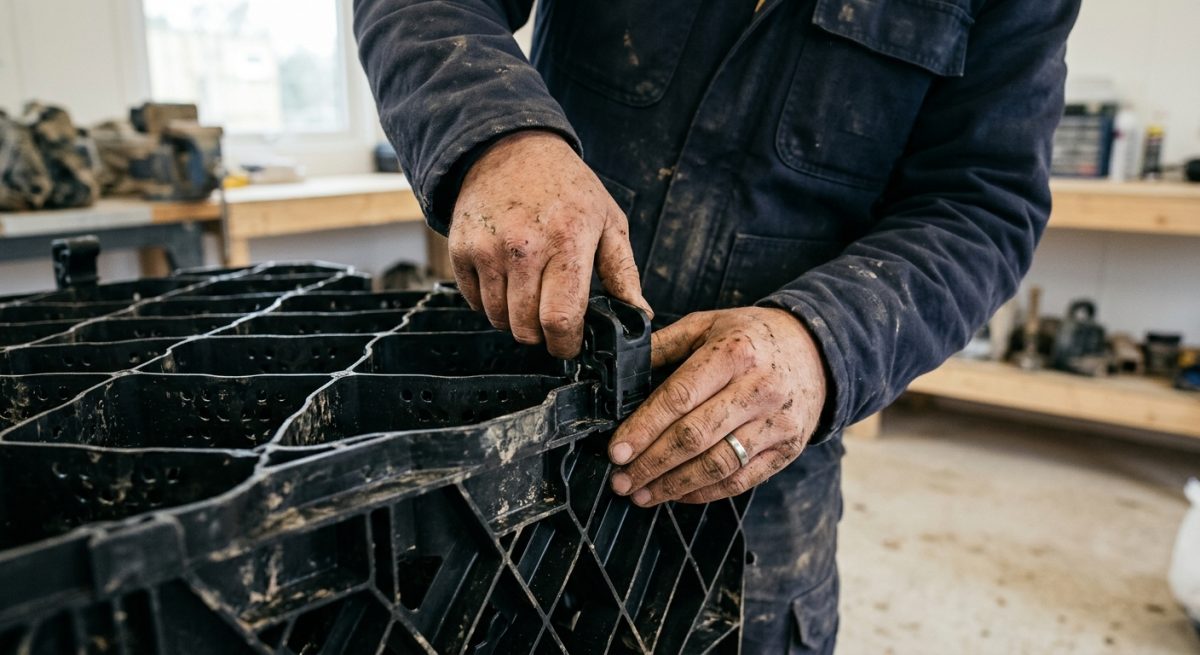
Geocellular crates simplify on-site handling, allowing small teams to manually position units without heavy lifting machinery. This lightweight design accelerates installation programmes while minimising ground disruption across compact working areas.
To maintain structural stability in active construction zones, contractors must adhere to a well-defined installation sequence:
- Prepare a stable, well-compacted aggregate bed to prevent differential settlement under load.
- Interlock individual modular crates securely using designated clips to resist lateral ground pressures.
- Backfill around the perimeter using crushed stone, compacting in thin layers to avoid displacement.
Concrete structures require long curing times, expensive crane hires, and extensive site access corridors. Modular plastic units avoid these operational delays entirely, providing an efficient, cost-effective alternative that fits directly into fast-tracked site schedules.
| System Option | Structural Capability | Installation Speed | Primary Advantage | Best Suited For |
|---|---|---|---|---|
| Standard Plastic Geocellular Crates | Light to medium loading applications suitable for pedestrian zones and car parks | Fast manual assembly without the need for heavy crane plant | Extremely lightweight design reducing delivery vehicles and site handling costs | Housing developments and retail car parks with shallow invert levels |
| Heavy Duty Modular Geocellular Crates | High compressive strength designed for deep burial and heavy traffic loads | Fast interlocking placement with minimal site plant requirements | Flexible modular footprints that adapt easily around existing underground utilities | Logistics hubs, commercial loading bays, and tight urban brownfield sites |
| Precast Concrete Attenuation Tanks | Exceptional structural integrity handling extreme vertical and lateral earth pressures | Slower positioning requiring heavy mobile cranes and specialised lifting crews | Proven long term durability with high resistance to chemical aggressive soils | Major infrastructure projects and sites with high groundwater tables |
| In Situ Cast Concrete Tanks | Maximum engineered strength customised to any structural load requirement | Prolonged installation period due to formwork shuttering and concrete curing times | Bespoke internal chamber design for combined storage and silt management | Complex industrial facilities requiring custom dimensions and integrated pumping stations |
Installation logistics and plant equipment considerations
Navigating site access constraints on cramped UK developments often dictates your choice of attenuation tech long before any ground is broken. Heavy concrete structures demand extensive turning circles and high-capacity plant that can quickly paralyse a tight urban site.
Heavy plant requirements and site access constraints
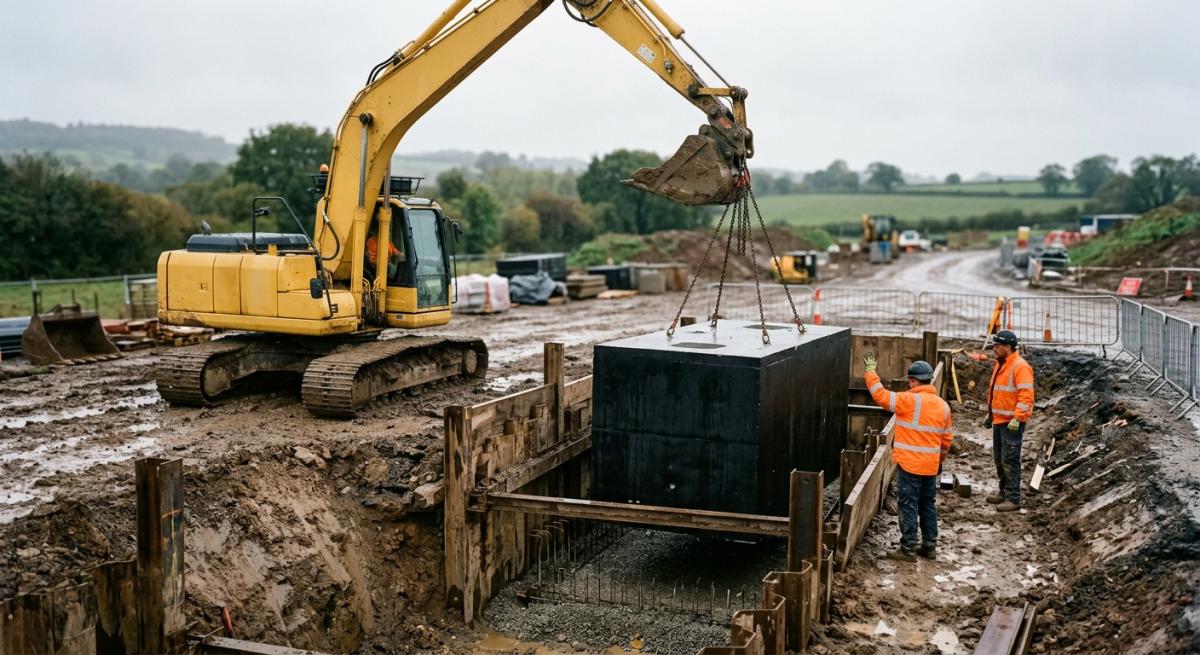
Concrete tanks necessitate heavy lifting equipment and substantial tracked excavators to offload and place massive precast units. Plastic geocellular crate systems offer a far more forgiving footprint because delivery vehicles can be offloaded using standard telehandlers or smaller plant.
When maneuvering around confined urban plots, managing your machinery footprint keeps the rest of the site moving. Here is how plant demands compare on site:
- Concrete installs require 50-tonne mobile cranes, dedicated outrigger mats, and wide-bed articulated lorries.
- Plastic crate deliveries arrive as flat-packed or stacked units on standard curtain-siders that fit into tight loading bays.
- Earthmoving demands drop significantly with crates because shallow excavations reduce spoil volumes and lower local traffic disruption.
Offloading procedures and ground worker safety
Ground workers face markedly lower manual handling risks when handling lightweight modular crates compared to cast or precast concrete units. Safety managers generally prefer the modular approach because it minimises overhead crane operations and reduces pinch-point hazards.
Setting up a safe, high-speed crate installation relies on a simple, methodical site routine:
- Offload palletised crates directly to a clean, dry staging area using a standard site telehandler.
- Position a 2-man crew inside the lined excavation to clip the lightweight units together by hand.
- Wrap the completed core in geotextile and geomembrane materials before immediate backfilling with suitable aggregate.
Excavation stability and installation speed
Achieving maximum installation speed relies heavily on minimizing the time an excavation remains open to unpredictable British weather. Plastic crates clip together rapidly, allowing teams to construct large-volume storage voids in a fraction of the time needed for concrete equivalents.
Because concrete units require curing time or complex structural jointing, the surrounding trench walls must stay open for much longer. Extended exposure increases the risk of side-wall collapse, especially in soft clay or high water table conditions common across the UK. Crate systems let ground workers backfill the trench on the same day, protecting the excavation baseline and keeping overall project timelines on track.
Gas membrane integration and watertight integrity
Ensuring long-term watertight integrity on a busy UK development site requires a complete understanding of how different subterranean structures interact with specialist liner systems. While both options store excess rainwater effectively, the choice between modular plastic units and poured or precast concrete significantly impacts your waterproofing strategy.
Wrapping plastic geocellular crate systems
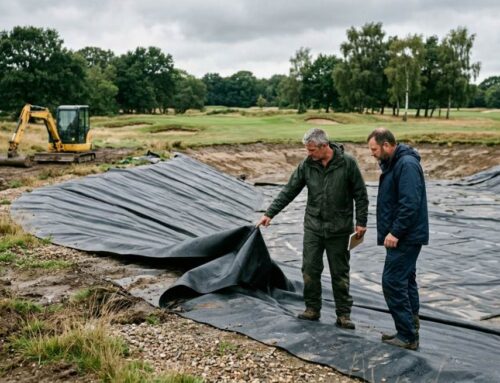
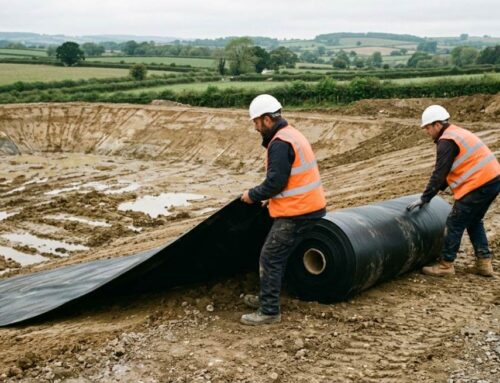
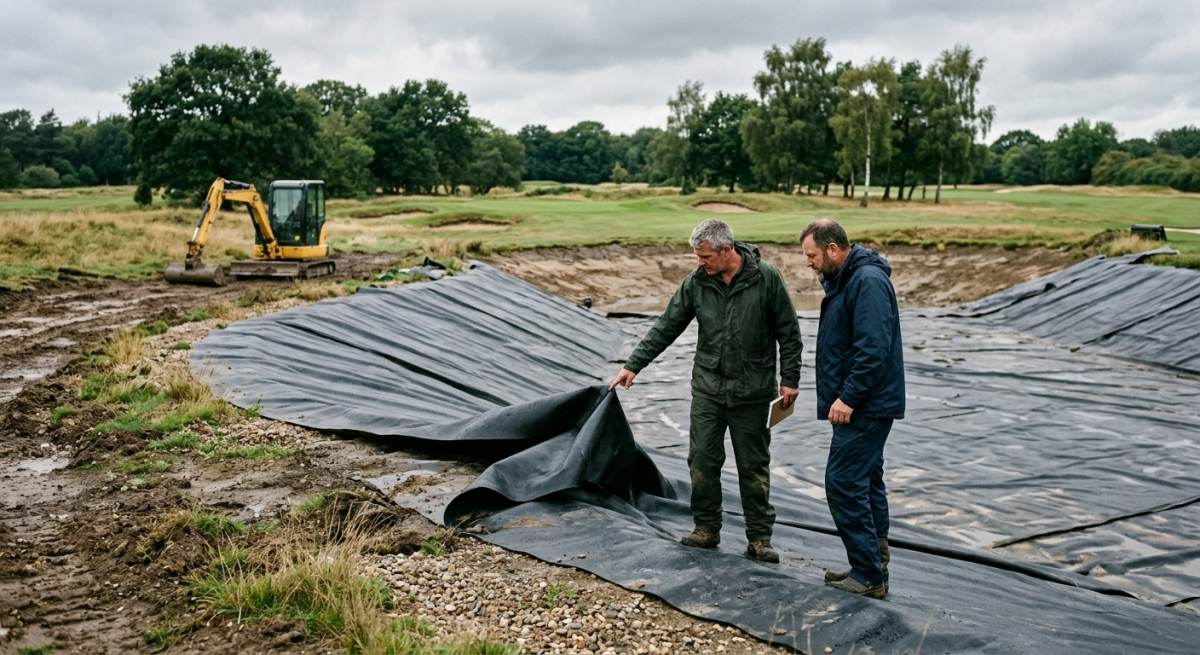
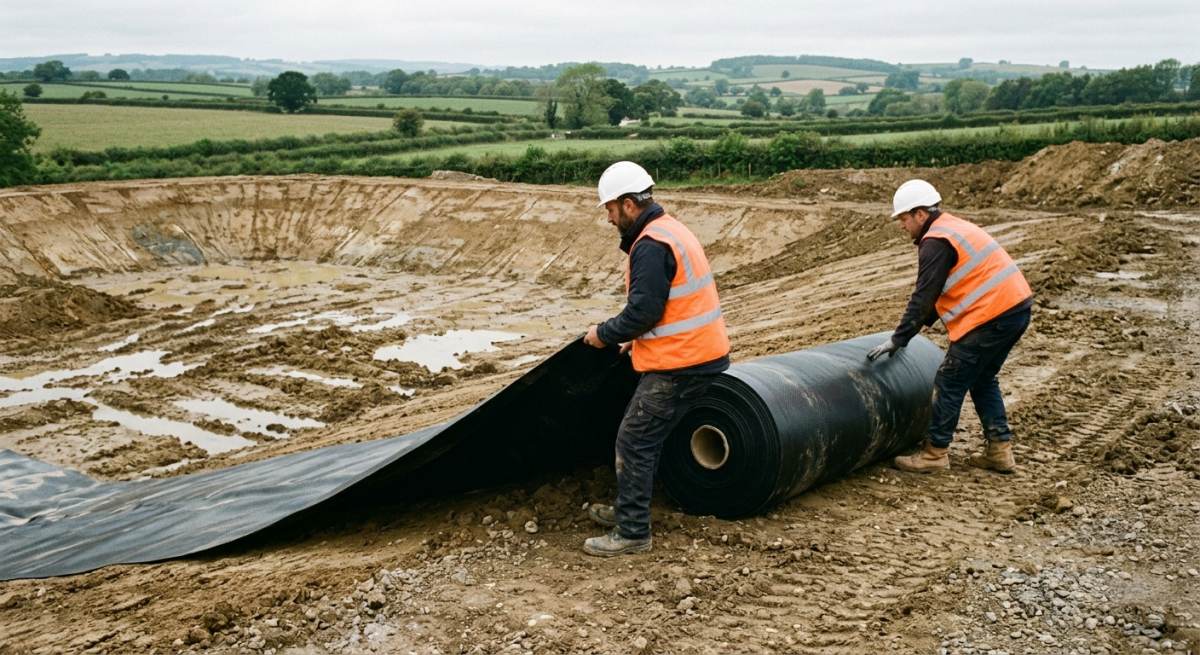
Achieving a fully sealed tank around modular crates relies on creating a continuous, robust envelope around the entire structure. Specialists wrap the polyolefin matrix in an impermeable geomembrane to prevent any unwelcome water ingress or subterranean gas migration.
To guarantee a leak-free installation, site teams follow a precise sequence:
- Lay a heavy-duty protection fleece over the smooth sand-blinding to shield the primary membrane from sharp aggregate puncture points.
- Position the gas barrier protection liner around the perimeter, ensuring generous overlaps along every joint for hot-wedge fusion welding.
- Execute verified double-seam field welds and pressure-test every single seam before backfilling the excavation with clean material.
This detailed process creates a fully sealed underground pocket that offers exceptionally high hydrocarbon resistance on contaminated brownfield sites. Because plastic crate matrices flex slightly under load, the surrounding welded liner absorbs ground movement without compromising its structural bond.
Integrating liners with concrete attenuation structures
Concrete attenuation tanks present a vastly different set of sealing challenges because water barrier systems must bond directly to rigid, heavy surfaces. Ingress usually occurs at construction joints, so engineers must install specialised hydro-expansive waterstops alongside traditional membrane layers.
Unlike lightweight modular crates, concrete units rely on internal coatings or externally applied membrane sheets to maintain watertight integrity. Applying a continuous gas membrane across cold joints or tie-bolt holes requires meticulous surface preparation, as any dust, moisture, or rough aggregate can ruin adhesion. Concrete naturally cracks over time due to thermal expansion and settlement, which places localised stress on the applied membrane layer. If the surrounding soil contains aggressive contaminants, any micro-fissure in the concrete skin risks exposing the internal steel reinforcement to rapid corrosion.
Evaluating risk profiles across both attenuation systems
Choosing between these two approaches often comes down to long-term risk management and total site installation speed. Plastic crate systems wrapped in an impermeable geomembrane eliminate the risk of cracking because the flexible membrane adapts to natural soil settling.
Concrete structures remain popular for heavy-duty load conditions, but their rigid nature makes post-installation leak detection and remediation exceptionally difficult. A pinhole failure in a plastic tank membrane usually remains isolated, whereas water tracking behind a concrete membrane can emerge metres away from the actual breach point. Selecting modular geocellular units with a fully welded, tested liner provides measurable quality assurance before the trench is closed.
Long-term maintenance inspectability and silt management
Selecting the right sustainable drainage solution depends heavily on how easily your team can maintain it over a 30-year operational life. While both options store excess rainwater effectively, their internal layouts create fundamentally different day-to-day clearance challenges.
Navigating internal access corridors for camera surveys
Plastic geocellular crate systems require pre-planned inspection channels to allow remote cameras through the matrix. Without integrated access conduits, sub-surface cameras simply cannot navigate the dense polypropylene lattice.
In contrast, concrete attenuation tanks offer open internal volumes that make camera surveys straightforward. Standard CCTV inspection equipment moves through these solid structures without getting caught on internal pillars. To keep geocellular units running smoothly, engineers must design clear inspection paths from the start.
- Install dedicated access catchpit chambers at all entry points
- Align internal crate channels during the initial site build
- Select high-visibility camera heads designed for narrow plastic voids
Managing heavy sediment build-up over decades
Catchpit chambers and upstream silt traps provide the absolute first line of defence against progressive blockage. Pre-filtering run-off prevents heavy debris from settling deep inside sub-surface storage voids where clearance becomes tricky.
If fine sediment does pass the perimeter controls, concrete tanks handle high-pressure water clearing much better than plastic alternatives. The smooth floor of a concrete chamber allows jetting access tools to sweep settled mud towards a central sump without scouring the structural walls. Plastic crates rely almost entirely on robust upstream filtration because aggressive jetting inside light polypropylene matrices can dislodge geotextile membranes and compromise the perimeter wrap.
Balancing long-term maintenance routines and site access
Concrete systems allow direct engineer access through standard manhole covers for straightforward physical inspections. This structural layout simplifies long-term maintenance, provided site managers follow strict confined-space safety protocols.
Geocellular arrays cannot accommodate physical entry, meaning site teams must rely on remote flushing and camera equipment. This setup reduces direct hazard risks for workers, but it demands strict adherence to upstream maintenance schedules. If an unmaintained catchpit allows silt to pack tightly inside a plastic matrix, clearing the blockage requires costly specialist extraction work. Concrete systems provide a bit more forgiveness against delayed maintenance, though proper pre-filtration remains the best practice for both materials.
Whole life cost comparison and sustainability metrics
Evaluating financial commitments across SuDS infrastructure requires looking well beyond initial purchase orders. While cast concrete has long been considered the traditional benchmark, modern plastic geocellular crate systems offer a compelling financial and environmental case across the complete operational cycle.
Initial capital outlay and haulage logistics
When comparing upfront expenditures, modular plastic units drastically reduce overall site expenditure compared to heavy concrete alternatives. These lightweight units allow contractors to minimise initial purchase commitments while cutting down heavy transport requirements.
The core transport advantages include: 1. Drastically lower transportation costs due to flatpack or high-density stacking, which minimises vehicle movements to site. 2. Reduced offloading machinery demands, allowing standard site plant to handle deliveries safely without hiring specialist heavy cranes. 3. Lower temporary storage footprint, freeing up valuable spatial capacity on tight urban plots.
Carbon footprint and material sustainability
Evaluating embodied carbon reveals a clear environmental contrast between virgin concrete production and recycled polymers. Modern geocellular units constructed from high-grade recycled polypropylene offer a remarkably low carbon profile during manufacturing and transport.
Concrete requires energy-intensive curing processes and heavy aggregate extraction, driving up site carbon metrics before installation even begins. Conversely, polymer systems re-purpose industrial waste streams into durable structural modules. This lower manufacturing impact, combined with fuel savings during haulage, allows developers to meet strict site sustainability targets without compromising hydraulic performance.
Long-term maintenance and structural longevity
Assessing the ongoing operational viability of underground storage requires balancing scheduled cleansing routines against overall material durability. Both options deliver an impressive design life exceeding 50 years when specified and installed by trained specialists.
Concrete structures resist heavy ground movements, yet they remain vulnerable to chemical attack from aggressive groundwater and silt accumulation over time. Modern plastic crates feature integrated access channels designed for high-pressure water jetting and camera surveys. These built-in maintenance pathways ensure silt removal remains straightforward, preserving long-term attenuation capacity without risking structural degradation or requiring intrusive excavations.
Overall life cycle value
Determining true long-term value demands a holistic view of installation speed, earthworks volumes, and structural longevity. Modular plastic systems deliver a cost-effective alternative that reduces overall project expenditure across the entire asset lifespan.
Because geocellular units require shallow excavation depths, contractors extract far less spoil and use significantly less backfill material. Reduced dig volumes translate directly into shorter programme schedules and lower labor expenses. Combined with lightweight handling and simple maintenance access, plastic crate networks provide superior long-term commercial value alongside impressive carbon savings for modern British developments.
Frequently Asked Questions around Attenuation Tanks
What Is An Attenuation Tank And How Does It Work?
An attenuation tank is a underground storage facility designed to capture heavy rainfall and hold it back before releasing it slowly into the local drainage network. Think of it as a giant sponge that stops stormwater from overwhelming our sewers during a sudden downpour.
By collecting surface water runoff from roofs and paved areas, the system holds the volume temporarily. It then uses a flow control device to discharge the water at a safe, controlled rate into a nearby watercourse or public sewer.
Why Do UK Construction Sites Need Attenuation Tanks?
UK construction sites require these tanks to meet strict sustainable drainage regulations and prevent localised flooding in surrounding areas. Planning authorities almost always insist on a robust surface water management strategy before granting full approval for new developments.
When we build on green spaces, we replace natural ground that absorbs rain with hard surfaces like concrete and tarmac. Without a proper tank to manage the resulting runoff, heavy rain would quickly flood nearby roads and property.
How Do Geocellular Crates Compare To Concrete Tanks For Attenuation?
Geocellular crates are lightweight modular plastic units that clip together easily, whereas concrete tanks are heavy, rigid structures made from precast rings or poured on site. Plastic crate systems are generally much faster to install and require smaller plant on site, which can lower your overall labour costs.
Concrete tanks, on the other hand, offer exceptional structural strength and can easily handle heavy traffic loads with minimal cover depth. However, transporting heavy concrete sections to tight urban plots can be tricky, making plastic crates the go-to choice for many modern UK contractors.
What Is The Lifespan Of A Geocellular Crate System?
A high quality geocellular crate system manufactured from virgin or high grade recycled polypropylene will comfortably last for 50 years or more. Manufacturers design these plastic units to withstand long term underground pressure without degrading or collapsing.
To achieve this long lifespan, you must install the crates correctly with the right geotextile wrapping and structural backfill. Proper routine maintenance of the silt traps upstream will also protect the internal space from clogging up over time.
Are Plastic Geocellular Crates Cheaper Than Precast Concrete Tanks?
In terms of pure material and installation costs, geocellular crate systems are usually significantly cheaper than precast concrete tanks. The plastic modules are lightweight, which means cheaper delivery to site and far less heavy machinery required for excavation and positioning.
However, the total project cost always depends on your site conditions and ground cover requirements. If a site has very high groundwater or requires extreme load bearing capabilities, a concrete tank might end up being more cost effective once you factor in specialist engineering needs.
Can You Install Geocellular Attenuation Tanks Under Heavily Trafficked Roads?
Yes, you can safely install geocellular tanks under roads and car parks, provided you select heavy duty crates designed for high load applications. Manufacturers produce specific crate ranges that are engineered to withstand the weight of heavy goods vehicles and continuous traffic.
You must ensure the depth of cover and the surrounding backfill materials match the structural design guidelines. Skimping on the installation spec under a busy roadway risks ground settlement, so following the structural engineer’s drawings is essential.
How Do You Maintain An Underground Attenuation Tank Properly?
You maintain an attenuation tank primarily by keeping sediment out of the main storage area using upstream silt traps and catchpits. Inspecting and clearing these pre-filtration units every 6 to 12 months prevents sand and mud from settling inside the main structure.
Most modern geocellular systems and concrete tanks also include dedicated inspection channels built into the design. This allows maintenance teams to lower CCTV cameras and jetting equipment inside to clear out any debris that manages to sneak through.
What Happens If High Groundwater Levels Are Present On Site?
High groundwater creates a floatation risk for plastic geocellular crates, meaning the empty tank can actually float up out of the ground like a boat. Concrete tanks are much heavier, making them naturally more resistant to hydrostatic uplift forces in wet ground conditions.
If you must use plastic crates where groundwater is high, your structural engineer will need to design an anchoring system or specify a thick concrete slab above the tank. Alternatively, wrapping the system in a sealed geomembrane can help keep water out, though concrete is often the simpler fix here.
How Much Space Do Plastic Crate Systems Take Up Compared To Concrete?
Plastic geocellular crates generally offer a much better void ratio of around 95%, meaning they store more water in a smaller total excavation volume than concrete. Precast concrete tanks have thick walls that take up valuable underground space, requiring a larger physical footprint for the same water volume.
Because crates are modular, you can also shape them to fit awkward site layouts or narrow trenches. This flexibility makes plastic crates ideal for tight UK developments where space below ground is limited by existing utilities.
Do Attenuation Tanks Need A Water Tight Geomembrane Lining?
Yes, attenuation tanks built with geocellular crates require an impermeable geomembrane lining to hold water inside the system until it discharges through the flow control unit. Without this watertight barrier, the collected rainwater would simply soak into the surrounding soil like a soakaway.
Concrete tanks generally do not need an external plastic lining because the engineered concrete sections and sealed joints are naturally watertight. If your goal is strictly to attenuate rather than infiltrate water into the ground, getting the membrane seal right on a plastic system is vital.
Ready to Discuss Your attenuation tank Project?
Get in touch with our specialists today for detailed site guidance, technical specifications, and a quotation tailored to your requirements.