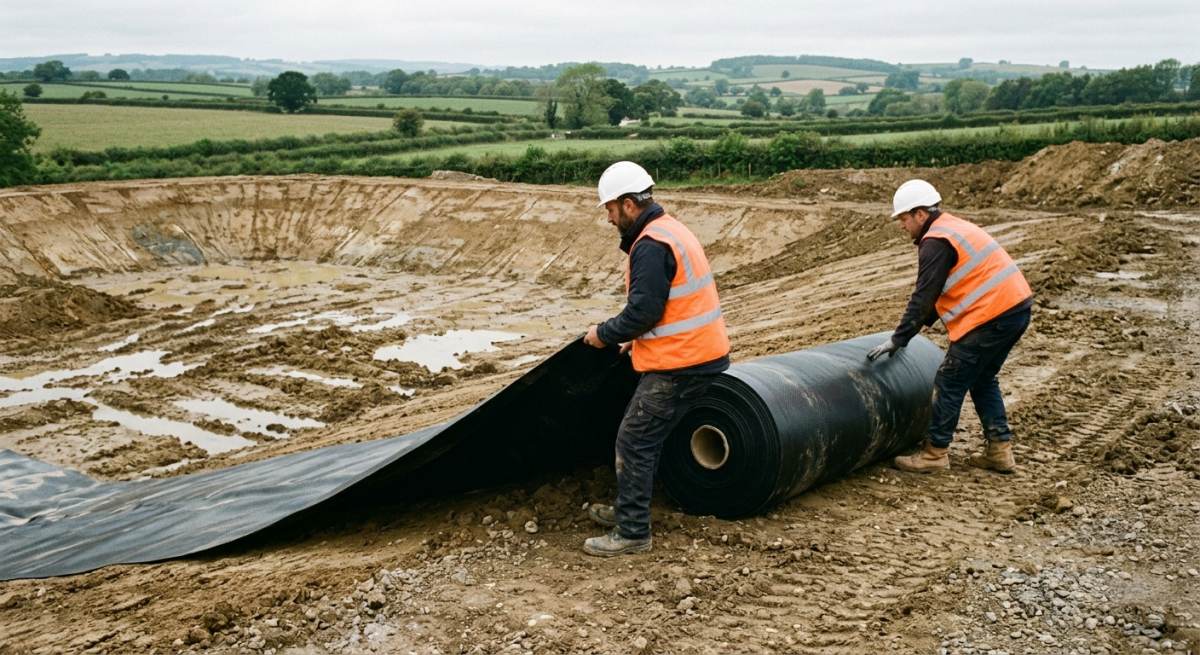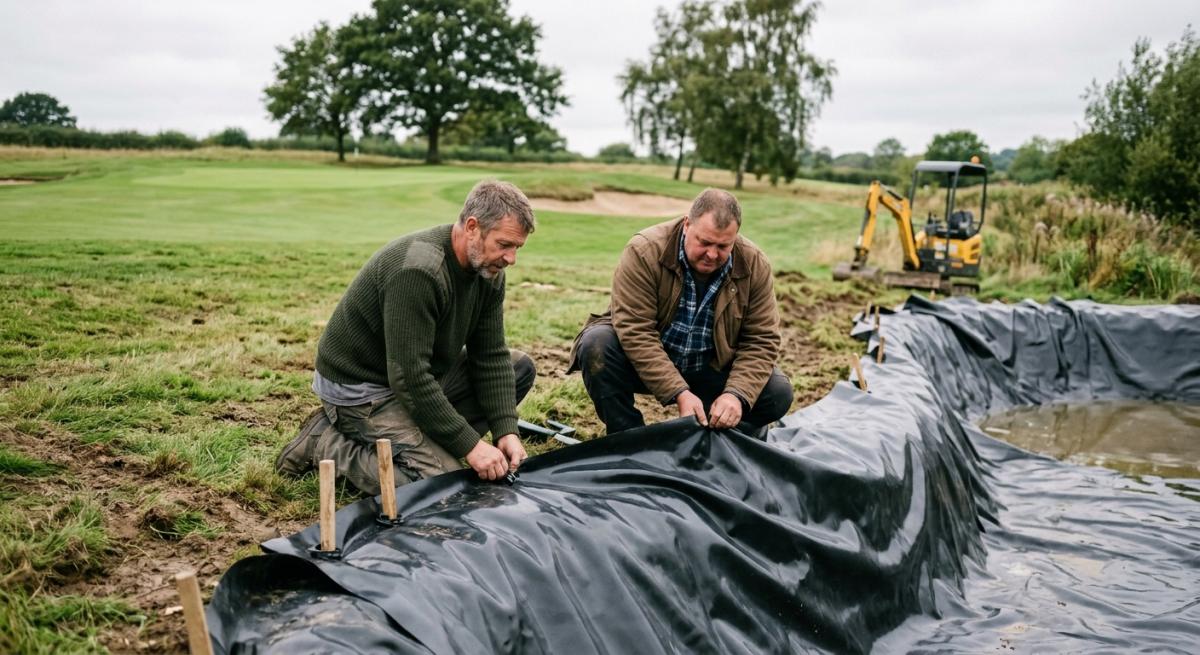
Managing healthy, green turf on a busy course requires a dependable supply of stored water. However, unlined or poorly lined golf course reservoirs often suffer from severe water loss, quiet seepage, and compromised holding capacity. In this comprehensive guide, we examine why subsurface leakage happens and how greenkeepers can identify structural weaknesses before expenses spiral.
Grounded in 30 years of practical trade experience, our guide breaks down the core physics of soil permeability and outlines long-term lining options to secure your water assets. You will discover practical ways to monitor your storage levels, lower your energy consumption, and keep your course in first-class condition throughout the drier summer months.
Unlined golf course reservoirs frequently suffer from subterranean water loss due to naturally high soil permeability. When surface water silently migrates into the surrounding earth, daily irrigation schedules quickly become erratic and unreliable.
This constant, unmeasured loss of volume forces course managers to pump fresh water far more often, driving up electricity bills and placing an unnecessary strain on boreholes. Over time, this quiet drainage can erode structural banks, destabilise nearby playing surfaces, and cost thousands of pounds in wasted resources.
By deploying engineered barrier solutions and carrying out routine assessments of your local seepage rate, you can permanently seal your storage lakes and safeguard your water supply. Modern impermeable liners provide a dependable, long-term barrier that keeps every single litre of water exactly where your turf needs it most.
KEY TAKEAWAYS
- High soil permeability is the primary cause of ongoing water loss in natural reservoirs, quietly draining thousands of litres into the surrounding subsoil every single week.
- A high seepage rate dramatically inflates day-to-day running costs by forcing irrigation pumps to work continuously to maintain basic operating levels.
- Installing a professional liner provides a cost-effective defence that secures your water storage, protects surrounding fairway structures, and supports long-term course health.
Table of Contents
- Why natural clay seals fail over time
- Selecting the right golf course pond liner material
- Essential ground preparation and geotextile underlays
- Professional installation methods for long term water retention
- Integrating aeration and ballast without damaging the membrane
- Ongoing maintenance and leak detection strategies
- Frequently Asked Questions around Golf Course Pond Liner
Need Specialist Advice on golf course pond liner?
Speak to our technical team today for tailored specifications, regulations compliance, and practical support.
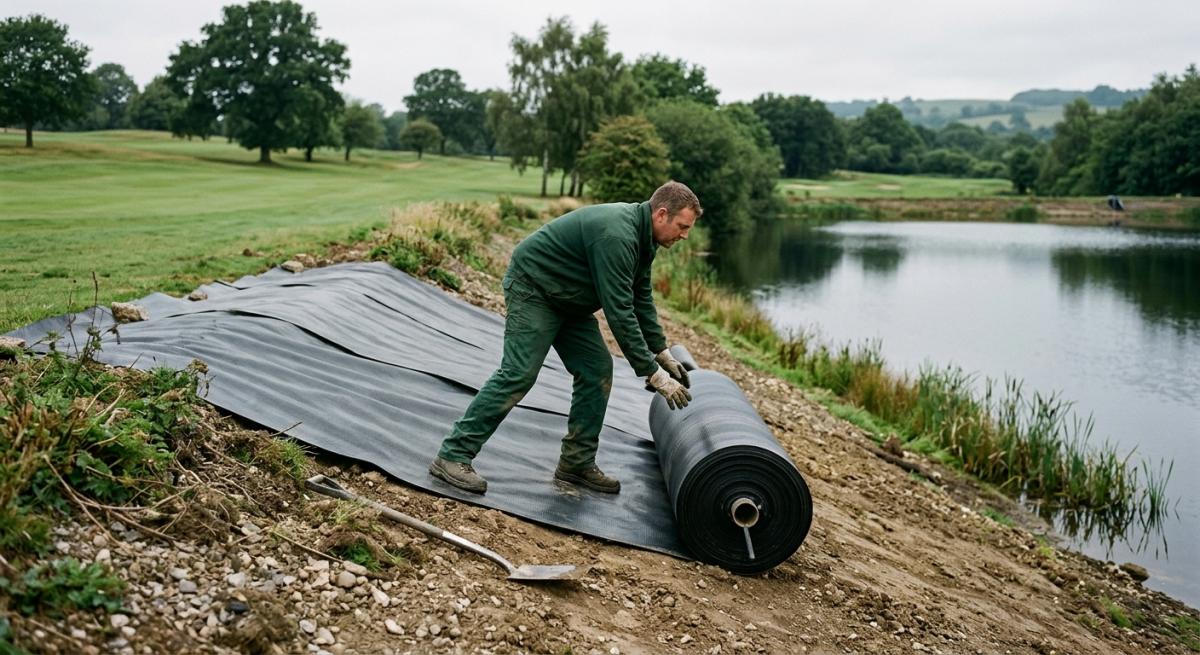
Why natural clay seals fail over time
For decades, greenkeepers across the UK relied on traditional puddle clay to line their irrigation reservoirs and ornamental lakes. Whilst clay liners initially offer a natural barrier, they are inherently unstable dynamic systems that deteriorate under fluctuating environmental conditions.
Wet and dry cycles compromise structural integrity
Repeated changes in water levels cause natural clay barriers to shrink and swell continuously until severe fracturing occurs. This erratic movement inevitably triggers desiccation cracking, which allows water to escape through deep fissures in the subgrade.
When summer heat hits the UK, irrigation demand peaks, causing storage levels to drop rapidly. As the exposed banks dry out, the clay bakes and splits. When the autumn rains finally arrive, these cracks rarely heal fully. Instead, water forces its way through the newly formed pathways, turning a minor fissure into a permanent leakage route.
Soil movement and subterranean shift destroy the seal
Sub-base instability puts immense mechanical stress on rigid clay layers, causing localised fractures to form below the surface. Differential ground settlement across the lake bed pulls the consolidated liner apart, creating hidden paths for seepage.
Unlike modern geosynthetic barriers, compacted clay lacks tensile strength and cannot stretch when the ground beneath it shifts. To evaluate whether your substrate is failing, follow this 3-step inspection routine:
- Monitor daily drop rates by comparing water loss against local evaporation figures.
- Inspect the perimeter banks for soft, boggy ground or unusually lush patches of grass.
- Check the baseline drawdown levels during quiet periods to locate the exact depth of the leak.
If the underlying soil drops even a few centimetres, the clay liner splits open, allowing water to bleed away into the surrounding strata.
Subterranean water movement forces the barrier apart
Unbalanced hydraulic forces beneath the lake bed frequently push natural materials beyond their operational limits. Sub-surface hydrostatic pressure acts directly against the underside of the bed, blowing holes through weakened patches of clay.
When the internal water level in the reservoir drops quickly during peak summer watering routines, the downward force reduces. If the surrounding groundwater table remains high, water pressure from underneath literally lifts and dislodges the clay base. This scouring action washes fine mineral particles out of the matrix, turning what was once a dense barrier into a porous, leaking sponge.
Over a 10 to 15 year period, these combined pressures render natural clay entirely unfit for purpose, leaving course managers with rising water bills and unreliable storage. Moving away from legacy clay solutions in favour of engineered membrane systems is the only long-term way to secure your water assets.
| Lining Material Option | Core Sealing Capability | Primary Advantage | Key Installation Consideration | Best Suited For |
|---|---|---|---|---|
| EPDM Rubber Membrane | Exceptional flexibility with 300 percent elongation capacity | Conforms easily to irregular lake beds and withstands ground movement | Requires protective geotextile underlayment on rocky subgrades | Irregularly shaped irrigation lakes and ornamental feature ponds |
| HDPE Geomembrane | High chemical and ultraviolet resistance with rigid structural strength | Most cost effective solution for covering very large surface areas | Demands specialized hot wedge welding by experienced technicians | Large volume water storage reservoirs with uniform bank slopes |
| Reinforced LLDPE Membrane | Balanced flexibility with internal scrim reinforcement for tear resistance | Resists puncturing from roots and heavy maintenance equipment | Needs careful anchor trenching along steep perimeter banks | High traffic storage holding ponds and exposed water hazards |
| Bentonite Geosynthetic Clay | Self sealing natural clay layer bonded between two geotextiles | Self heals small punctures and presents a natural earth bottom appearance | Must be covered with 300 mm of soil or gravel to maintain hydration pressure | Naturalized course lakes where a synthetic surface cannot be visible |
Selecting the right golf course pond liner material
Choosing the correct lining system forms the foundation of any reliable water management strategy for greenkeepers and course managers. With over 30 years of experience in gas and water management solutions, Catalogue Engineering recommends evaluating raw material durability against specific terrain conditions before placing an order.
Evaluating HDPE geomembrane for large storage volumes
An HDPE geomembrane offers exceptional chemical resistance and high mechanical strength for large irrigation lakes. This robust material provides a cost-effective choice when covering vast surface areas that demand minimal long-term maintenance.
Course managers opting for high-density polyethylene usually follow a simple preparation routine to secure maximum longevity.
- Smooth the subgrade by removing sharp stones and compacting the native soil thoroughly.
- Lay down a heavy-duty geotextile underlayment to shield the primary membrane from below.
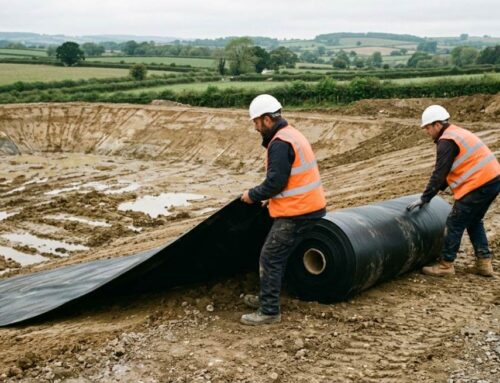
- Deploy the engineered sheets and hire certified specialists to heat-weld every joint.
Because this material is relatively rigid, it performs best across expansive features with uniform bank slopes rather than tight, ornamental hazards.
Selecting EPDM rubber for complex pond shapes
EPDM rubber delivers unmatched flexibility and conforms effortlessly to intricate lake contours and steep shelves. It remains the ideal option for smaller reservoirs where natural aesthetics and rapid fitting take priority over raw tensile strength.
This synthetic elastomer stretches easily around inlet pipes and decorative rockwork without creating structural stress points. Its outstanding UV stability ensures decades of reliable service, even when left exposed along shallow shorelines. While the initial investment runs slightly higher per square metre than rigid plastics, reduced labor overheads during installation often balance the overall budget.
Balancing performance with Flexible Polypropylene and puncture resistance
Flexible Polypropylene provides an excellent middle ground, combining top-tier seam integrity with superior puncture resistance. This versatile material adapts exceptionally well to shifting soils while resisting mechanical damage during routine maintenance work.
Greenkeepers frequently choose this option when site conditions involve rough, stony ground or frequent water level fluctuations. The material boasts a low thermal expansion coefficient, meaning it resists unsightly wrinkling during hot summer spells. Its inherent toughness protects the lining system against invasive root growth and heavy wildlife activity around the perimeter.
Partnering with a specialist installer ensures your chosen lining system delivers decades of leak-free service, safeguarding your precious water reserves across every playing season.
Essential ground preparation and geotextile underlays
Preparing the basin correctly before laying a liner is the single most important step in building a long-lasting irrigation lake. Skimping on earthworks or skipping proper underlays will almost certainly lead to costly liner punctures and hidden water leaks later on.
Achieving optimal subgrade compaction
Proper subgrade compaction creates a dense, stable foundation that supports thousands of tonnes of stored water without shifting. Greenkeepers must ensure the basin floor is completely uniform, smooth, and cleared of all sharp debris before any lining work begins.
To get the ground ready for a high-performance liner, follow these 3 essential steps.
- Clear all large stones, tree roots, and sharp organic material from the excavation zone.
- Grade the slopes to a maximum 1 in 3 incline to ensure long-term bank stability.
- Pass heavy roller equipment over the soil to create a firm, well-defined surface.
Once the subgrade compaction meets technical requirements, the site is ready for protective geotextile layers.
Laying non-woven geotextile as a protective cushioning layer
A heavy-duty non-woven geotextile acts as a vital protective buffer between the rough earth and the primary waterproof membrane. Installing this resilient material prevents angular stones from pushing upward into the flexible lining membrane under heavy hydro-static pressure.
This specialised fabric distributes structural weight evenly across the entire base of the storage pond. As a high-performance cushioning layer, the needle-punched geotextile absorbs ground movement and resists puncture forces from sharp subgrade aggregate. Our team brings over 30 years of field experience to selecting the precise fabric weight needed for varied soil conditions. Laying continuous panels with generous overlaps guarantees complete protection against abrasive substrate rocks across every square metre of the site.
Securing liner edges with robust anchor trenches
Anchor trenches lock the perimeter of both the geotextile and flexible liner firmly into the surrounding ground. Cutting a clean perimeter channel prevents heavy wind uplift during construction and stops slipping along steep storage banks over time.
Excavate a continuous channel around the top edge of the reservoir basin, roughly 500 millimetres wide and deep. Lay the protective underlay and main liner across the base of the trench, then backfill with well-compacted, smooth soil or lean mix concrete. This robust structural hold preserves the integrity of the water management system for decades, protecting your financial investment and safeguarding valuable irrigation reserves.
Professional installation methods for long-term water retention
Securing long-term water retention in golf course reservoirs requires far more than just laying down a plastic sheet and hoping for the best. Proper sub-base preparation combined with expert fitting ensures your storage lakes remain full throughout the dry summer months.
Sub-base preparation and smooth compaction
Getting the ground conditions right before lining is the most effective way to protect your investment. Skipping this initial step almost always leads to costly structural punctures and premature liner failure down the line.
To guarantee a stable foundation, follow these 3 steps:
- Clear all sharp stones, roots, and debris from the excavated basin floor.
- Lay down a high-density cushioning geotextile layer to protect against ground movement.
- Compact the underlying soil to create a uniform, smooth surface without any soft spots.
Taking the time to prepare the base correctly creates a dependable anchor for the heavy waterproof barrier above it.
Thermal fusion welding for watertight seams
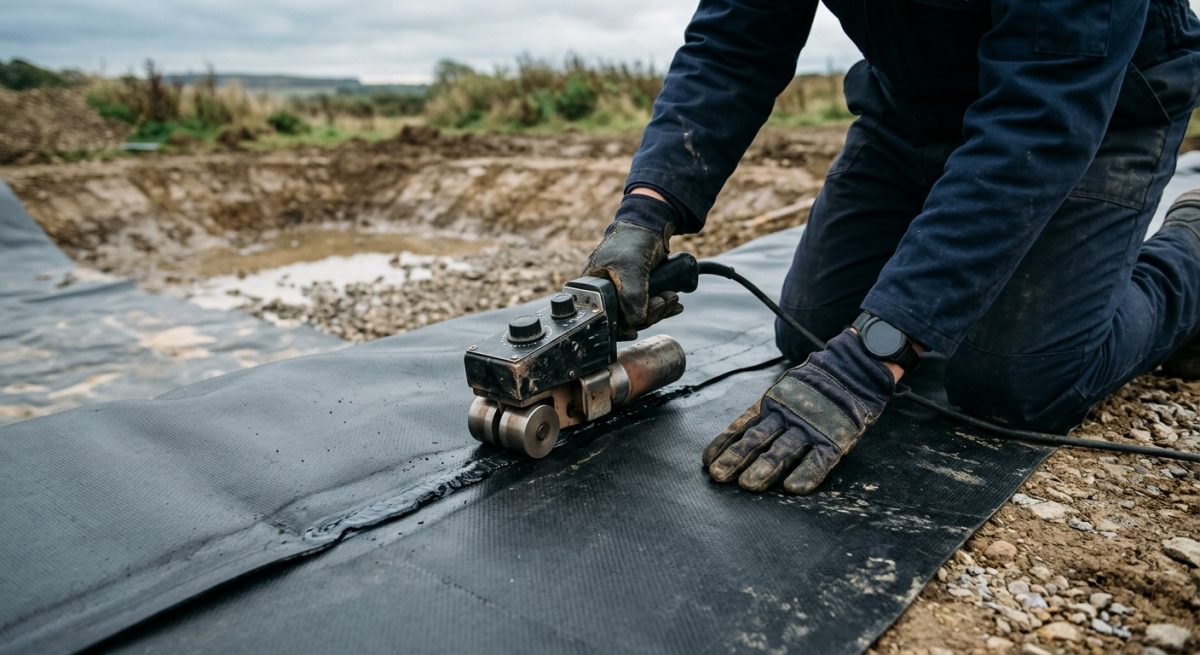
Thermal fusion welding joins individual geomembrane panels into a single, continuous watertight sheet across the entire lake bed. This specialised heat-treatment method melts the overlapping edges together at a molecular level to prevent seepage.
Our specialist installers rely on automated dual-track wedge welders to execute these long seams efficiently across massive surface areas. By applying precise temperatures and constant pressure, the join actually becomes stronger than the surrounding material itself. This robust joining approach prevents water escaping through weak joints, keeping your course green and your water bills manageable.
Rigorous weld testing and quality assurance
Comprehensive testing of every joined seam guarantees that your reservoir remains completely leak-free before any water enters the basin. Rigorous quality control measures catch tiny imperfections that might otherwise go unnoticed during a visual inspection.
Our team carries out non-destructive air-pressure testing along the entire length of the double-wedge welded seams. By pumping compressed air into the central channel created during the join, we can monitor pressure drops over a set timeframe to confirm an airtight seal. Documenting this complete quality assurance process gives course managers absolute confidence that their water storage facility will perform reliably for 30 years or more.
Integrating aeration and ballast without damaging the membrane
Preventing costly water loss through a geomembrane lining system requires a carefully balanced approach to retrofitting underwater equipment. When greenkeeping teams introduce heavy ballast piping or high-output diffused aeration units, the risk of mechanical damage to the delicate synthetic barrier increases significantly.
Deploying weighted diffusers without puncturing the lining
Diffused aeration systems require heavy anchors to remain firmly on the lake bed, which can easily scuff fragile membrane surfaces during installation. Placing heavy-duty sacrificial geotextile underlay pads directly beneath each anchor point absorbs localised pressure and prevents abrasions.
To safely position submerged aeration equipment, follow this proven installation routine:
- Map out the lake bed using precise boat-based sonar to locate level positioning zones away from deep structural slopes.
- Float the pre-assembled diffuser frame out into position using temporary surface buoys to avoid dragging equipment across the floor.
- Lower the unit slowly onto a pre-installed 500gsm non-woven geotextile protection mat using controlled winch lines.
Securing ballast piping along steep storage slopes
Ballast piping holds sinking air lines and sub-surface structures in position, but shifting pipes can cause severe friction tears on side slopes. Utilizing self-weighted, smooth-profile hose runs eliminates the need for aggressive concrete anchor blocks along the banks.
If heavy anchors are unavoidable, always wrap concrete weights in thick protective rubber sleeves. This soft outer cushion prevents hard edges from grinding into the lining when water levels rise and fall during peak irrigation seasons.
Using protective soil cover to cushion underwater infrastructure
A thick layer of protective soil cover acts as an excellent natural shield between heavy water management hardware and the underlying geomembrane. Placing 300mm of clean, washed aggregate over a secondary geotextile cushion spreads point loads evenly across the entire base of the reservoir.
This barrier layer allows greenkeepers to adjust weighted lines without risking direct contact with the primary seal. It also shields the polymer membrane from harmful solar rays and accidental damage from floating debris, extending the operational lifespan of the installation by up to 15 years.
Ongoing maintenance and leak detection strategies
Maintaining a healthy water supply on a golf course requires constant vigil over your storage infrastructure. Catching a minor tear or structural shift early prevents thousands of litres of stored water from seeping away quietly under your feet.
Proactive water level monitoring techniques
Automated tracking systems provide an instant window into the daily performance of your storage basin. Installing smart sensors allows greenkeepers to establish baseline evaporative rates against true structural seepage.
By pairing modern digital pressure transducers with local weather data, managers can isolate genuine sub-surface losses from natural atmospheric evaporation. A robust monitoring regime relies on 3 straightforward steps:
- Install high-precision ultrasonic sensors at key inlets and outlets to measure static head pressure.
- Link sensor outputs to a centralised data logger to plot automated decay curves during quiet overnight periods.
- Set immediate automated alerts for unexpected drops that exceed typical seasonal loss patterns.
This data-driven approach removes guesswork, helping turf teams spot subtle subterranean leaks before catastrophic embankment failure occurs.
Advanced geophysical leak location surveys
Geophysical testing methods pinpoint invisible liner breaches without draining your valuable water reserves. These non-destructive specialist surveys map electrical currents across wet synthetic membranes to locate pinpoint punctures.
Because water acts as a conductor, sending a low-voltage electrical current through the reservoir highlights precise escape paths where the liquid contacts the earth beneath. Turf managers should schedule these surveys under a few clear conditions:
- Prioritise testing immediately after heavy bank-clearing works or structural sediment removal.
- Conduct a full survey every 3 to 5 years as part of a formal asset management plan.
- Deploy mobile probe units whenever raw monitoring data suggests an unexplained volumetric decline.
Engaging experienced contractors for precise electrical tracking prevents unnecessary excavation, preserving surrounding playing surfaces while protecting your capital investment.
Routine visual inspections and preventative maintenance
Structured physical walkovers reveal early signs of liner stress, bank erosion, and failing sealants long before major leaks develop. Catching minor edge tears during weekly perimeter strolls keeps minor repairs simple and inexpensive.
Ground staff must check high-risk zones where mechanical stresses concentrate, such as pipe penetrations, anchor trenches, and emergency spillways. Effective preventative maintenance demands careful focus on key physical markers:
- Check liner fixings around concrete headwalls for movement, cracking, or sun damage.
- Inspect waterlines for unusual weed growth, which often indicates nutrient-rich soil saturation behind the membrane.
- Clear heavy debris and deep-rooted vegetation from perimeter slopes to avoid root-puncture risks.
Combining routine eyes-on checks with modern tracking technology guarantees long-term structural security for your storage lakes, keeping your course lush and playable throughout dry summers.
Frequently Asked Questions around Golf Course Pond Liner
Why Do Golf Course Lakes Lose So Much Water?
Golf course lakes lose water primarily through natural soil seepage and evaporation. Without a proper physical barrier, water simply drains away into the underlying earth, which can lead to thousands of litres lost every single day. Factors like hot weather, strong winds, and porous soil types like sand or gravel will make this water loss significantly worse. Installing a high-quality lining system creates an impermeable barrier that keeps your irrigation storage exactly where you need it.
What Is The Best Material For A Golf Course Pond Liner?
High Density Polyethylene and Flexible Polypropylene are generally considered the finest materials for lining large golf course reservoirs. These synthetic membranes are exceptionally tough, highly resistant to ultraviolet light, and flexible enough to cope with ground movement over time. Choosing between them usually comes down to your site conditions, as some materials handle steep banks and complex lake shapes better than others. A good specialist will help you select the exact material to match your course budget and terrain.
How Long Does A Commercial Golf Pond Liner Typically Last?
A properly installed, high specification pond liner will easily last between 20 and 30 years, and often much longer. Modern heavy-duty materials are engineered to withstand extreme weather, continuous submersions, and ground shifting without cracking or deteriorating. You can also extend the life of your liner by keeping it covered with water or a layer of soil, which protects the material from direct sunlight and mechanical damage.
Can We Install A New Liner Without Destroying The Surrounding Turf?
Yes, professional installation teams can lay a new liner with minimal disturbance to your fairways and greens. Modern installers use specialised light machinery and temporary ground protection mats to transport heavy rolls of membrane across the course without churning up the grass. By planning the access routes carefully and working during dry spells or the off-season, you can complete the project while keeping the course open and looking pristine.
How Much Does It Cost To Line A Golf Course Lake?
Lining a standard golf course reservoir typically costs between £15 and £35 per square metre, which includes both the supply of materials and professional installation. The final price depends heavily on the overall size of the water feature, the chosen membrane thickness, and how much ground preparation work is needed before laying the fabric. While it represents a noticeable upfront investment, most greenkeepers find the liner pays for itself quite quickly through reduced mains water bills and lower pumping costs.
How Do You Protect A Pond Liner From Plant Roots and Stones?
You protect the primary waterproof liner by laying a heavy-duty protective geotextile underlay directly onto the ground before installing the membrane. This soft, dense felt cushion acts as a protective shield against sharp stones, flint, and aggressive root systems that might otherwise puncture the main barrier from below. In areas with particularly aggressive vegetation like reeds, an extra layer of puncture-resistant matting or a smooth sand bed is added for extra peace of mind.
What Is The Difference Between EPDM and HDPE Liners?
EPDM is a highly flexible synthetic rubber that molds easily to complex shapes, whereas HDPE is a stiffer, exceptionally strong plastic membrane that offers superior chemical and tear resistance. Because HDPE comes in very wide rolls and features fantastic seam strength when welded, it is often the preferred choice for massive, simple irrigation reservoirs. EPDM is brilliant for smaller, decorative features around the clubhouse where you need to contour around tight bends, rocks, and shallow margins.
How Do You Fix A Leak In An Existing Golf Pond Liner?
Fixing a leak involves identifying the damaged area, cleaning the exposed membrane, and heat welding or chemically bonding a matching patch over the hole. Specialist underwater repair kits exist for small punctures, but draining the lake slightly to expose the problem area usually yields the most reliable long-term repair. If your liner is quite old and showing multiple cracks, patching might only buy you a little time before a full replacement becomes necessary.
Will A Pond Liner Help Improve Our Overall Water Quality?
Yes, installing a liner significantly improves water quality by separating your stored irrigation water from the surrounding groundwater and mud. Unlined ponds often become muddy and full of suspended solids, which can clog up expensive pump sets and sprinkler nozzles across your irrigation network. A lined lake stays much clearer, reducing wear and tear on your pumping systems and keeping your turf grass healthier when watered.
Do We Need Planning Permission To Line An Existing Lake?
In most cases, relining an existing golf course reservoir does not require formal planning permission as it counts as routine maintenance work. However, if you plan to expand the surface area, significantly alter the surrounding landscape, or dig a brand new lake from scratch, you will almost certainly need to consult your local planning authority. It is always wise to check with your local council and the Environment Agency before starting any major earthworks on the course.
Ready to Discuss Your golf course pond liner Project?
Get in touch with our specialists today for detailed site guidance, technical specifications, and a quotation tailored to your requirements.