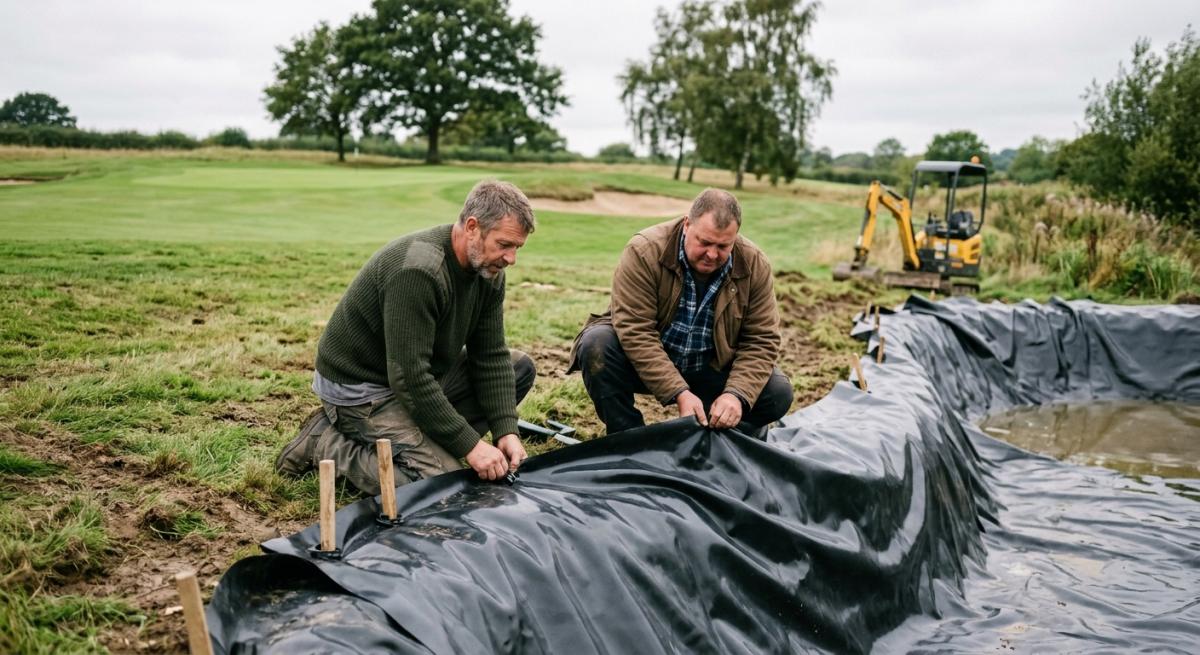
Managing water features across a golf course requires year-round attention, but the arrival of severe winter weather brings distinct physical challenges for sub-surface infrastructure. As temperatures plunge, water trapped within the surrounding soil freezes and expands, exerting immense pressure on your golf course pond liner. Without robust preparation, ice sheet formation and frost heave can easily stretch or puncture an HDPE geomembrane, leading to silent leaks that manifest only when spring arrives. Drawing upon over 30 years of specialist experience in gas and water management solutions, Catalogue Engineering provides practical advice to safeguard your water assets during prolonged cold spells. In this guide, we break down the mechanics of winter damage, explore how thermal expansion affects different materials, and share proven maintenance strategies to keep your water retention systems performing reliably season after season.
Managing golf course water features through harsh winter conditions presents a severe headache for greenkeepers and course managers across the UK. Ground movement combined with thick ice accumulation routinely threatens the integrity of synthetic containment systems.
Ignoring sub-zero threats often results in structural tearing, severe sub-grade erosion, and catastrophic water loss once the winter thaw begins. These preventable failures lead to costly emergency repairs, disrupted play schedules, and unnecessary operational expense for the club.
Implementing proactive water management techniques and selecting robust materials engineered for thermal expansion ensures complete protection against freezing hazards. Adopting long-term winter care protocols preserves your infrastructure cleanly and sustainably, safeguarding both your budget and your course aesthetics.
KEY TAKEAWAYS
- Ground freezing causes frost heave, pushing soil upward and placing immense mechanical stress on the underside of a golf course pond liner.
- Rapid thermal expansion and contraction cycles degrade inferior materials, making a flexible HDPE geomembrane the preferred choice for long-term cold resistance.
- Maintaining appropriate water levels throughout winter counteracts ice pressure and protects vulnerable bank slopes from structural displacement.
Table of Contents
- Essential Autumn Inspections Before the First Hard Frost
- Managing Water Levels to Protect Subgrades and Liners
- Preventing Deep Freezing and Ice Sheet Movement
- Protecting Exposed Edge Details and Feature Liners
- Safe Ice Removal Practices and Emergency Winter Repairs
- Spring Thaw Protocol for Long Term Performance
- Frequently Asked Questions around Golf Course Pond Liner
Need Specialist Advice on golf course pond liner?
Speak to our technical team today for tailored specifications, regulations compliance, and practical support.
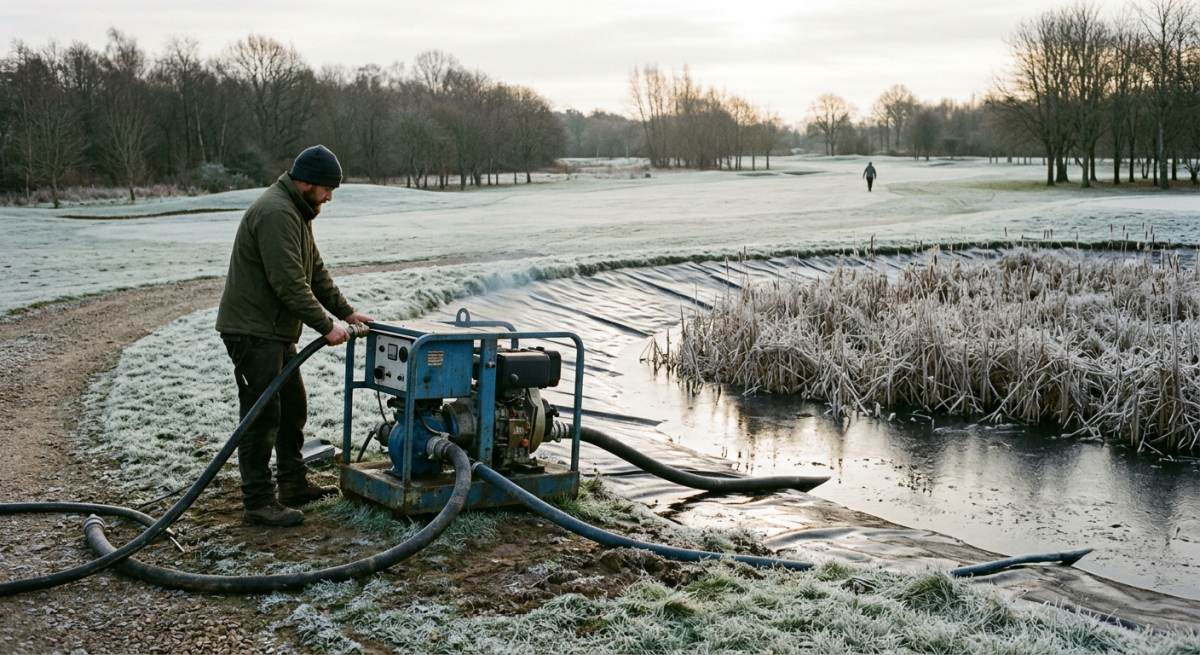
Essential Autumn Inspections Before the First Hard Frost
Carrying out thorough autumn checks before the ground freezes solid is the single most effective way to safeguard your water feature. Taking time to assess your water management systems now prevents minor structural defects from turning into costly winter failures.
Inspecting perimeter anchor trenches and shoreline edges
Checking where your liner anchors into the surrounding soil ensures the entire lining system stays firmly in place during heavy freeze-thaw cycles. Loose soil or exposed liner edges allow groundwater to creep underneath, which causes hydrostatic pressure and severe lifting once temperatures plummet.
To complete a robust shoreline assessment, follow this simple 3-step routine
- Walk the entire perimeter to spot any soil erosion, displaced gravel, or pulled liner edges.
- Compact loose backfill soil around the anchor trenches to secure the material against winter winds.
- Clear away decaying vegetation and sharp debris that could puncture exposed membrane sections.
By keeping the perimeter secure, specialist installers can ensure your pond retains its structural balance all season long.
Assessing seam integrity and surface flexibility
Checking every joint and seam across the exposed liner prevents hidden splits from opening up under ice pressure. Cold weather causes synthetic membranes to contract, putting immense physical stress on welded seams and stress points.
You should pay close attention to high-risk areas like shelf transitions, corners, and regions with heavy foot traffic. Inspecting these stress zones allows you to catch fine cracks or minor seal separations long before sub-zero temperatures arrive. If you discover any lifted edges or compromised joints, arrange immediate repairs using specialised cold-weather adhesives or professional heat welding. Early intervention protects the overall strength of your installation and keeps the underlying substrate completely dry.
Evaluating pipe penetrations and structural inlets
Inspecting the seals around pipes, bottom drains, and biological filters ensures water cannot seep behind the barrier. Ice expansion around rigid pipe fittings often causes minute gaps to widen into major leak points.
Examine all mechanical clamps, pipe boots, and elastomeric seals for sign of wear or UV damage. Clean out accumulated leaves and organic silt around inlet grates so water flows freely without creating unnecessary pressure spots. If you notice brittle rubber seals or loose fitting bands, replace them immediately to guarantee a completely watertight seal before the frost sets in.
| Protection Method | Primary Mechanism | Liner Safety Benefit | Operational Consideration | Best Suited For |
|---|---|---|---|---|
| Subsurface De-icing Aerators | Circulates warmer bottom water to the surface to prevent ice sheet formation | Eliminates expanding ice pressure against margins and protects exposed flexible membrane liners | Requires a reliable electrical supply and routine winter compressor maintenance | Deep water hazards and main irrigation storage reservoirs |
| Water Level Elevation Management | Maintains high water levels so ice forms well above the shallow liner shelf | Prevents sharp surface ice from gouging or tearing the liner along sloping banks | Demands careful monitoring of rainfall levels and overflow drains throughout late autumn | Shallow feature ponds and aesthetic water hazards near greens |
| Floating Expansion Buffers | Absorbs inward physical pressure as surface water freezes and expands | Reduces lateral stress on perimeter anchor trenches and rigid liner edges | Must be tethered securely to prevent drifting into pump intakes during high winds | Smaller formal water features and steep-sided concrete or hybrid ponds |
| Protective Non-Woven Underlay Overlays | Provides a heavy geotextile barrier over exposed liner margins above the frost line | Shields membrane from sharp ice edges puncture risks and winter wildlife damage | Requires seasonal installation and removal along visible or unballasted pond edges | Exposed EPDM or FPP liners with shallow shelf transitions |
Managing Water Levels to Protect Subgrades and Liners
Maintaining correct water volumes throughout the colder months is the most effective way to safeguard your golf course feature. When winter temperatures plummet, your pond liner relies heavily on the surrounding water volume to remain stable and intact.
Maintaining proper ballast to counter groundwater movement
Sustaining an adequate water depth provides essential weight to keep your flexible membrane firmly anchored against underlying forces. Without this protective ballast, rising groundwater during wet winter spells creates immense hydrostatic pressure that causes bottom liners to balloon upward.
When managing seasonal pond volumes, our site teams always recommend following a 3-step winter drawdown protocol to keep your subgrade stability intact:
- Lower the water level by no more than 300 mm to protect sensitive marginal planting while retaining sufficient downward weight. 2. Monitor groundwater monitoring wells around the perimeter to ensure external water tables remain below your internal water line. 3. Lock off automated top-up valves to prevent unexpected overfilling during sudden winter downpours.
Preventing subgrade freezing through controlled depth management
Keeping a minimum 1 metre depth of water prevents cold air temperatures from penetrating into the soil subgrade below your liner. If frost reaches a saturated subgrade, expanding ice crystals cause frost heave, displacing the underlying soil and stretching the synthetic membrane above.
In cold weather, water acts as a thermal blanket for the floor of your pond. Shallow water allows frost to drive deep into the surrounding ground, which destabilises the banks and causes structural movement beneath the membrane. By maintaining a constant, well-regulated depth, you protect the subgrade from destructive freeze-thaw cycles that lead to costly spring repairs.
Balancing water levels to neutralise hydrostatic pressure
Carefully balancing internal and external water pressure stops high groundwater from lifting and stretching your membrane. Uncontrolled hydrostatic pressure forces water up under the synthetic layer, creating unsightly gas and water bubbles that undermine structural performance.
During heavy winter rainfall, saturated ground surrounding your feature exerts tremendous inward force against the slope embankments. Keeping the pond at a predetermined, safe operating level counters these external forces without placing undue stress on the top anchoring trenches. If you notice localised lifting along the pond floor, top up the water volume immediately to restore natural equilibrium and pin the liner back onto its prepared bed.
By adopting an active approach to water level management, greenkeeping teams can easily avoid structural damage to their water features. Over 30 years of hands-on industry experience has taught us that simple water management during the coldest weeks saves course managers thousands of pounds in subgrade reconstruction come the spring.
Preventing Deep Freezing and Ice Sheet Movement
When sub-zero temperatures settle over a golf course, standing water rapidly turns from a tranquil hazard into a major structural risk for your pond lining. As ice forms across the surface, the physical pressure and thermal contraction can wreak havoc on underlying containment membranes if left unmanaged.
Sub-surface water circulation stops thick ice forming
Continuous water movement is your primary defense against thick, uninterrupted surface freezing during extended cold snaps. By transferring warmer water from the pond bed up to the surface, you break up thermal layering and keep key areas open.
Deploying bottom-diffused aeration creates a steady plume of rising bubbles that drives a constant thermal current upwards. This bottom-to-top water circulation keeps the liquid moving, preventing solid ice sheets from locking onto the surrounding banks where your liner is anchored.
Surface aerators protect high-risk perimeter zones
Positioning mechanical surface aerators near vulnerable pond edges prevents ice sheets from grabbing hold of exposed geotextile margins. These floating units agitate the top layer of water, creating an active splash zone that resists freezing even in harsh British weather.
To get the best protection from surface aerators, greenkeepers should follow a simple three-step winter routine:
- Position floating units within 3 metres of steep banks or narrow channels where ice sheet load presents the greatest threat to the liner.
- Set automated timers to run the equipment during the coldest night-time hours when water temperatures drop towards freezing point.
- Inspect the surrounding water daily to clear any floating debris that could clog the impeller during sudden cold spells.
Managing ice sheet load prevents liner displacement
Uncontrolled ice sheet movement causes severe physical stress as shifting slabs scrape against slope margins and anchor trenches. When a solid sheet of ice expands and contracts with daily temperature swings, it acts like a massive lever that can easily tear or shift sub-surface lining materials.
Maintaining open water buffers around the edges relieves this mechanical stress completely. When the central ice mass has space to expand without pressing directly into the bank, the ice sheet load dissipates safely across the open surface rather than pushing against your containment system.
Diffused aeration maintains safe oxygen levels underneath
Installing diffused aeration systems preserves water quality beneath partial ice cover while protecting deep pond zones from freezing solid. The fine bubbles maintain essential gas exchange, preventing anaerobic conditions that damage aquatic life and degrade the pond floor.
Because deep water holds heat at roughly 4 degrees Celsius, gentle air diffusion lifts this warmer liquid without causing sudden thermal shock to the ecosystem. The steady movement ensures that deep freezing never reaches the lower slope margins, protecting both the structural substrate and the flexible membrane underneath throughout the winter months.
Protecting Exposed Edge Details and Feature Liners
Unprotected edge details are often the first elements to fail when sub-zero temperatures hit a green. Frost heave, sharp ice accumulation, and extreme thermal contraction can quickly pull an exposed geomembrane away from its perimeter anchor trench.
Stabilising the anchor trench before the first frost
Ground movement caused by freezing soil can easily dislodge an exposed geomembrane if the perimeter boundary is poorly secured. Taking early action to lock the outer edges into place prevents costly structural displacement during severe winter spells.
To secure your perimeter effectively ahead of freezing weather, follow these 3 practical steps.
- Inspect the entire perimeter to identify any soft spots where soil has washed away near the anchor trench.
- Backfill open trenches with well-compacted aggregate to lock the geomembrane edges firmly in position.
- Lay a heavy-duty geotextile underlayment over exposed sections to cushion the liner against sharp frost-heaved stones.
Shielding vulnerable feature liners from UV and ice damage
Exposed water features on a course suffer accelerated wear when low winter sun combines with surface ice formation. Installing protective cover layers keeps the underlying membrane flexible and prevents brittle fractures during long cold snaps.
Winter sunlight still delivers significant UV radiation that degrades exposed synthtic materials over time. Combining this radiation with sharp ice shelf expansion creates a high-risk environment for feature liners around decorative stone borders and retaining walls. A simple layer of topsoil, smooth river shingle, or thick protective matting shields the membrane from both physical punctures and direct light exposure.
Protecting perimeter brickwork and retaining walls
Rigid structures expand at different rates than flexible liners, creating tight stress points where the two materials meet. Securing these interface points prevents ice lenses from forcing the liner away from solid masonry.
- Apply winter-grade flexible sealant along all contact joints to keep water from pooling behind the membrane.
- Clear away fallen leaves and organic debris that trap unwanted moisture against the base of retaining walls.
- Place protective rubber sheeting over exposed top edges to deflect falling icicles and snow load.
Careful winter preparation keeps these high-stress areas intact throughout the coldest months. Simple preventative maintenance protects your long-term investment, ensuring water features remain fully functional and visually appealing when the new season begins.
Safe Ice Removal Practices and Emergency Winter Repairs
Thick ice formations on golf course hazard features present severe operational risks to flexible geomembranes throughout the freeze-thaw cycle. Heavy surface sheets can easily snag, stretch, or puncture exposed lining materials if greenkeeping teams attempt aggressive manual clearance.
Safe Ice Clearance Techniques
Removing stubborn surface ice requires a gentle touch to prevent costly punctures to the primary waterproofing layer. Greenkeepers should avoid using heavy mechanical diggers or sharp hand tools near delicate bank slopes.
To protect vulnerable sub-grade structures while managing ice builds, follow this 3-step winter maintenance routine:
- Maintain sub-surface water movement using submerged aerators or quiet diffusers to prevent total surface locking.
- Apply specialised non-toxic de-icing compounds around critical perimeter edges to create a soft buffer zone.
- Allow natural thaw cycles to clear central ice bodies rather than smashing sheets with mechanical equipment.
Cold Weather Patching and Emergency Liner Repair
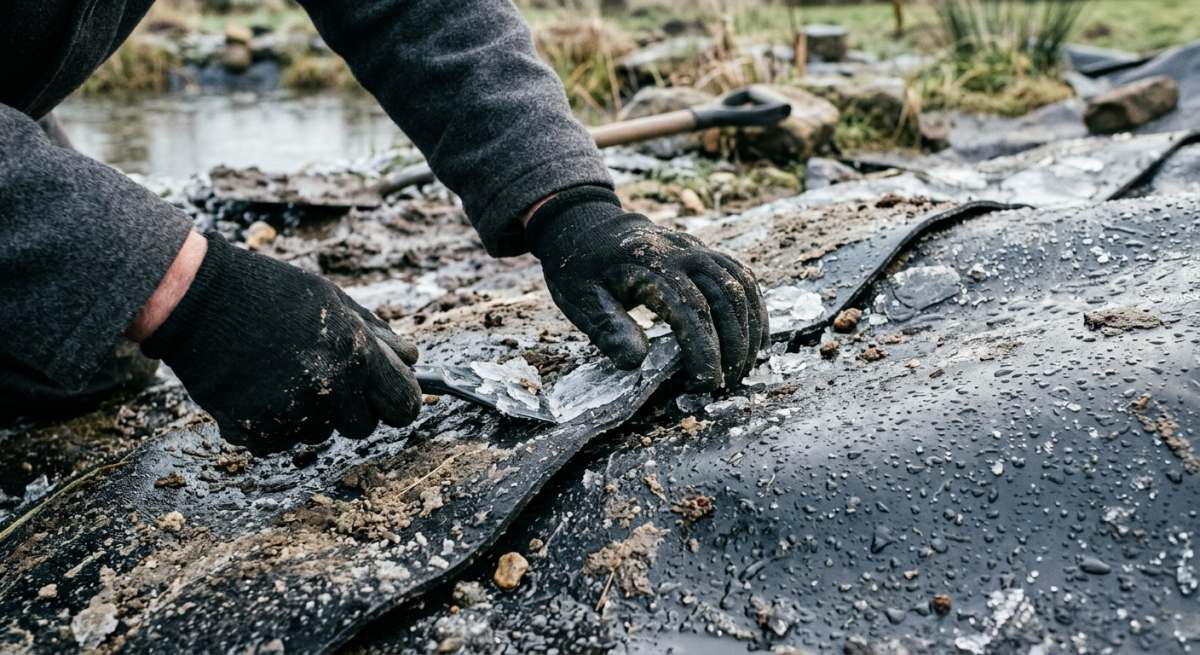
Executing an emergency liner repair during sub-zero conditions demands specialist temporary materials and careful surface preparation. Standard solvent adhesives often fail in low temperatures, making proper site safety protocols and correct physical mechanical fastenings absolute priorities for course managers.
When facing active tears beneath the waterline, teams must rapidly isolate the damaged zone using temporary cofferdams. Technicians then utilise specialised cold weather patching tapes or specialised underwater mastic compounds to seal exposed breaches before groundwater can displace the underlying soil. These rapid interventions stabilize the feature until permanent repairs can take place in warmer conditions.
Extrusion Welding and Permanent Winter Seaming
Permanent liner restoration during winter months relies on specialised heat application to achieve robust structural integrity. Hot air tools and portable extrusion welding rigs allow trained installers to bond replacement geomembrane sections directly over cleaned damage sites.
Before initiating hot work on cold substrates, installation teams preheat the target area to remove trapped moisture and frost. The technician then feeds high-grade polymer welding rod through an extrusion nozzle, fusing the new patch smoothly with the parent sheet. This rigorous process restores full tensile strength and guarantees long-term watertight performance across the entire water feature.
Spring Thaw Protocol for Long-Term Performance
As the winter ice begins to recede across the course, your water containment infrastructure enters a delicate transition period. Managing the spring thaw with a structured approach ensures your geomembrane liners maintain their structural integrity for many years to come.
Conducting a post frost inspection
A post frost inspection should always be your first physical action as soon as the ice cover melts away completely. This initial check allows greenkeeping teams to identify surface damage before water levels rise and obscure potential problem areas.
When carrying out your walkover along the perimeter, keep a close eye out for these specific failure indicators:
- Substrate movement or sharp void formations directly behind the exposed top banks.
- Stress cracking along the high water line where frozen sheets may have pulled against the liner.
- Displacement of protective ballast or stone tearing away from the anchor trench.
Catching these issues early prevents minor surface scuffs from developing into major structural breaches once irrigation pumps resume full operation.
Identifying sub surface leaks early
Systematic leak detection is essential to verify that winter ground heave has not compromised your liner base. Monitoring water retention levels daily during the first fortnight of spring provides clear visual proof of system health.
If you notice unexplained volume drops, you need to act quickly to locate the source. At Catalogue Engineering, our 30 years of hands-on experience shows that post winter leaks usually occur around fixed inlet pipes, aeration sumps, or bottom drains where ground movement is most pronounced. Taking a methodical approach to tracking minor water loss saves your club from costly emergency repairs during the peak playing season.
Recommissioning aeration and pump systems
Safely restarting your water management hardware requires a gradual approach rather than turning everything on at full power immediately. Reintroducing circulation too quickly can stir up heavy benthic sediment and create sudden pressure spikes across the liner floor.
- Clean all intake grilles and clear biological debris accumulated over the cold months.
- Run pump units at low capacity for 2 hours to check line pressure and seal stability.
- Reconnect aeration diffusers slowly to avoid scouring the delicate base membrane.
Taking these practical steps protects your high-performance lining investment while setting up your course storage features for a smooth transition into the summer months.
Frequently Asked Questions around Golf Course Pond Liner
How Does Freezing Weather Damage a Golf Course Pond Liner?
Freezing weather causes ice to expand on the surface, which exerts heavy pressure against the sides of your golf course pond liner. When water turns into ice, it expands by roughly 9% and creates sharp edges that can easily scrape or puncture the lining material.
If the water level drops beneath a sheet of ice, the sheer weight of the frozen layer can collapse downwards and tear the exposed liner. Repeated freezing and thawing cycles also cause the surrounding soil to shift, which puts extra stress on the seams.
Which Liner Material Performs Best During Harsh British Winters?
EPDM rubber is generally the best material for a golf course pond liner exposed to freezing temperatures. This synthetic rubber remains exceptionally flexible even when temperatures plunge well below zero, meaning it can stretch slightly as ice moves rather than cracking.
High-density polyethylene, or HDPE, is also very durable and chemically resistant, though it is somewhat stiffer than EPDM. Whichever material you choose, ensuring it has a generous thickness of at least 1 mm will give your feature the best defence against winter damage.
Should I Keep Aerators Running in My Pond All Winter Long?
Yes, running your aerators throughout the winter is an effective way to protect both your aquatic life and your golf course pond liner. Keeping the water moving prevents a solid layer of surface ice from forming across the entire pond, which reduces the lateral pressure pushed against the banks.
You should consider moving the diffusers into shallower water during the coldest months so you do not mix the warmer bottom water with the freezing surface layer. This simple adjustment keeps an open patch of water near the edge while protecting any fish living near the bottom.
How Deep Should a Golf Course Pond Be to Prevent Complete Freezing?
A golf course pond should ideally be at least 1.5 to 2 metres deep in the centre to prevent it from freezing solid. In most parts of the UK, frost rarely penetrates more than 20 to 30 cm into a water body, leaving a safe layer of liquid water underneath.
Maintaining this depth ensures that ice never presses directly against the bottom golf course pond liner. It also creates a stable environment for fish and beneficial bacteria to survive until spring returns.
What Is the Best Water Level for the Winter Months?
You should keep your pond water level consistently high, ideally near the overflow mark, throughout the winter. Keeping the water high ensures the ice sheet forms near the top edge of the bank, where the golf course pond liner is usually protected by soil, turf, or stone capping.
If the water level drops too low, ice will form against unsupported stretches of the liner wall. If a heavy freeze occurs on a half-empty pond, the weight of the ice can easily drag the liner down and ruin the anchor trenches.
Can I Break Surface Ice manually Without Damaging the Liner?
You should never use heavy tools like sledgehammers or axes to smash surface ice on a golf course pond liner. The force of the blow sends high-pressure shockwaves through the water, which can easily tear the flexible material or split the seals around pipe inlets.
If you need to create an opening for gas exchange or maintenance, gently rest a saucepan of boiling water on the ice to melt a clean hole. Installing a floating pond heater or maintaining continuous water movement is a far safer way to manage ice buildup.
How Does Underlayment Protect a Liner in Freezing Conditions?
A heavy-duty geotextile underlayment acts as a protective cushion between the ground and your golf course pond liner. During winter, moisture in the surrounding soil freezes and expands, pushing sharp stones and roots upwards against the underside of the sheet.
The thick fleece layer absorbs these small earth movements and spreads the physical stress evenly across the surface. Skipping the underlayment leaves your waterproof membrane vulnerable to hidden punctures that are very difficult to locate once the weather warms up.
What Winter Checks Should Greenkeeping Teams Carry Out?
Greenkeeping staff should carry out visual checks around the pond perimeter at least once every 2 weeks during frosty weather. They ought to look out for signs of sagging turf along the edges, ice slabs pulling away from the banks, or sudden drops in water level that might indicate a hidden leak.
It is also wise to inspect all exposed pipework, pumps, and aerator lines for frost damage or blockages. Catching a small issue early in the season prevents a minor fix from turning into a costly structural repair come spring.
How Do I Repair a Damaged Liner During the Winter Season?
Repairing a golf course pond liner in freezing conditions requires specialised cold-weather adhesives or sealants, as standard tapes will not stick below 5 degrees Celsius. You must first clear away all ice, dry the damaged area thoroughly, and warm the liner surface gently using a hot air blower.
If the tear is below the waterline, it is usually best to apply a temporary plug or lower the water slightly until milder spring weather arrives. Once temperatures rise, you can complete a permanent, fully bonded patch over the damaged section.
Is Snow Accumulation Danger for the Pond Structure?
A blanket of fresh snow on top of frozen water is actually a helpful insulator that prevents deep frost from penetrating further into the pond. However, if heavy snow melts quickly during a sudden thaw, it can cause a rapid influx of freezing runoff that stresses your drainage systems.
You should ensure all overflow pipes and drainage ditches are kept clear of leaves and frozen debris throughout the winter. Clear channels allow melted snow to drain away smoothly without swamping the anchor trenches that hold your golf course pond liner in place.
Ready to Discuss Your golf course pond liner Project?
Get in touch with our specialists today for detailed site guidance, technical specifications, and a quotation tailored to your requirements.