Deciding between a loose laid or fully bonded gas membrane is a common headache for many UK site managers who want to keep their building projects running smoothly. You often find yourself caught between the pressure of tight installation budgets and the need to meet strict building regulations for ground gas protection. This guide clears up the confusion by explaining how these two systems perform in real-world conditions so you can make a choice that keeps your project safe and compliant. We draw on our experience at Catalogue Engineering to show you exactly how to match the right installation method to your specific site needs. By understanding the practical differences between these two options, you will feel much more confident when discussing project specifications with your design team or local building control inspectors today.
Selecting the right protection for your foundation feels like a balancing act between long-term reliability and the speed of your current site programme. When you look at the risks associated with ground gas migration, it becomes clear that getting the initial installation method wrong leads to expensive delays during the inspection phase of your build. Every site has its own unique characteristics that change the way a gas membrane interacts with the concrete sub-base and the surrounding structural elements.
Frustration often kicks in when project teams discover that a chosen material does not suit the installation environment, which forces them to restart their planning from scratch. This leads to lost enquiries and wasted time because everyone is trying to resolve complex compatibility issues when they should be focusing on the next stage of construction. Dealing with these preventable setbacks causes a drop in morale across the site and shifts your focus away from maintaining your planned project delivery schedule.
Our practical approach focuses on matching the membrane system to the specific site requirements so you can avoid these common pitfalls entirely. We evaluate how the ground gas pressure levels influence your choice, which helps you pick the most efficient solution for your particular project. This method brings clarity to your decision-making process because you are working with proven systems that satisfy both the technical demands of your site and the expectations of local authorities.
KEY TAKEAWAYS
- Choosing the correct gas membrane installation method protects your site from regulatory non-compliance while keeping your build schedule on track for successful completion.
- Understanding the physical bond between the membrane and the substrate provides the necessary peace of mind that harmful ground gas will not enter your finished building.
- Matching your system choice to site-specific conditions prevents expensive rework and ensures you meet building regulations without unnecessary delays or overcomplicated installation procedures.
Table of Contents
- How loose laid membranes provide a flexible solution
- Why fully bonded systems offer superior protection
- Factors to consider when selecting your system
- How our specialist installation expertise ensures compliance
- Frequently Asked Questions around Gas Membrane
Need Specialist Advice on gas membrane?
Speak to our technical team today for tailored specifications, regulations compliance, and practical support.
How loose laid membranes provide a flexible solution
Adaptability on site
When you look closely at how a building site actually functions, you will notice that the pace of work is often dictated by how quickly materials can be deployed. A loose laid membrane system is frequently chosen because it avoids the need for heavy bonding agents, which means your installation speed increases significantly compared to more traditional methods. In practice, this means your team spends less time waiting for adhesives to cure and more time moving toward the next phase of the build, which helps keep the project schedule moving along smoothly.
Because modern construction environments can be unpredictable, having a system that does not require a permanent chemical bond offers a great deal of flexibility during the initial setup. If there are minor adjustments required due to unforeseen groundwork issues, you can lift and reposition the material with relative ease, so the project avoids the delays associated with tearing up fixed components. This approach is particularly helpful when you are working on sites with tight deadlines, as it provides a practical way to manage changes without starting the process from scratch.
- You gain the ability to accommodate minor surface irregularities without complex surface preparation or heavy machinery.
- The material works as an effective vapour barrier across irregular ground surfaces where standard methods might prove difficult to seal.
- Your site managers can inspect the subgrade more easily since the system remains accessible throughout the early stages of construction.
Practical benefits for the project
When you choose this method, you are essentially selecting a solution that respects the physical constraints of the site while maintaining high standards of protection against gas ingress. It is much like checking how a website loads on a mobile device; you want a system that reacts well to the environment it inhabits without causing unnecessary friction. You will find that because the system relies on mechanical fixing or simple overlap methods, the overall complexity of the job is reduced for the labourers on the ground.
This efficiency becomes even more apparent when you compare the turnaround time of a loose laid system against the traditional fully bonded alternatives. Once you have a clear picture of the specific site requirements, you might find that the extra time saved during the install process allows your crew to focus on other key areas of the build. Because you are avoiding the mess and fumes associated with heavy-duty glues, the workspace remains cleaner and safer for everyone involved in the daily operations. Getting the job done right often comes down to selecting methods that allow for natural site movement, which makes the whole process feel much more manageable for your project team.
| Feature | Loose Laid System | Fully Bonded System | Comparison Impact |
|---|---|---|---|
| Installation Speed | Fast and straightforward | Slower due to bonding process | High schedule impact |
| Gas Migration Risk | Higher risk if punctured | Lower as gas cannot move laterally | Critical safety risk |
| Substrate Suitability | Works on most surfaces | Requires clean and smooth concrete | Medium prep requirement |
| Typical Application | Standard residential slabs | High risk brownfield sites | High site variance |
Why fully bonded systems offer superior protection
The logic behind a permanent seal
When you look closely at how moisture and harmful vapours navigate through a building foundation, you quickly realise that loose laid materials leave too much room for lateral migration. A fully bonded membrane works by adhering directly to the substrate, which creates a monolithic layer that travels with the structure as it settles over time. Because local customers often walk past a site during the early stages of a build, they notice the professional level of detail applied to the slab preparation. If there is a small tear or an imperfect lap in a loose system, the gas travels underneath the membrane to find another path into the property. Using a bonded system prevents this movement entirely because the connection stays airtight and physically locked in place across every square inch of the floor.
Understanding the pressure of the environment
In practice, this means that your project remains safe even when the ground conditions become particularly challenging during a wet British winter. Hydrostatic pressure can build up beneath a slab quite unexpectedly, so a fully bonded system manages these external forces by acting as a secondary shield against water ingress. Think of this process like how a professional checks their own website on a mobile phone to see if it holds up under real usage. You want that same level of immediate, reliable performance from your foundation system without needing to worry about hidden gaps or pockets of trapped air. This approach provides a significant advantage for long-term gas barrier integrity because it removes the possibility of the membrane shifting or bunching up during the pouring of the concrete.
Practical benefits for your building schedule
Once you have a clear picture of the risks involved, you will see why site managers prefer a system that simplifies their inspection process. When a membrane is fully bonded, it becomes part of the foundation assembly, which means that any potential leak is immediately visible to the installation team during the testing phase. If you look at how quickly a local branch replies to reviews on a public platform, you see the value of transparency and speed in maintaining a high reputation. Choosing a bonded solution helps your team verify the quality of the seal before any other trades arrive to work on the site. This level of confidence allows you to move forward with your build programme knowing that the ground works are completed to a standard that protects the building from the bottom up. By focusing on the bond rather than just the barrier itself, you create a much more predictable outcome for every developer or homeowner involved in the project.
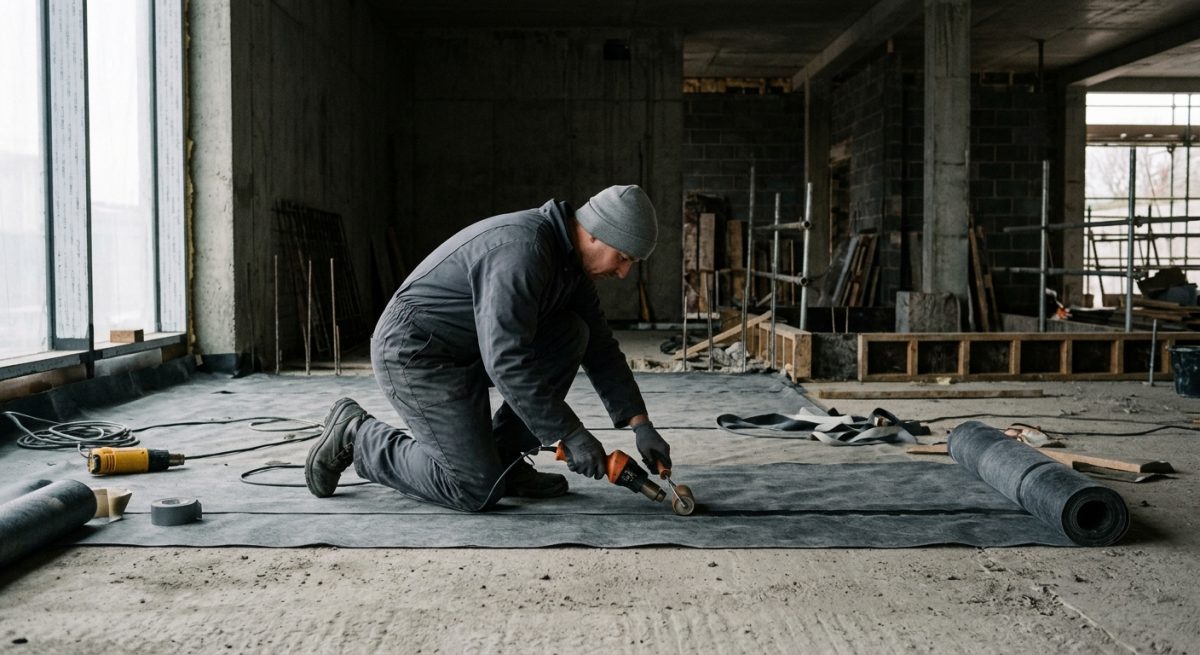
Precision is key when applying a fully bonded system, as technicians carefully heat-weld membrane seams to ensure a continuous gas-tight barrier.
Factors to consider when selecting your system
Why the ground surface dictates your choice
When you weigh up your options, the condition of the ground itself usually dictates your path forward. If the site is prone to uneven levels or has a crumbly surface, achieving a smooth finish for bonding can become an expensive headache, which makes a loose laid system a far more sensible choice. You should think of this like choosing between a temporary office setup and a permanent renovation; one allows for flexibility when you have limited time, while the other demands a level of surface perfection that you might struggle to achieve on a difficult plot.
You need to look at how your chosen method interacts with the physical reality of your workspace because mistakes here are notoriously difficult to fix later. To get the best out of your investment, keep these practical points in mind as you walk the site.
- A loose laid system provides a buffer if you expect ground movement or settling because it does not rely on a chemical bond that could snap under stress.
- Fully bonded options work exceptionally well when you have a clean, dry, and flat concrete substrate, as the material locks into place to prevent any gas migration beneath the surface.
- You should assess how quickly your tradespeople need to work, as bonding often requires curing time which might stall your progress if your site schedule is tight.
How site specific conditions influence performance
Your local environment plays a massive part in this decision, especially when you consider that gas membrane durability is affected by the chemical makeup of the soil or the presence of groundwater. If you look at how other builders in your region handle similar plots, you might notice they choose systems that resist the specific contaminants found in their postcode area. It is worth spending a little extra time testing the soil to understand what your barrier will face every single day. If you find the ground is particularly wet or potentially aggressive, you must pick a material that remains stable over the long-term, because replacing a faulty barrier once the building is occupied is a task no business owner wants to face.
Once you have a clear picture of your site and the challenges it presents, the final decision usually boils down to finding a balance between your current budget and the long-term protection you need. It is rarely about picking the most expensive product, but rather finding the solution that fits your build schedule and the specific ground reality you are facing today. Because you are dealing with safety, spending an extra hour with your installers to confirm the substrate preparation will save you from future headaches and keep your project moving along as planned.
How our specialist installation expertise ensures compliance
The value of veteran technical knowledge
Choosing between a loose laid or fully bonded gas membrane system often feels like a technical hurdle until you see how the installation phase dictates the final result. At Catalogue Engineering, we bring over 30 years of direct experience to every site visit because we know that even the most advanced materials fail if the groundwork is not handled with genuine care. Our specialist installers focus on the specific ground conditions of your project so that the chosen system integrates perfectly with your site layout. Much like checking how a website performs on a busy high street rather than just in a lab, we test the practical application of our seals against real weather and site traffic. This approach creates a solid barrier that stays secure through the inevitable movement of a building over the coming decades.
How local site conditions influence the finish
Every site carries its own unique set of challenges, whether it sits on reclaimed industrial land or involves complex structural geometry that complicates the membrane placement. Because we function as specialist installers, our team identifies potential weak spots in the design phase that a general contractor might overlook during the rush of a build. We apply our gas barrier compliance standards to every seam and joint so that the final certification process feels like a logical conclusion rather than an unexpected administrative burden. You will notice that our teams approach every detail with the same level of attention as a business owner reading through their latest customer feedback to improve service quality. By managing the installation process directly, we remove the confusion that often arises when different teams try to coordinate their tasks on a crowded building site.
Taking accountability for every seal
When we install a system, the responsibility remains firmly with us from the first roll of membrane to the final verification test. You receive the peace of mind that comes from knowing the same people who designed the water management and gas barrier systems are also the ones standing behind the quality of the finish. Because we handle the entire process, we catch minor irregularities before they become expensive problems that cause delays for other trades working nearby. This way of working allows your project to progress through the inspection stages without the usual friction that stems from disconnected communication channels between designers and site teams. You can expect a professional standard of workmanship that aligns with your timeline, keeping the focus entirely on delivering a safe and compliant building that meets every local expectation for long-term protection.

Frequently Asked Questions around Gas Membrane
Which system type works best for sites with high levels of methane?
You should look towards a fully bonded system because it creates a complete seal across the entire footprint of the building, which prevents gas from migrating laterally under the floor slab. This method is often the preferred choice for high-risk sites where you need absolute peace of mind that every joint and penetration is permanently locked down against ground gases.
Is a loose laid membrane more cost-effective for smaller projects?
You will find that loose laid systems are generally cheaper because the installation process is much faster and requires fewer specialist materials to seal the joints. It is a fantastic option for lower-risk projects where speed is important and you can achieve the necessary protection levels without the extra expense of full bonding.
How does the condition of the concrete surface affect my choice?
The state of your substrate dictates the installation method because a fully bonded system requires a clean, smooth surface to ensure the adhesive actually sticks properly. If the concrete is rough or uneven, you might struggle to get a good bond, which makes a loose laid option a much more practical and sensible route to take.
Can I install these systems during bad weather?
British weather is notoriously unpredictable, so it helps to know that loose laid membranes are usually more forgiving during a rainy spell. Fully bonded systems are quite sensitive to moisture because the adhesives need a dry surface to cure correctly, which means you could face delays if the site is exposed to the elements.
Do I need to employ a specialist installer for both methods?
You certainly need a competent team regardless of the system you pick, but fully bonded options require a higher level of technical skill to manage the detailing. If your team does not have specific experience with heat welding or complex bonding agents, it is worth bringing in experts so that you avoid any future liability issues.
Will the membrane move once the floor is finished?
A loose laid membrane sits directly under the slab, so it remains held firmly in place by the weight of the concrete once the build is complete. While you might worry about it shifting during the construction phase, it stays perfectly stable as soon as the floor load is applied, which keeps the protective barrier intact.
How do I check for leaks before the floor goes down?
Verification is a standard part of the process, and you should always schedule an independent inspection before the concrete is poured over your chosen system. The inspector will check the integrity of every seam and lap so that you can be confident the gas barrier will perform exactly as expected once the site is operational.
Does the choice of system impact the overall build programme?
You should consider the timeline of your project because a fully bonded membrane adds a few days of preparation and drying time to your schedule. If you are under significant pressure to meet a handover date, the faster installation speed of a loose laid system can help you reclaim some of that time.
Ready to Discuss Your gas membrane Project?
Get in touch with our specialists today for detailed site guidance, technical specifications, and a quotation tailored to your requirements.