Installing Underground Attenuation Tanks during periods of heavy winter rainfall presents significant engineering hurdles for UK civil engineers, site managers, and property developers. Severe precipitation rapidly fills open trenches, weakens surrounding soil stability, and raises the local water table, turning routine site excavation into a high-risk operation. Ground collapse, silt contamination, and uplift buoyancy risks threaten project completion timelines and drive up plant hire costs across regional development sites.
This article examines the physical impact of wet weather on sub-surface drainage installations, evaluating how saturated ground conditions compromise load-bearing capacities and exact tank positioning. We review essential ground-works mitigation tactics, including continuous de-watering methods, trench-shoring techniques, geotextile wrapping, and high-density crate selection to maintain structural integrity. By understanding seasonal risks and adopting weather-resistant installation strategies, contractors can avoid expensive rework, maintain compliance with CIRIA C753 guidance, and deliver long-lasting surface-water management systems regardless of harsh winter conditions.
Executing a deep site excavation during cold winter months routinely exposes civil engineering contractors to unstable trench walls, heavy slurry, and sudden flooding. Persistent rainfall weakens the surrounding soil matrix, making it exceptionally difficult to set heavy underground attenuation Tanks onto a clean, level, and properly compacted bedding layer.
A rapidly rising water table combined with relentless winter rainfall often triggers catastrophic trench collapses or causes un-ballasted attenuation units to float out of position. Construction sector statistics indicate that unmanaged groundwater ingress accounts for up to 35% of winter drainage project delays in the UK, creating severe financial losses through extended pump hire and extra labour hours.
Site engineering teams can overcome these severe weather challenges by integrating aggressive de-watering pumps with modular trench-shoring systems from the start of works. Specifying heavy-duty geocellular units protected by robust, non-woven geotextile membranes guarantees that sub-surface storm-water management assets remain stable, clean, and fully operational despite saturated ground conditions.
KEY TAKEAWAYS
- Heavy winter rainfall raises the local water table dramatically, increasing buoyancy risks for un-ballasted drainage crates and threatening trench wall stability during deep site excavation works.
- Deploying continuous de-watering pumps and protective trench shoring prevents silt contamination, cutting unexpected site downtime by up to 25% on wet UK development plots.
- Installing robust, high-capacity underground attenuation tanks with high-quality geotextile wrapping guarantees long-term structural stability, meeting strict CIRIA C753 guidance regardless of adverse weather.
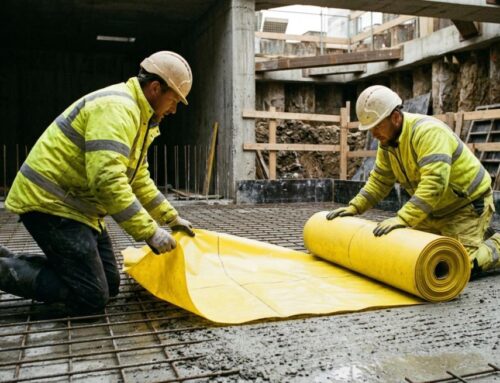
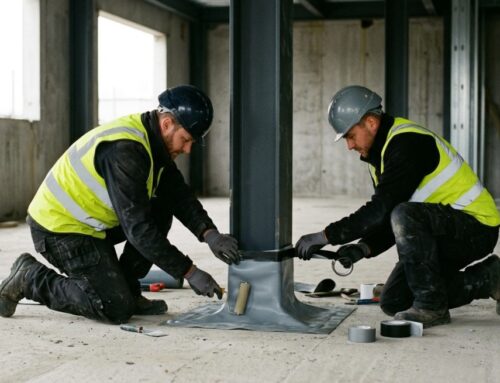
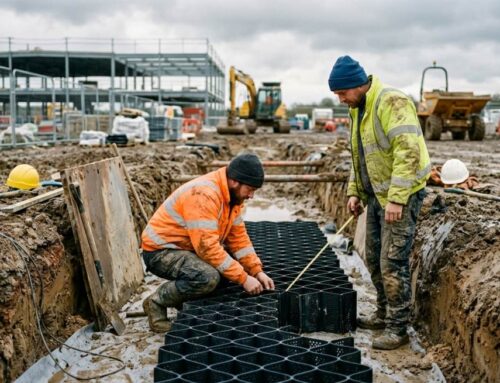
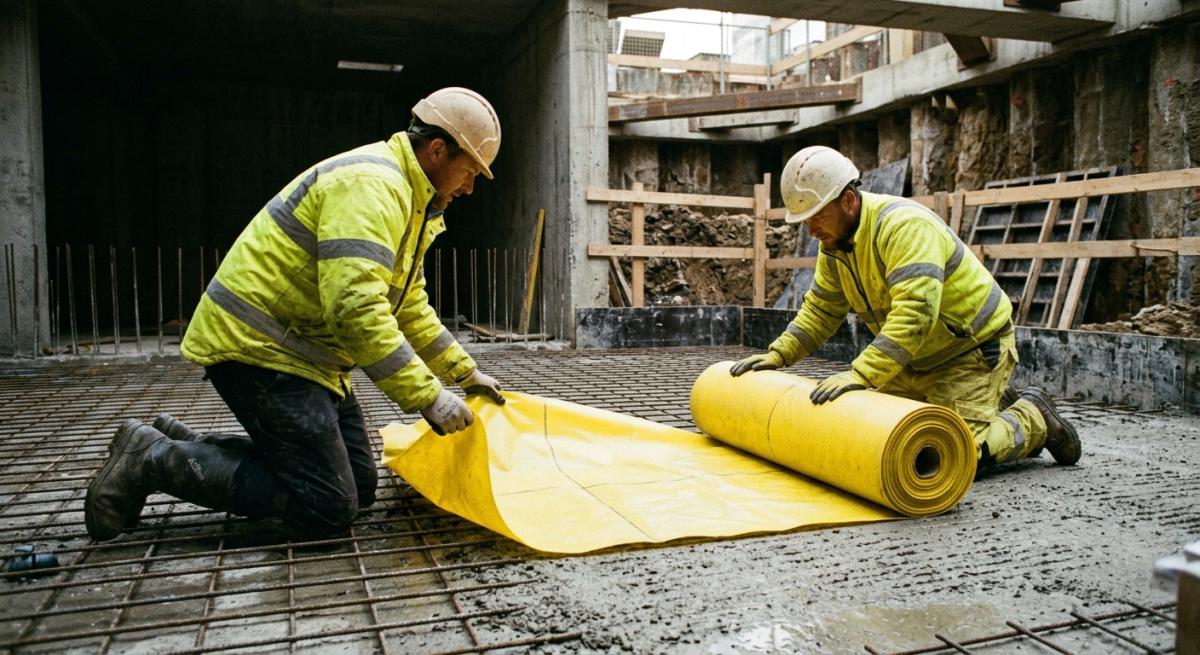
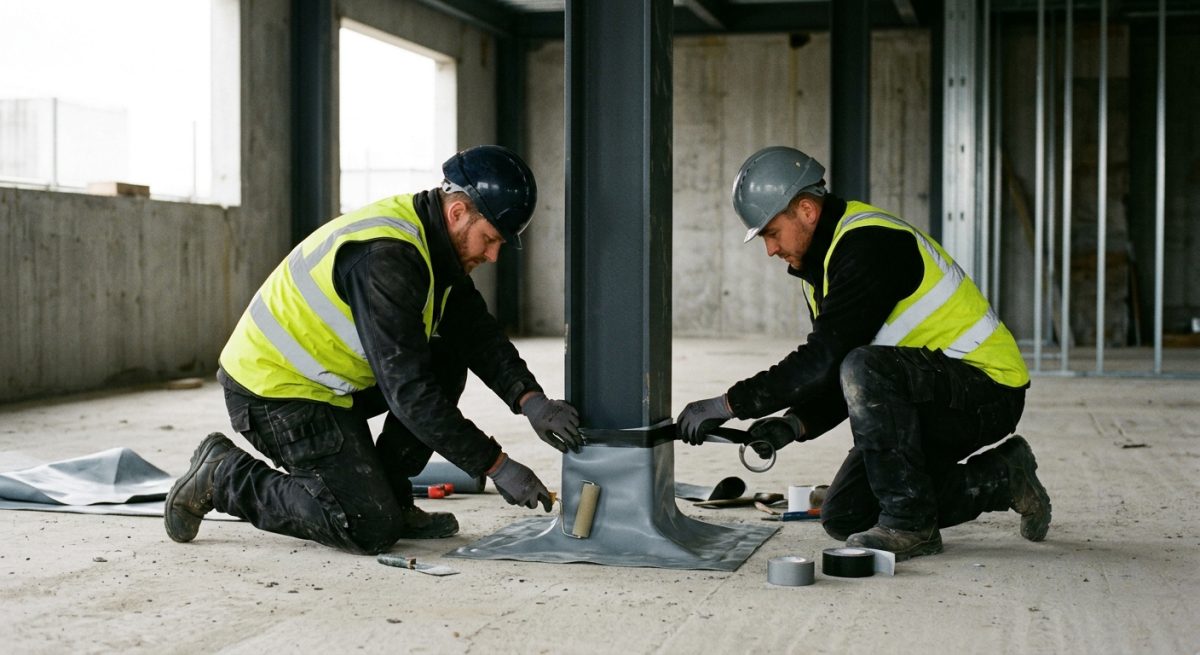
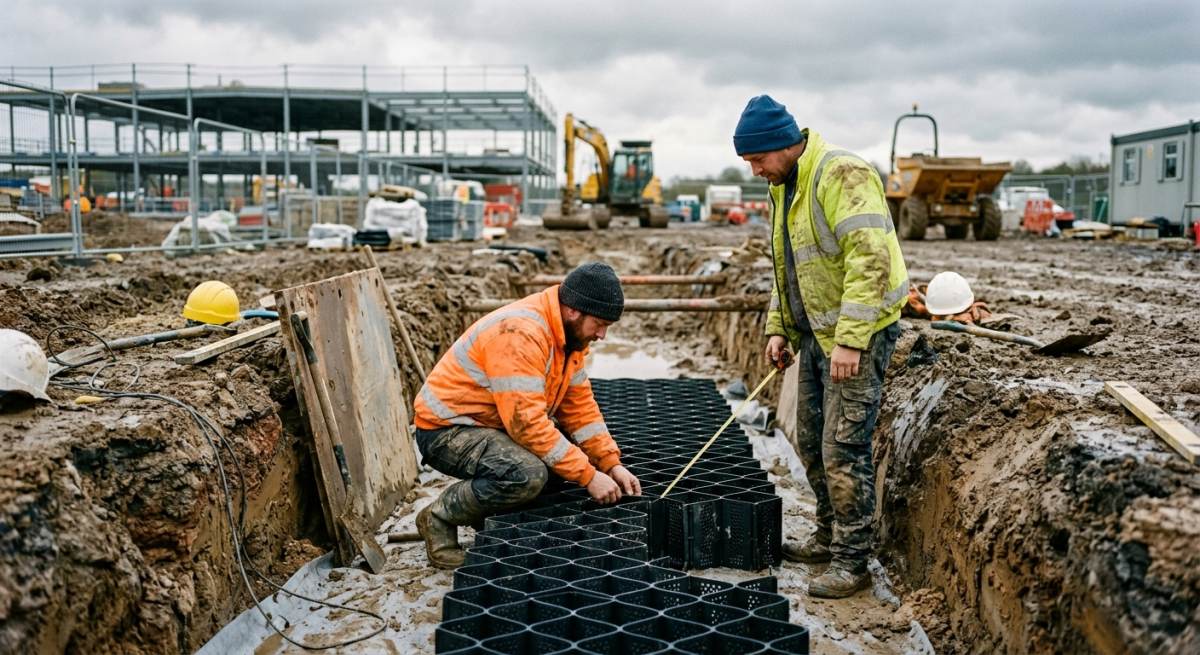
Civil engineers battle heavy winter rain and waterlogged ground conditions during attenuation tank installation on a UK site.
Table of Contents
- Managing Water Ingress and Trench Instability During Heavy Rain
- Preventing Flotation and Buoyancy Risks in Unfilled Underground Tanks
- Protecting Geomembranes and Geotextiles from Mud and Silt
- Soil Compaction and Backfilling Standards in Wet Conditions
- Professional Winter Installation Procedures for Long Term Tank Performance
- Frequently Asked Questions around Attenuation Tank Installation
Need Specialist Advice on attenuation tank installation?
Speak to our technical team today for tailored specifications, regulations compliance, and practical support.
Managing Water Ingress and Trench Instability During Heavy Rain
Mitigating Trench Collapses and Soil Washout
Heavy rain rapidly degrades soil shear strength and causes severe instability in unsupported earthworks. Installing robust trench shoring systems protects site operatives and prevents costly ground movements during excavation.
Prolonged downpours turn stiff clays and granular soils into soft slurry, dramatically increasing lateral earth pressures against temporary revetments. Without adequate shoring or sheet piling, severe trench collapses pose immediate risks to human life and derail project schedules across busy towns and construction sites.
Ground engineers must specify heavy-duty trench boxes or hydraulic sheeting to brace trench walls before any operatives enter the base. Managing surface water runoff with cut-off ditches installed upstream prevents fast-flowing water from scouring vulnerable trench edges and washing sub-surface silts directly into the open pit.
Controlling Subsurface Water Ingress with Active Pumping
Uncontrolled water accumulation destabilises the excavation base and prevents the correct bedding of modular geocellular units. Deploying continuous dewatering pumps maintains a dry formation layer necessary for structural load-bearing performance.
Rising water tables and high volumes of migrating subsurface water quickly submerge open excavation pits during winter storms. Standing water rapidly weakens the underlying formation ground, causing geocellular attenuation crates to tilt, float, or settle unevenly once backfilled.
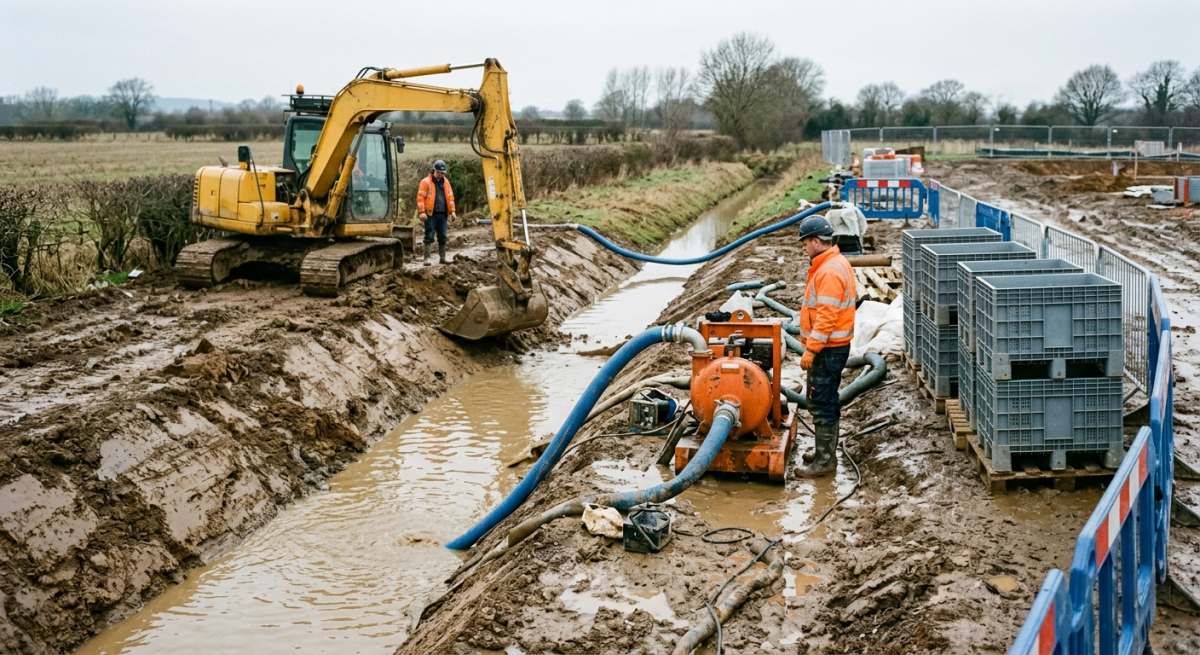
To mitigate this issue, site teams should construct peripheral sump pits lined with coarse stone aggregate to capture fines and avoid pump blockages. Positioned high-capacity dewatering pumps must run around the clock to clear incoming water, discharging it safely through mobile silt traps into local stormwater sewers under an official environmental licence.
Sequential Dewatering and Excavation Safety Routine
Executing a structured ground-control protocol ensures excavations remain stable throughout the installation window. Following a disciplined sequence minimises weather-related delays and keeps workers safe on site.
- Inspect freshly excavated soil faces and position hydraulic trench boxes immediately after reaching each 2-metre depth milestone across the site.
- Excavate perimeter sump pits at excavation low points and engage heavy-duty dewatering pumps to draw down subsurface water prior to placing 150 mm sharp sand bedding layers.
- Perform mandatory 2 daily site safety audits covering structural shoring integrity, pump flow rates, and geotextile membrane protection before assembling crate layers.
Protecting Bedding Materials from Silt Contamination
Heavy rainfall flushes fine silts into open trenches, contaminating clean aggregate bedding and compromising structural drainage. Encapsulating bedding layers with geotextile membranes prevents fine particle migration and preserves tank performance.
When stormwater enters an unsealed trench, it carries suspended solids that settle into the porous aggregate base. This silt accumulation reduces the void ratio of stone bedding and clogs the lower faces of geocellular attenuation blocks. Operatives must lay high-grade geotextile filter fabrics across the sub-base immediately after excavation to isolate clean stone from soft, saturated ground.
Seaming all membrane overlaps by at least 300 mm ensures a weather-tight barrier that stops fine particles from blinding the drainage system during unexpected winter downpours.
Preventing Flotation and Buoyancy Risks in Unfilled Underground Tanks
Hydrostatic Pressure and Buoyancy Calculations
Unfilled underground attenuation tanks act like hollow boats when rising groundwater creates upward hydrostatic pressure. Engineers must perform accurate buoyancy calculations during winter installations to ensure the upward force of displaced water does not exceed the total downward mass of the structure and backfill.
Winter rain rapidly transforms stable excavation pits into waterlogged basins within built-up areas and open sites alike. When groundwater levels rise above the base of an empty geocellular crate system or modular tank, Archimedes’ principle takes full effect.
Without sufficient downward weight, tank flotation occurs, shearing inlet pipework, tearing geotextile membranes, and pushing the unit upwards by several metres. Site engineers calculate safety factors of at least 1.5 against uplift to withstand saturated soil conditions, accounting for maximum predicted water tables during 100-year storm events.
Concrete Anchoring and Surcharge Loading Mechanics
Heavy-duty ballast strategies such as concrete anchoring and temporary water-filling prevent light plastic crates from popping out of waterlogged excavations. Applying effective surcharge loading through engineered backfill layers provides the extra downward force required to hold empty modular units in place during severe downpours.
When native soils offer low friction or groundwater remains high, contractors pour a continuous 150 mm to 300 mm thick reinforced base slab to serve as a reliable anchor pad. Overlying backfill material creates substantial structural mass, but unpredictable winter weather often requires immediate weight before backfilling finishes.
Installing structural concrete collars or strapping systems directly to the base pad locks the sub-surface tank into position. Combining this mechanical restraint with well-compacted aggregate layers generates reliable surcharge loading, neutralising upward forces until top-slab construction and paving finish.
Essential Safeguards During Winter Installs
Site teams must follow a strict installation sequence to mitigate buoyancy risks before severe rainfall floods an open excavation. Implementing continuous dewatering and rapid backfilling safeguards the sub-surface void until the final cover slab is completed.
- Dewater the trench continuously using 100 mm submersible pumps to maintain groundwater levels well below the excavation base.
- Pour the concrete base slab to enable concrete anchoring and attach structural hold-down webbing across the unit body.
- Place specified aggregate in 150 mm compacted lifts to establish immediate surcharge Loading before heavy rain arrives.
In persistent wet weather, contractors should also consider temporary water ballast within the cells to equalise hydrostatic pressures. Filling individual modular units with clean water during construction provides instantaneous ballast, securing the structure while surrounding soils are backfilled and compacted.
Protecting Geomembranes and Geotextiles from Mud and Silt
Preventing Silt Contamination During Excavation Works
Severe winter rain carries fine soil particles directly into open excavations, threatening the integrity of synthetic liners. Installing temporary sacrificial covers and perimeter bunds prevents fine sediment from settling onto fabric layers before final backfilling.
Continuous rainfall turns unsealed trench floors into slurry within 2 to 3 hours. When mud washes across a non-woven protective geotextile, soil fines clog the microscopic voids between synthetic fibres. This silt contamination drastically reduces permeability and weakens the cushioning layer designed to shield the tank from sharp sub-base aggregate.
Site managers must install perimeter drainage ditches positioned at least 1 metre from the excavation edge to redirect surface water away from active work zones. In busy town build sites, standing groundwater must be managed using 2-inch submersible pumps to clear sump pits before mud migrates into the main basin. Placing sacrificial polyethylene sheets over laid fabrics offers immediate protection when sudden downpours strike, ensuring underlying materials stay clean until workers assemble the crate array.
Maintaining Waterproof Seals in Wet Conditions
Clean jointing faces are mandatory to achieve reliable thermal welds across an impermeable geomembrane liner. Moisture and liquid mud destroy joint adhesion, leading to sub-surface leaks if seams are welded over dirty surfaces.
Creating durable waterproof seals requires completely dry, grit-free surfaces along every overlap zone. High-humidity environments and driving rain lower seam temperatures during extrusion welding, creating weak bonds that fail under hydrostatic pressure. Cold winter temperatures of 5 degrees or below also require pre-heating of the liner material using hot-air blowers prior to final welding.
Site crews should erect portable weather-tight shelters over jointing locations to maintain dry conditions during rainfall. Technicians must clean membrane edges using specialised solvent wipes, removing thin film coats of wet clay before applying heat. Running air pressure tests along dual-track welds at 2 bar for 5 minutes confirms total seal integrity across the full installation area.
Site Inspection Checklist for Protective Fabrics
Daily visual checks ensure synthetic layers remain undamaged and free from heavy soil build-up during heavy downpours. Systematic monitoring catches minor fabric displacement before mud ingress compromises structural performance.
Site engineers must complete this 3-step inspection sequence prior to signing off wrapped modular units.
- Inspect the protective geotextile for silt contamination, sweeping clean or replacing affected sections before crate placement.
- Wipe down all edge overlaps on the geomembrane liner with dry cloths to guarantee clear contact points for welding.
- Vacuum test all field joints and confirm waterproof seals maintain full pressure across 100% of the tank perimeter.
Addressing these winter challenges keeps attenuation installations on schedule while securing a 60-year lifespan for underground stormwater management systems in busy built-up locations.
Soil Compaction and Backfilling Standards in Wet Conditions
Managing Moisture Content During Backfill Operations
Excess moisture content in surrounding soils severely reduces load-bearing capacity and increases the risk of structural displacement around underground attenuation tanks. Site teams must actively monitor ground conditions to prevent saturated silts or soft clays from compromising the installation depth.
When heavy winter rain hits a site, fine-grained soils quickly absorb water and lose their internal friction. This sudden decrease in Shear Strength leads to trench wall slumping, localised soil movement, and uneven lateral pressure against the geocellular tank structure. To prevent structural deformation or lateral crushing, contractors must test soil water levels before placing any fill material into the trench.
If standing water sits in the excavation pit, engineers must pump it out completely and clear away any softened mud. Working in wet conditions requires tighter quality checks to ensure the surrounding ground supports designed traffic loads over a 60-year lifespan.
Selecting Suitable Granular Backfill Material
Using imported granular backfill is essential when native sub-surface soils become too saturated for adequate compaction during winter installations. Free-draining aggregate maintains its structural integrity and mechanical stability even during persistent rainfall.
Cohesive soils like clay hold onto water and expand rapidly, making them completely unsuitable for backfilling operations in wet weather. Instead, project designs should mandate sharp, well-graded aggregates such as 4 mm to 20 mm clean angular gravel or crushed rock. These coarse materials allow excess surface water to drain away freely without washing away fine particles into the tank geotextile wrapper.
Replacing poor native soil with graded stone ensures that 100% of the backfill achieves the required stiffness, protecting both small housing developments and larger schemes in any built-up area.
Best Practice Compaction Sequences on Site
Compacting backfill in thin, controlled layers prevents post-installation settlement and ensures structural stability for sub-surface drainage systems. Site teams must follow strict compaction procedures using mechanical machinery to achieve maximum dry density in challenging weather.
To maintain structural performance during wet winter conditions, contractors should follow this 3-step compaction routine:
- Lay the granular backfill in uniform lifts not exceeding 150 mm in uncompacted thickness around the tank perimeter.
- Pass heavy plate compactors over each lift at least 4 times to eliminate air voids and consolidate the aggregate safely.
- Perform continuous density checks across every finished layer before placing the next lift of material.
Running plate compactors over saturated material can cause soil liquefaction, so operators must pause work if water rises to the surface during pass-overs. Keeping backfill lifts shallow ensures thorough consolidation throughout the entire excavation depth, protecting nearby local streets, car parks, and grey infrastructure from future ground movement.
Professional Winter Installation Procedures for Long-Term Tank Performance
Dewatering and Temporary Drainage Strategies
Managing water ingress during winter excavation requires continuous sub-surface pumping and robust run-off diversion. Site engineers must deploy reliable Temporary Drainage systems before placing aggregate beds to prevent trench degradation.
Excessive winter rain rapidly transforms exposed trench bases into unstable, slurry-like conditions. To maintain structural stability, site teams must establish perimeter interceptor ditches and dedicated sump points around the excavation zone. Dewatering pumps ought to run continuously to keep the groundwater table at least 300mm below the base level.
Placing a 150mm layer of clean, angular crushed stone over a geotextile membrane shields the sub-grade soil from traffic-induced disturbance. This safeguards the load-bearing capacity of the sub-base, ensuring that the installation complies with all relevant structural engineering standards despite adverse weather.
Laying Geocellular Units in Wet Conditions
Installing modular crates in saturated trenches demands strict adherence to manufacturer installation guidelines to preserve structural integrity. Contractors must wrap geocellular units in heavy-duty geotextile membranes immediately after placement to keep out fine silt.
When placing structural matrix blocks during heavy rain, site operatives must execute a precise 3-step assembly sequence.
- Inspect the 150mm granular bedding layer for surface water pooling and check level accuracy using laser equipment.
- Interlock the Geocellular Units systematically, engaging all structural clips to ensure uniform load-distribution under dynamic traffic weight.
- Encase the full matrix in a 300g per square metre non-woven geotextile membrane, heat-sealing or taping all 500mm overlaps.
This controlled procedure stops fine silt particles from washed-in surface run-off from entering the storage void, maintaining 95% void ratio capacity for decades.
Winter Quality Control and Integrity Checks
Rigorous Quality Control processes ensure that winter weather does not compromise the long-term performance of underground attenuation systems. Pre-backfill inspections and side-fill compaction testing identify structural movement before final capping occurs.
Saturated backfill material creates dynamic hydrostatic pressures that can deform plastic crate arrays if placed incorrectly. Site engineers must mandate that backfill material consists exclusively of clean, free-draining 4mm to 20mm single-sized crushed stone rather than wet, clay-heavy soil excavated from local streets.
Conducting 100% visual inspections across all membrane joints and placing backfill in uniform 150mm layers prevents lateral displacement. Following these thorough procedures guarantees a 60-year operational life, protecting stormwater infrastructure in any city or town built-up area.
Frequently Asked Questions around Attenuation Tank Installation
Can You Install an Underground Attenuation Tank in the Rain?
Yes, you can install an underground attenuation tank during light rain, but heavy rainfall often requires work to stop until conditions improve. Excessive water causes soil instability and risks flooding the excavation pit, which creates severe safety hazards for site workers.
How Does Heavy Rain Affect Excavation Work for Attenuation Tanks?
Heavy rain softens the surrounding soil, which increases the risk of trench wall collapses during excavation work. It also fills the pit with muddy surface water, making it extremely difficult to lay a level stone bedding layer for the attenuation tank modules.
What Happens If an Uninstalled Attenuation Tank Pit Floods?
If an uninstalled attenuation tank pit floods, work must stop immediately so groundworkers can pump out the standing water using heavy-duty submersible pumps. Once drained, workers must remove any contaminated silt and replace wet, unstable sub-base material before installation can resume.
Why Is Groundwater Control Crucial During Winter Tank Installations?
Groundwater control is crucial during winter tank installations because high water-table levels can cause empty plastic attenuation crates to float out of position. Implementing a well-planned dewatering system prevents hydrostatic uplift and keeps the excavation pit dry and stable throughout the build process.
How Do Groundworkers Protect the Geotextile Membrane in Wet Weather?
Groundworkers protect the geotextile membrane in wet weather by storing rolls off the ground on dry pallets and keeping them covered with weather-tight sheeting. Installing membrane liners quickly during dry spells prevents silt or mud from clogging the fabric, which ensures proper long-term water filtration.
What Temperature Limits Apply to Plastic Attenuation Tank Installation?
Plastic attenuation tank crates should generally not be installed when ambient site temperatures fall below 5 degrees Celsius. Cold weather makes plastic polymers brittle, which increases the risk of cracking during handling, assembly, or backfilling operations.
How Should You Backfill an Attenuation Tank During Winter?
You must backfill an attenuation tank in thin, 150 mm to 300 mm layers using dry, clean, aggregate material during winter conditions. Groundworkers must never use frozen soil or waterlogged clay, as wet materials create uneven pressure points that can damage the sub-surface tank structure over time.
Does Rain Delay the Overall Attenuation Tank Installation Timeline?
Rain frequently delays attenuation tank installations by 2 to 5 working days depending on ground conditions and rainfall volume. Severe wet weather slows down site traffic, extends dewatering efforts, and requires additional ground-stabilisation measures before heavy machinery can operate safely.
What Safety Risks Increase During Wet-Weather Tank Installation?
Slipping hazards, trench cave-ins, and machinery instability on soft ground are the primary safety risks that increase during wet-weather tank installation. Site managers must conduct extra daily checks, install trench support systems, and mandate non-slip safety gear for all groundworkers.
How Can Site Managers Prepare Attenuation Tank Sites for Winter Rain?
Site managers can prepare attenuation tank sites for winter rain by setting up robust site-drainage channels and keeping high-capacity dewatering pumps on site. Storing modular crates, geotextile fabrics, and granular backfill on raised, covered platforms prevents weather-related damage before the installation begins.
Ready to Discuss Your attenuation tank installation Project?
Get in touch with our specialists today for detailed site guidance, technical specifications, and a quotation tailored to your requirements.