Key Takeaways
Understanding BS 8485 is critical for building safety on sites prone to gas migration. This guide covers the essential scoring elements for risk assessment, the technical requirements for high-performance gas-resistant membranes, and the importance of rigorous, independent verification. Mastering these protocols ensures regulatory compliance and long-term structural protection.
Understanding BS 8485:2015+A1:2019 Principles
The Fundamental Objectives of BS 8485
BS (British Standard) 8485 is the definitive framework for the design and installation of protective systems against hazardous ground gases. Its primary purpose is to ensure that buildings are constructed safely on sites where methane or carbon dioxide might otherwise pose a threat to occupants.
By mandating a risk-based approach, the standard ensures that gas protection measures remain proportionate to the specific dangers identified during the site investigation phase. Professionals must treat the guidance as a mandatory benchmark for achieving structural safety in regions prone to subsurface gas migration.
You can find more expert insights via the Catalogue Engineering blog.
Key Principles and Risk Assessment
Effective compliance begins with a thorough understanding of the source and pathway assessment process. The standard requires developers to quantify the levels of hazardous ground gases present before determining the necessary level of mitigation. Designers calculate a total score based on the ground gas regime and the type of building construction involved.
This scoring system dictates the performance requirements for the barriers and ventilation systems selected. Whether dealing with low-risk scenarios or complex sites containing significant volumes of methane and carbon dioxide, the integrity of the barrier remains the highest priority throughout the lifecycle of the project.
Integration of Protective Systems
Successful implementation of BS 8485 requires more than just high-quality materials. It necessitates a holistic view of the building envelope as an integrated defence system. Gas protection measures usually involve a combination of structural barriers, ventilation layers, and management protocols.
Each element must function in harmony to prevent gas ingress into occupied spaces. Regular verification and independent validation are essential components of these principles because they confirm that the installed solution matches the design intent. Through consistent application of these requirements, construction teams protect both the future residents and the structural stability of the development.
Determining Required Gas Protection
The Process of Calculating the Gas Protection Score
Determining the necessary level of mitigation begins with the calculation of the Gas Protection Score. This numerical value dictates the specific combination of safety features required for a development project. Professionals arrive at this figure by multiplying the gas flow rate of the site by a generation potential factor that reflects the geological characteristics of the ground.
This systematic approach ensures that every installation aligns with the risk profile of the specific building location.
Selecting Appropriate Mitigation Measures
Once the score is established, the designer must select a robust system to block or dissipate soil gases. A common requirement involves the integration of a structural barrier, such as a cast-in-situ floor slab, to prevent gas ingress through the building foundation. This component works in tandem with other defensive layers to create a secure environment for occupants.
For projects requiring specialised containment, consult the experts at Catalogue Engineering.
Engineers often incorporate ventilation measures to dilute any gases that manage to bypass primary defensive layers. These systems rely on natural or mechanical airflow to ensure that hazardous concentrations cannot accumulate beneath the building footprint.
When paired with a high-quality gas-resistant membrane, these combined layers offer a multi-tiered defence strategy that complies with national building standards.
Achieving Full Compliance
The final design must demonstrate that the chosen Gas Protection Score is adequately addressed by the selected materials and methods. Each layer provides a specific degree of protection, and the installation process must be rigorously verified to confirm that no gaps exist within the protective envelope.
By following this structured methodology, developers provide long-term safety and regulatory compliance for all new residential or commercial constructions.
Technical Specification of Gas-Resistant Membranes
Selecting Materials for Gas Protection
The choice of gas-resistant membranes is a fundamental aspect of meeting the standards set out in BS 8485. For sites classified as NHBC Amber 1 or NHBC Amber 2, the specification of the material must be evidence-based to ensure it provides an adequate factor of safety. The primary function of these products is to prevent the ingress of harmful ground gases such as methane and carbon dioxide into the structure.
Engineers must verify that the chosen barriers have the required mechanical strength to survive the construction process without puncturing.
Performance Metrics and Material Integrity
Determining the effectiveness of a barrier relies heavily on evaluating Permeability Coefficients. These values indicate how easily gas molecules can migrate through the material matrix. When dealing with High Performance Membranes, it is essential that the manufacturer provides independent test data to confirm compliance with the specific gas protection score required for the site.
It is not enough to simply select a generic plastic sheet, as the barrier must be chemically resistant to any contaminants identified in the ground investigation report.
Installation and Material Compatibility
Successful compliance depends on the material being compatible with all surrounding construction elements. Designers should ensure that the membrane remains robust under site conditions where heavy foot traffic or concrete pouring may occur. When a site requires protection against NHBC Amber 1 or NHBC Amber 2 risks, the membrane must be installed by trained professionals who understand the importance of heat welding or chemical bonding of joints.
Every component of the system, including tapes and sealants, must share similar Permeability Coefficients to maintain the integrity of the total gas resistance scheme across the entire floor area. Explore various hydrocarbon barrier solutions for complex sites.
Precision Installation and Detailing Protocols
Achieving Precision in Membrane Application
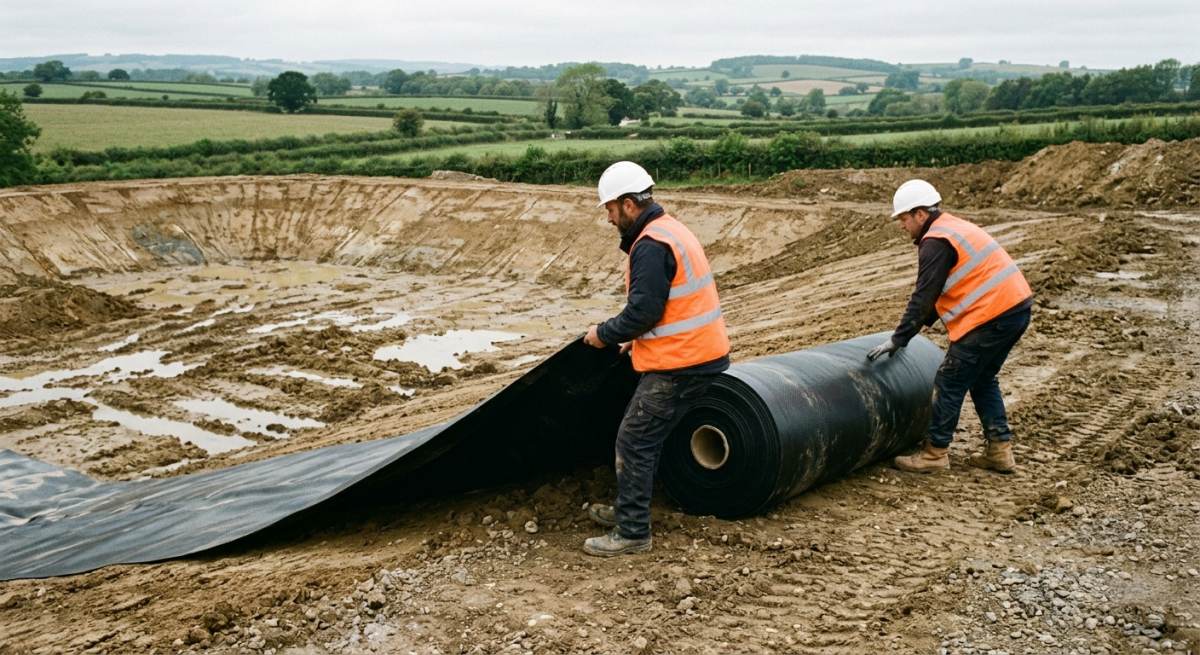
The successful performance of a gas protection system relies entirely on the quality of work performed during the installation phase. Practitioners must treat every joint and edge as a critical point of potential failure. Adhering to the specific requirements found within BS 8485 ensures that hazardous ground gases cannot find a path into the building envelope.
Installers should focus on creating a continuous barrier that functions as a single monolithic layer across the entire footprint of the structure.
Managing Critical Junctions and Penetrations
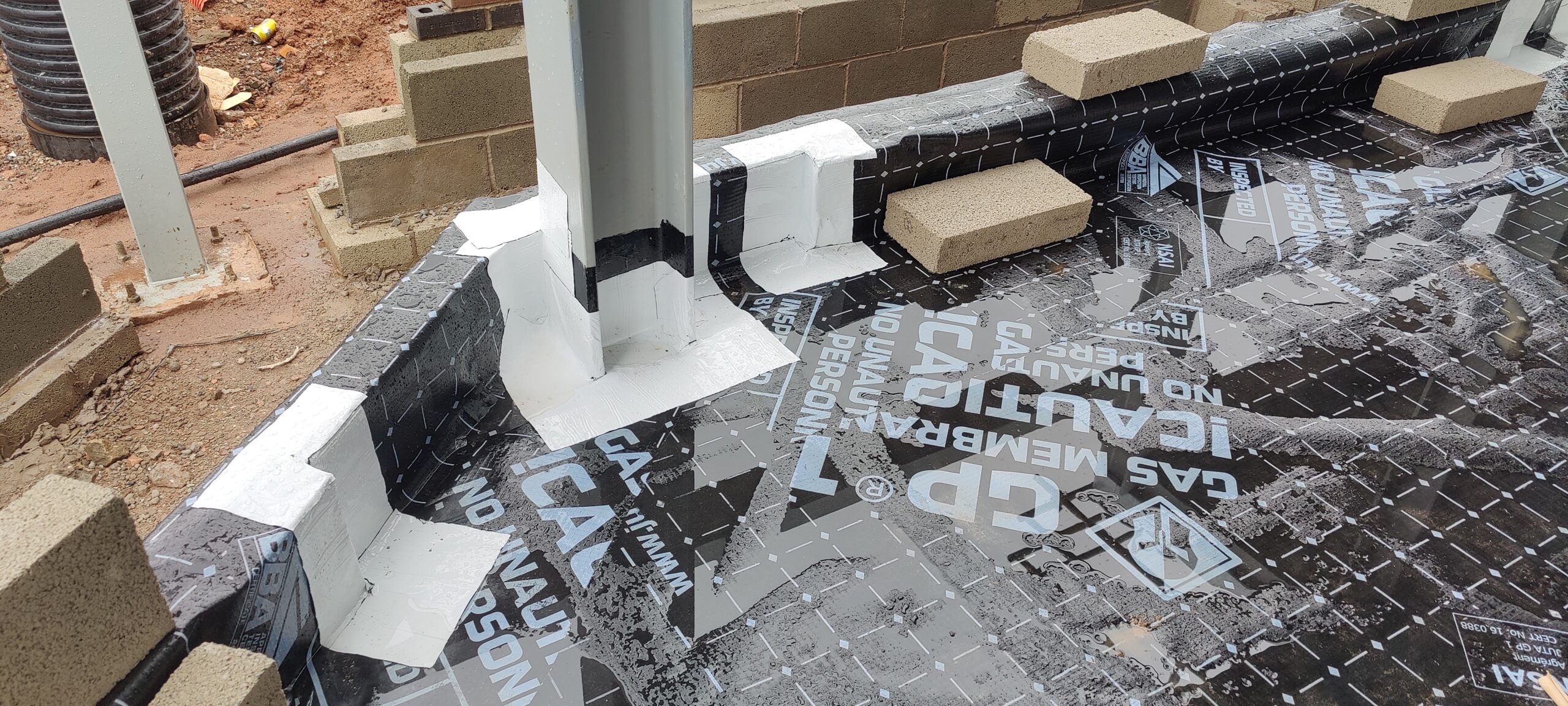
One of the most complex aspects of site work involves the management of Service Penetrations. Every pipe or cable passing through the floor slab creates an opening that must be sealed perfectly. Using proprietary top hat units or bespoke welded boots provides the necessary physical seal.
When managing these areas, installers should ensure that the membrane is tailored to fit snugly around the conduit before securing it with appropriate bonding agents. Precise measurements taken before cutting the material help to reduce the risk of oversized holes that become difficult to seal.
Techniques for Sealing and Integrity Testing
Creating robust Gas Membrane Laps remains the primary method for maintaining continuity across a floor slab. Best practice dictates that installers provide a minimum overlap as specified by the manufacturer and the project design. Professionals frequently use Heat Welding to fuse these overlaps together. This thermal bonding process creates a stronger connection than adhesive tapes alone and provides better resistance against long-term degradation.
Once the installation is complete, comprehensive Integrity Testing serves as the final quality control measure. This stage involves air pressure tests or vacuum box assessments to verify that no leaks exist within the joints or at the site boundaries. Following these rigorous protocols ensures full compliance and protects the building occupants from future ground gas migration.
Verification, Validation, and Independent Inspection
The importance of rigorous verification
Achieving full compliance under BS 8485 requires more than just the installation of membranes. It demands a robust framework of evidence to prove that the gas protection system performs as intended. Verification processes must begin at the design stage and continue throughout the construction period to ensure that no defects compromise the integrity of the barrier. A structured approach to CQA (Construction Quality Assurance) helps to manage risks and provides a clear audit trail for regulators and warranty providers.
Independent inspection protocols
The reliance on Third-Party Verification is essential for maintaining objectivity and meeting the standards set out in the guidance. Qualified inspectors examine the site to ensure that all details follow the original design specifications. This level of inspection identifies potential issues early, preventing costly remedial work after the slab has been poured.
An effective Gas Integrity Inspection covers all overlaps, penetrations, and edge seals to guarantee the system remains airtight against ground gases.
Advanced testing methodologies
Quantitative verification often involves Air Pressure Testing to detect leaks that remain invisible to the naked eye. This non-destructive method allows teams to pinpoint areas where the barrier might fail before the final handover. By combining visual inspections with these technical assessments, the project team ensures that the installation meets the necessary protection scores required by the site risk assessment.
Final sign-off relies upon the accumulation of this evidence, confirming that the building remains safe for future occupants.
Managing Site-Wide Gas and Water Management
Managing Site-Wide Gas and Water Management
Effective management of subsurface hazards requires a holistic approach that balances gas migration control with the mitigation of water ingress. Practitioners must address groundwater control measures early in the development lifecycle to prevent water from compromising the integrity of gas protection layers. When high water tables are present, the buildup of hydrostatic pressure can cause significant stress on membrane seals and joints, potentially creating pathways for ground gases like methane or carbon dioxide to enter the building envelope.
Implementing Integrated Barrier Systems
The successful installation of gas-resistant membranes relies on the seamless coordination of different construction disciplines. Integrated Barrier Systems offer a robust solution by combining gas protection with damp-proofing and waterproofing requirements. By utilising materials that serve multiple functions, contractors reduce the complexity of site installations and minimise the risk of human error during the sealing process.
It is essential that all service penetrations and structural junctions remain watertight and gas-tight throughout the build process to ensure full adherence to BS 8485 standards. You can view successful project outcomes via our water management or gas management case studies.
Long-Term Site Stability
Site-wide strategies must account for the changing nature of the water table and soil gas levels over time. Regular monitoring throughout the construction phase allows project teams to adjust their approach if groundwater levels fluctuate unexpectedly. Proper drainage design works in tandem with gas mitigation to ensure that static pressure does not force gases through small defects in the barrier.
By treating water and gas management as a single cohesive system, developers achieve a safer and more durable final product that provides long-term protection for all building occupants.