Why Does Contaminated Land Require Specialist Protection?
When developing the likes of brownfield sites or managing complex ground engineering projects across the UK, the risks are exceptionally high. Construction companies face strict regulations regarding ground gas and chemical contamination. Whether you are working on a new housing development, a commercial warehouse, or an industrial unit, getting your ground protection wrong can lead to severe environmental issues, planning friction, and costly structural delays.
Two of the most common materials used to protect buildings from underground hazards are standard gas membranes and specialist hydrocarbon barriers. While they might look similar on a construction site, they are engineered to do completely different jobs.
At Catalogue Engineering, with over 30 years of combined experience in groundworks and civil engineering, we understand the critical differences between these materials. Choosing the right containment system is vital for ensuring long-term site safety and structural compliance.
Understanding the Materials: Standard Gas Membranes vs Hydrocarbon Barriers
To choose the right protection for your project, you need to understand the distinct engineering purposes behind standard gas membranes and multi-layered hydrocarbon barriers.
-
Standard Gas Membranes – A standard gas membrane is primarily designed to block naturally occurring ground gases. These are typically manufactured from high-density polyethylene (HDPE) or low-density polyethylene (LDPE).
-
Best For – Sites affected by radon, methane, and carbon dioxide.
- Why – They create a robust, low-permeability layer that stops harmful gases from seeping through the concrete slab and building up inside a property.
Hydrocarbon Barriers
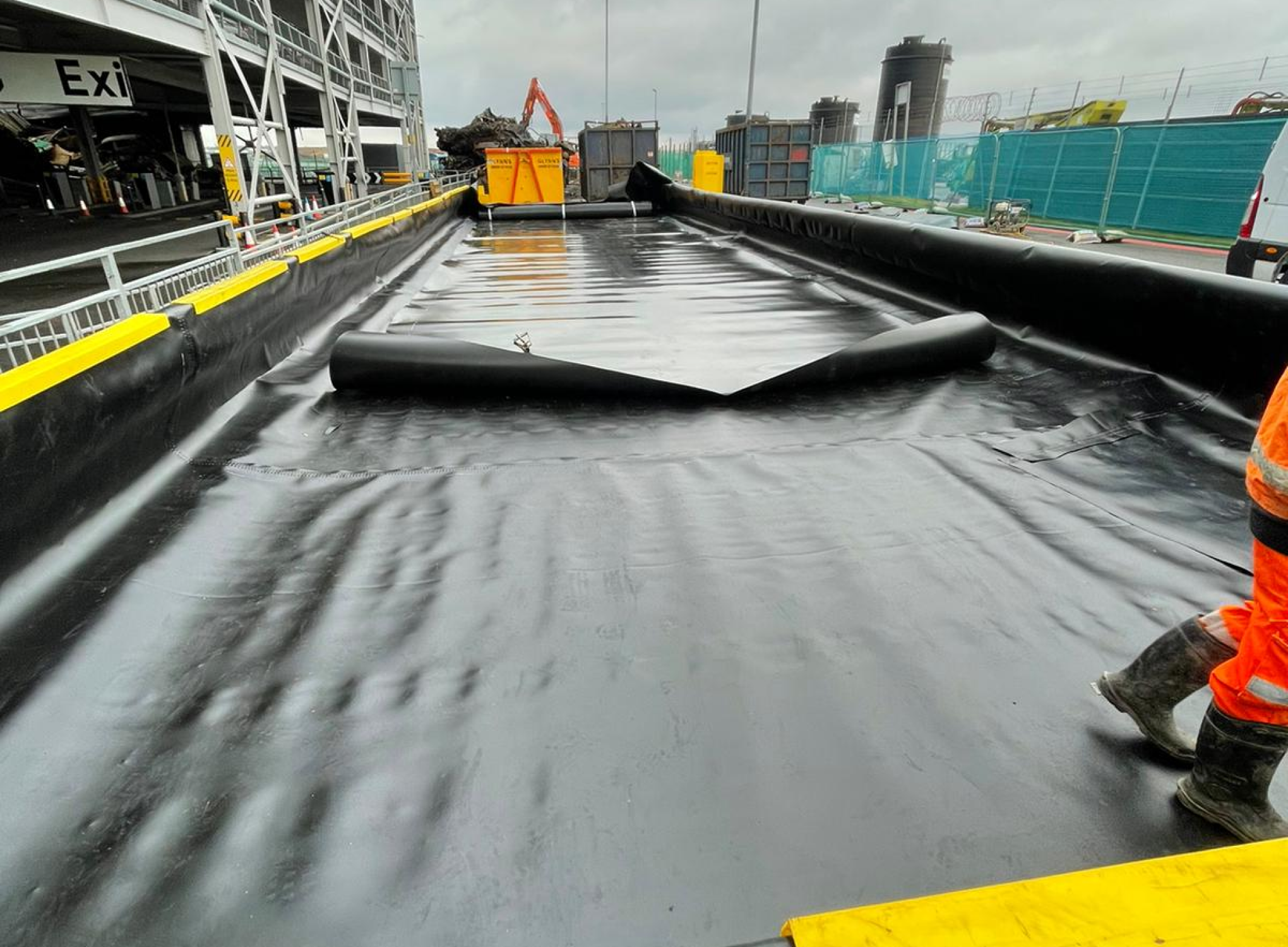
Hydrocarbon barriers are highly complex, multi-layered membranes. They feature a specialised aluminium foil or chemical-resistant core sandwiched between protective polymer layers.
- Best For – Brownfield sites, former petrol stations, railway land, and industrial zones contaminated with petroleum, oils, and VOCs (volatile organic compounds).
- Why They Work – Hydrocarbons can easily degrade and pass straight through standard plastic membranes. A dedicated hydrocarbon barrier uses a physical foil matrix to block these aggressive chemical vapours entirely.
Key Ground Gases Explained: Radon, Methane, and VOCs
When assessing a site, the type of gas barrier you require depends entirely on the contaminants present in the ground.
- Radon – This is a naturally occurring, radioactive gas found in varying levels across the UK bedrock. A standard radon gas membrane is usually sufficient to block it.
- Methane and Carbon Dioxide – Often found near old landfills, coal mining regions, or infill sites. These require higher-specification methane barriers that comply with BS 8485 codes.
- Volatile Organic Compounds (VOCs) – These are toxic, vaporous chemicals derived from industrial solvents, oils, and fuels. Because VOCs can migrate through standard plastics, they strictly require a dedicated hydrocarbon gas barrier rather than a basic membrane.
Leading Industry Brands: Visqueen vs. JUTA
In the UK construction sector, specifying the right brand is essential for passing independent site validation. We regularly work with the top manufacturers to ensure absolute compliance.
Visqueen Gas Membranes
Visqueen is one of the most established names in UK structural waterproofing and gas protection. Their product range includes the widely specified Visqueen Radon TPO Membrane and Visqueen GX Hydrocarbon Barrier. They are excellent for standard residential developments and sites requiring trusted, BBA-approved protection.
JUTA Gas Barriers
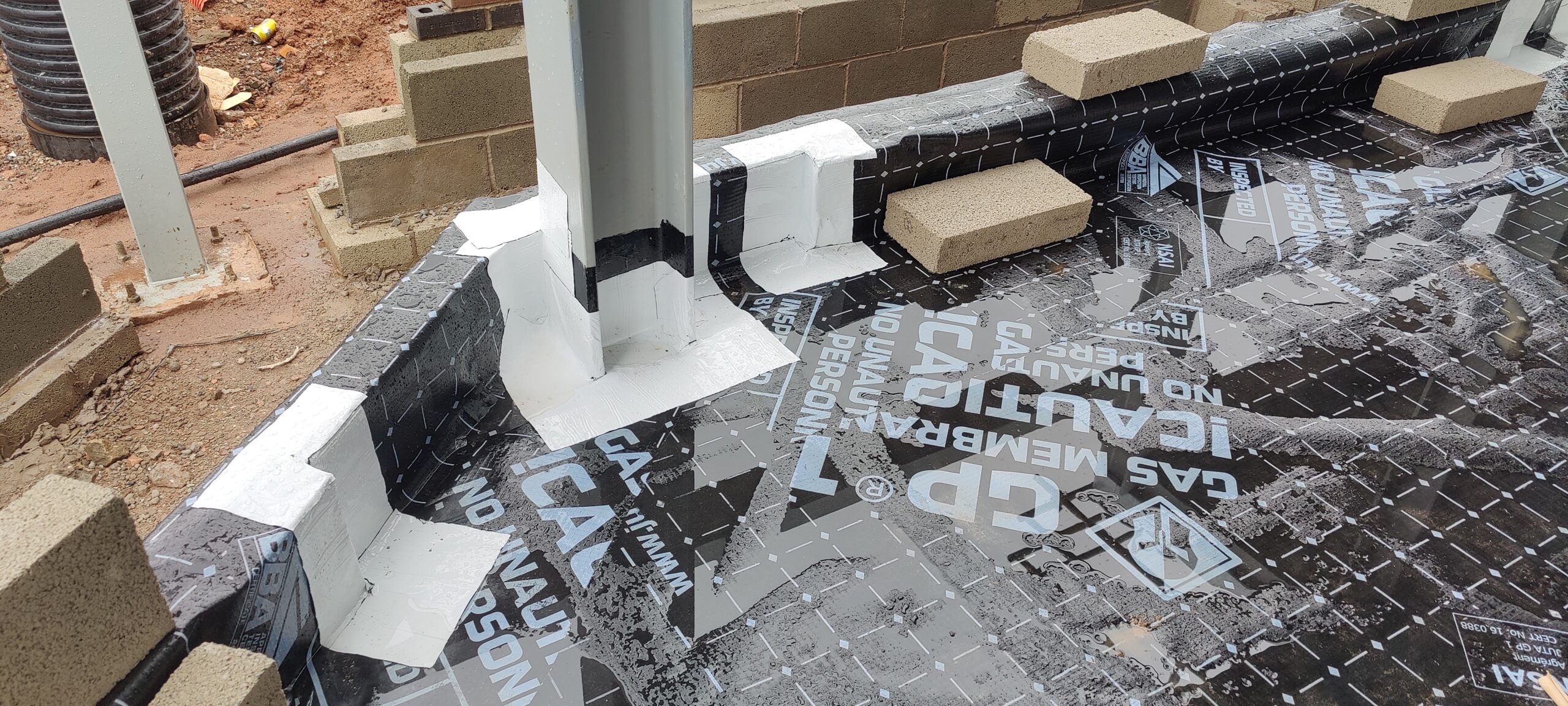
JUTA is a market leader in high-performance geosynthetics. Products like JUTA GP1 offer superb protection against methane and radon, while their JUTA GP-H barrier is the industry benchmark for complex hydrocarbon and VOC protection on highly contaminated brownfield land.
What is the Main Difference Between a Gas Membrane and a Hydrocarbon Barrier?
The main difference lies in their chemical resistance. Standard gas membranes are excellent at stopping simple gas molecules like radon or carbon dioxide, but they are not designed to withstand liquid fuels or complex volatile organic compound (VOC) vapours.
If hydrocarbons come into contact with a standard gas membrane, the plastic can soften, swell, and eventually break down. This process, known as permeation, allows toxic chemical vapours to penetrate the building envelope. Hydrocarbon barriers are specifically engineered to remain structurally stable and completely impermeable when exposed to aggressive chemical contaminants.
Frequently Asked Questions Regarding Site Protection
When is a hydrocarbon barrier legally required on a UK site? A hydrocarbon barrier is required whenever a specialist phase two site investigation identifies hazardous levels of VOCs, oils, or fuel residues in the soil. Local authority planning departments and the Environment Agency will mandate these barriers to meet BS 8485 and CIRIA C748 standards.
Can a hydrocarbon barrier also protect against radon and methane? Yes. Hydrocarbon barriers act as an all-in-one protection layer. Because they have an advanced multi-layer construction, they easily block simpler ground gases like radon, methane, and carbon dioxide while simultaneously stopping complex chemical vapours.
Are standard gas membranes cheaper than hydrocarbon barriers? Standard gas membranes generally have lower material costs because they use simpler single-layer plastics. However, using a standard membrane on a site that actually requires a chemical barrier is an expensive mistake that can lead to planning failures and remediation costs.
The Importance of Professional Gas Barrier Installers
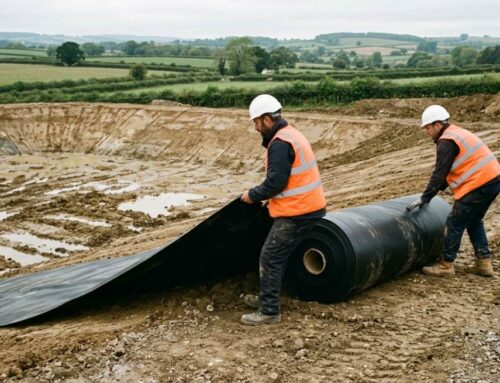
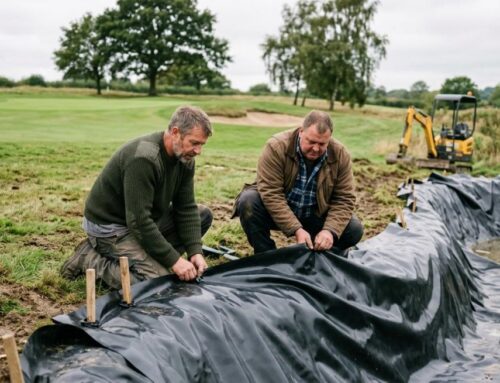
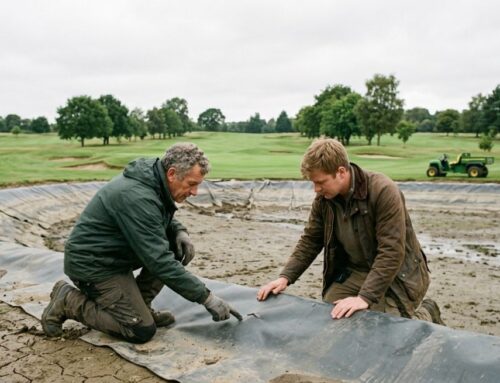
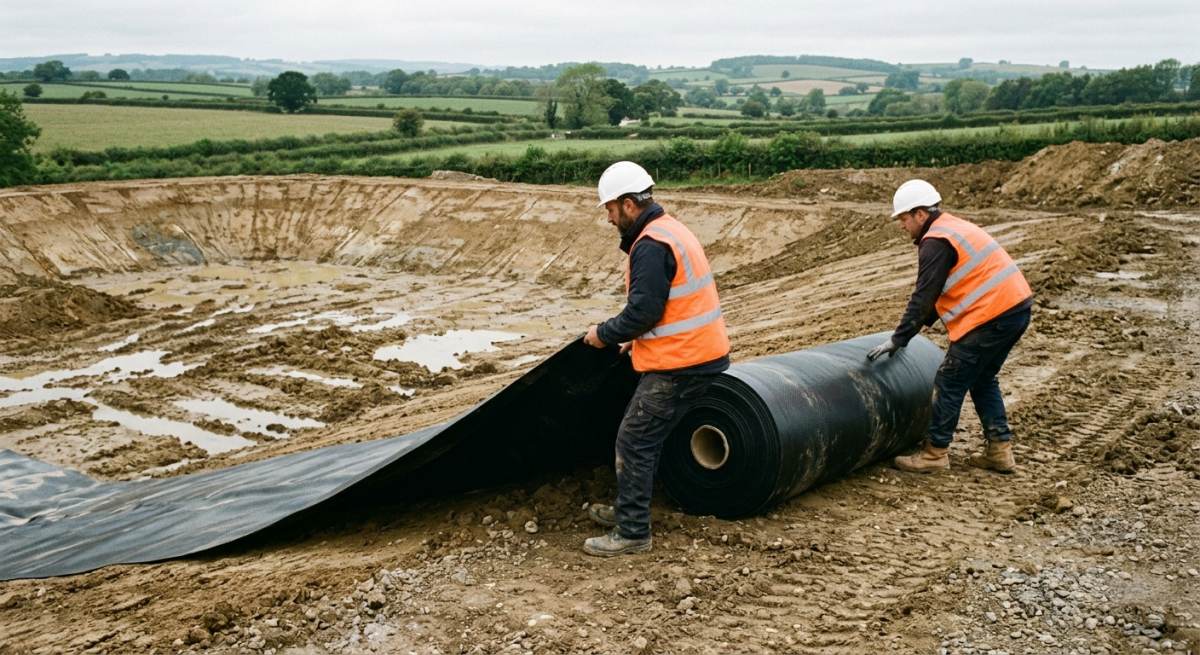
One of the most critical aspects of ground gas protection is how the barrier is installed. A membrane is only as good as its seams and penetrations. While standard damp proof courses can sometimes be laid by general bricklayers, specialist gas barrier installation requires professional groundwork contractors.
On-site welding and joint sealing are highly skilled tasks. At Catalogue Engineering, our gas barrier installers are NVQ Level 2 qualified, and our welders hold CSWIP TWI welding certificates. This ensures every seam forms a permanent, airtight, and chemical-resistant molecular bond.
Our comprehensive gas barrier installation process includes:
- Sub-grade Preparation – Clearing all sharp debris and compacting the ground to create a smooth base.
- Geotextile Protection – Laying a heavy-duty underlay to protect the membrane from puncture hazards.
- Bespoke Detail Sealing – Professionally sealing around service pipe penetrations and column details where leaks are most likely to occur.
Partnering with the UK’s Most Trusted Groundworks Experts
Choosing between a standard gas membrane and a hydrocarbon barrier is a decision that dictates the safety and regulatory approval of your entire development. For sites with a history of industrial use, investing in a high-quality hydrocarbon barrier installed by qualified professionals is the only way to guarantee long-term protection.
As Constructionline Gold Members, Members of the British Safety Council, and Acclaim Accredited contractors, Catalogue Engineering delivers fully compliant, high-standard installations across the UK. We bring verified expertise to your site drainage, water management, and gas protection challenges.
Looking for proven civil engineering expertise? Discover how we solve complex site drainage and containment challenges for our customers in our Hydrocarbon & Gas Barrier case studies.
Need technical advice on your next project? Contact our expert team today for a consultation on the best materials and installation methods for your specific site requirements.
- Phone: 03300 583335
- Email: enquiries@catalogue.engineering